Isolation Measures for Non-Compliance with Hair Regulations and School Rules Violations
Unconstitutional Lawsuits Filed Over Hair Regulations in Other Regions as Well
In Japan, an unexpected debate over 'freedom of hairstyle' has ignited. The issue arose when a mixed-race student with dreadlocks, who attended his graduation ceremony following his Black father, was barred from sitting at the ceremony for violating school rules. Critics within Japan argue that not only was diversity unacknowledged, but outdated hair regulations are still being enforced.
According to the Mainichi Shimbun on the 28th, an incident occurred at a high school graduation ceremony in Hyogo Prefecture last February, where a Black mixed-race student with dreadlocks was excluded and removed from the ceremony seating. The school isolated the student on the second floor, where no other students were present, instead of the auditorium's first floor. The student reportedly felt "there was no point in attending the graduation" and left early with his parents.
The student had styled his hair in a 'cornrow' style, commonly referred to as dreadlocks, to neatly groom his naturally curly hair for the graduation. The student argued that in the United States, this hairstyle is worn by Black children and women and is actually considered neat and clean, but the school did not accept this explanation.
The parents protested, but the school's vice principal repeatedly said, "Your son's hairstyle cannot be allowed at the graduation," and when asked for reasons, only replied, "He knows the rules."
The student told Mainichi, "I was waiting for my friends inside the school after receiving my diploma when a teacher told me to leave the school," adding, "I was upset. This hairstyle is part of Black culture and also my father's roots."
The school stated that the student violated the hair regulations and that their actions were based on school rules. However, according to Mainichi's investigation, the rules only specify that students must "maintain cleanliness appropriate for high school students without following trends." While dyeing and bleaching are prohibited, there is no mention of dreadlocks.
This has been criticized as an outdated mindset and discriminatory. There are also concerns that it goes against globalization. Mainichi noted, "In the United States, there is the 'CROWN Act' which prohibits hair discrimination," and added, "Defining hairstyle violations without reason is discrimination."
Professor Ry? Uchida of Nagoya University said, "There are many ambiguous rules not explicitly stated in the school regulations. Because teachers respond based on their own judgment or discretion, the harmful effects have become apparent," and added, "Rather than suppressing children in line with globalization, we should move toward respecting freedom and human rights."
This incident has brought the longstanding issues of hair regulations and student rights back into the spotlight in Japan. In 2017, a high school student in Osaka began raising concerns about hair regulations after being forced to dye naturally light-colored hair black, sparking controversy.
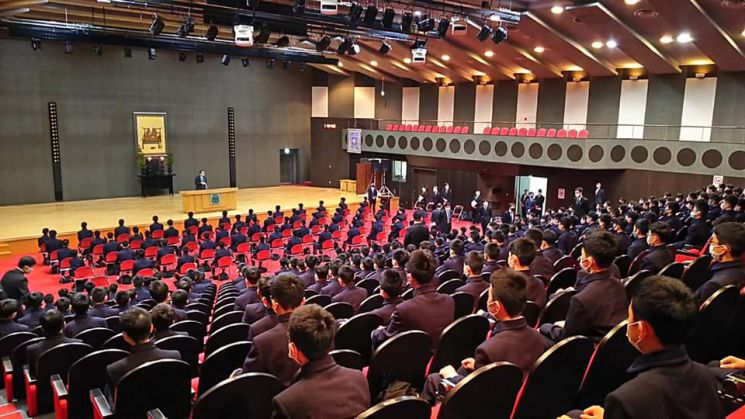
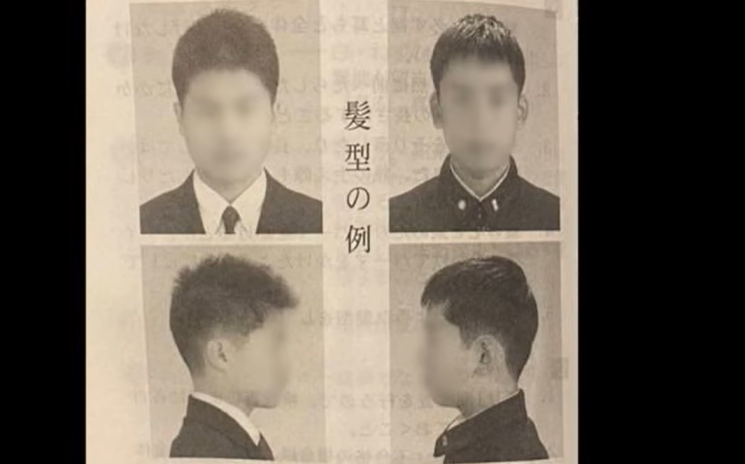
Furthermore, on the 23rd, the Osaka Bar Association issued recommendations for improvement regarding hair regulations at a prestigious private high school in Osaka, intensifying the debate. At Seifu High School in Osaka, the school rules specify regulations such as "bangs must not touch the eyebrows when bent forward" and "the entire area around the ears must be trimmed," with monthly hair inspections mandated. The rules also state that failure to comply could result in expulsion. Last year, some students filed a human rights complaint with the Bar Association, arguing that these rules violate Article 13 of the Constitution, which guarantees the right to self-determination.
However, there are predictions that this culture will not change easily. A 2019 survey conducted by the Tokyo Metropolitan Assembly of the Japanese Communist Party targeting 184 Tokyo metropolitan high schools found that 83.1% of the schools had hair regulations in their rules, and 15 of these schools banned two-block cuts and ponytails. There were also rules requiring students with naturally light hair to submit a report stating "the hair color is naturally light."
In response, the Ministry of Education, Culture, Sports, Science and Technology issued a notice to local boards of education in June 2021 stating that "school rules must be continuously reviewed considering social norms and changes in the times," but since this lacks binding force, it appears difficult to bring about substantial change.
© The Asia Business Daily(www.asiae.co.kr). All rights reserved.


















