Ruling and Opposition Parties Push for Simultaneous Passage of TK New Airport Special Act and Gwangju Special Act
'Fiscal Rules' Are Being Delayed to a Lower Priority
The Daegu-Gyeongbuk (TK) New Airport Special Act is expected to have difficulty passing the March extraordinary session of the National Assembly. It is known to be processed together with the special act for relocating the military airports in Daegu and Gwangju, and as the ruling and opposition parties engage in a quid pro quo legislative process related to the long-awaited projects in the 'vote-rich' regions of Daegu and Gwangju, criticism is emerging that this is a 'populist legislative collusion' for the general election.
According to the National Assembly on the 28th, the TK New Airport Special Act passed the full meeting of the Land, Infrastructure and Transport Committee on the 23rd. The special act was initially expected to be processed at the plenary session on the 30th of this month, but it was not submitted as an agenda item at the full meeting of the Legislation and Judiciary Committee the day before. A National Assembly official stated, "The TK New Airport Special Act did not fulfill the deliberation period, and there was a consensus to pass it together with the Daegu-Gwangju military airport relocation special act."
According to Article 59 of the National Assembly Act, a bill referred to the Legislation and Judiciary Committee for systematic and textual review can only be submitted after five days. Since the special act passed the standing committee on the 23rd, the fifth day after the resolution is the 28th, so the submission to the Legislation and Judiciary Committee is one day short.
However, considering the past practice of submitting bills by agreement between the ruling and opposition parties, the deliberation period is seen as a superficial reason. It is said to be to match the speed of processing the Daegu-Gwangju military airport relocation special act promoted by the Democratic Party. The Daegu-Gwangju Special Act, currently pending in the National Defense Committee, includes relocating the military airports in Daegu and Gwangju to build new airports, with the government providing necessary financial support. It was jointly proposed by Democratic Party lawmaker Lee Yong-bin and 20 other Democratic Party members.
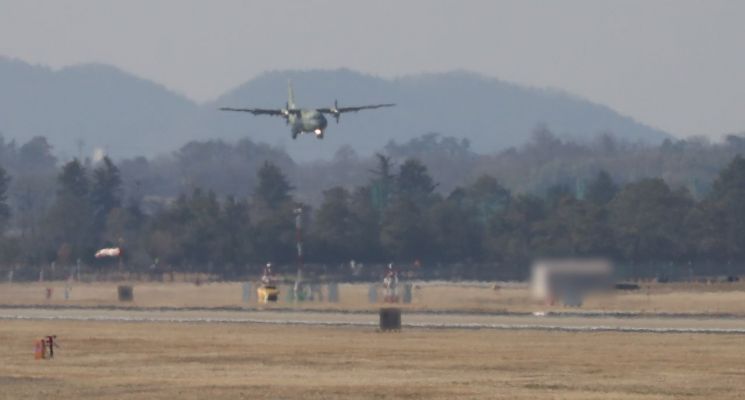
The TK New Airport Special Act centers on relocating the Daegu military airport to build an integrated new airport in the Gyeongbuk region. The special act supports the financial shortfall of this project, which is promoted through a 'donation in exchange for transfer' method, with national treasury funds and exempts the preliminary feasibility study for the new airport construction project. The 'donation in exchange for transfer' method involves the project implementer donating facilities to the military in exchange for receiving the existing site to develop and recover costs. The integrated new airport is expected to be the first case where national funds support a project led by local governments using this method. Because of this, concerns have been raised that it could impose a financial burden on the central government.
In political circles, it is expected that after the military airport special act passes the Defense Committee's bill subcommittee and full meeting next month, the two special acts will be submitted to the Legislation and Judiciary Committee side by side. Since there is an agreement between the ruling and opposition parties, it is anticipated that the final vote at the plenary session will proceed smoothly when the April extraordinary session is held. A People Power Party official explained, "The Gwangju Special Act will go through the Defense Committee's bill subcommittee on the 5th and the full Defense Committee meeting on the 6th before going to the Legislation and Judiciary Committee," adding, "Since the ruling and opposition parties initially agreed to process the TK New Airport Special Act and the Gwangju Special Act simultaneously, it seems the Democratic Party side feels burdened by the TK New Airport Special Act being processed first."
Some criticize the two special acts as 'populist legislative collusion' aimed at the election. About 20 trillion won of national funds will be invested in the construction of the two new airports, and there are concerns that proper investigations may not be conducted due to exemptions from preliminary feasibility studies. Political commentator Park Sang-byeong analyzed, "These two bills typically show a populist form ahead of election sentiment," adding, "If you say you will build airports, there is no reason for the regions to oppose, so they will gain support." He continued, "The problem is that the money comes from the people, but the glory is taken by politicians who then take credit."
© The Asia Business Daily(www.asiae.co.kr). All rights reserved.

















