As the new Cold War structure between democratic countries led by the United States' allies and authoritarian countries such as China, Russia, and North Korea solidifies, concerns over nuclear threats are growing as Russia decides to deploy tactical nuclear weapons in Belarus. In particular, in South Korea, which is directly exposed to North Korea's nuclear threat, the idea of "redeploying tactical nuclear weapons" and other self-nuclear armament theories are gaining more traction, especially within the political sphere.
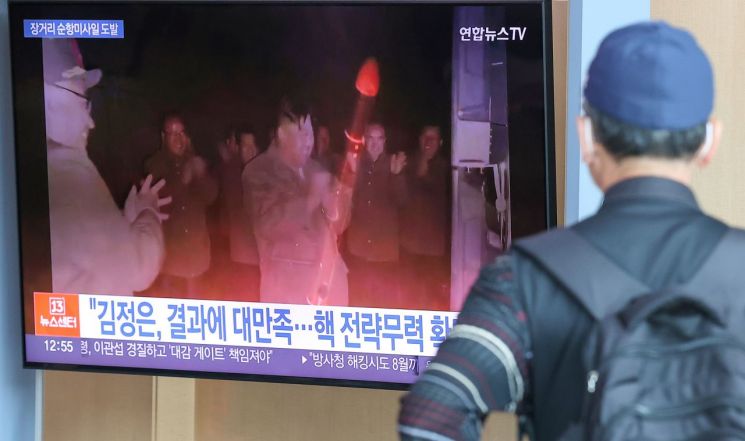
On the 27th, Jung Woo-taek, the Deputy Speaker of the National Assembly, stated on his social media (SNS), "North Korea is strengthening asymmetric capabilities by diversifying nuclear delivery methods, while our three-axis system has been shaken and weakened during the five years of the Moon Jae-in administration." He emphasized, "It is necessary to actively consider symmetrical strategies against North Korea's nuclear threat, including a NATO-style nuclear sharing strategy where the U.S. and South Korea jointly plan and operate U.S. tactical nuclear weapons, as well as increasing the deployment frequency of strategic nuclear bombers, nuclear submarines, and mobile missile delivery systems."
On the same day, Tae Young-ho, a Supreme Council member of the People Power Party, said at the morning Supreme Council meeting, "South Korea's independent nuclear armament should now be reviewed without prejudice," adding, "Instead of holding biases and outright opposing independent nuclear armament, it is necessary to actively consider ways to paradoxically move toward nuclear reduction on the Korean Peninsula and normalize inter-Korean relations through nuclear armament."
The increasingly hardline remarks from the political sphere, such as NATO-style nuclear sharing and independent nuclear armament, are due to the growing reality of North Korea's nuclear threat. On the 24th, North Korea unveiled a nuclear-powered unmanned underwater attack vehicle, and on the 19th and 22nd, it conducted tests detonating tactical ballistic missiles and strategic cruise missiles at altitudes of 800 meters and 600 meters, respectively. The 600-800 meter altitude is the height at which tactical nuclear missiles would cause the greatest human casualties if detonated. By revealing means capable of nuclear attacks not only on land and air but also underwater, North Korea appears to be attempting to neutralize South Korea's "kill chain," which aims to preemptively strike North Korean missiles.
In U.S. political circles, the need for redeploying tactical nuclear weapons is also being raised. James Risch, the Republican ranking member of the U.S. Senate Foreign Relations Committee, recently said in an email to Voice of America (VOA), "The Biden administration should consider not only expanding alliances and nuclear planning and operational mechanisms to reject North Korea's objectives and strengthen extended deterrence but also redeploying nuclear weapons to South Korea."
However, the U.S. government drew a line in response to President Yoon Suk-yeol's remarks in January, which could be interpreted as suggesting the possibility of independent nuclear armament, stating, "The joint goal of South Korea and the United States is denuclearization of the Korean Peninsula." Yoon Sang-hyun, a People Power Party lawmaker known as a key figure in foreign affairs and diplomacy, also expressed a negative view on the feasibility of "redeploying tactical nuclear weapons" voices within the ruling party last October, saying, "It would be like the U.S. breaking the denuclearization declaration on the Korean Peninsula with North Korea."
Redeploying tactical nuclear weapons goes a step beyond existing extended deterrence, but ultimately, the "nuclear button" remains with the United States, which is a limitation. Jung Sung-jang, head of the Korea Nuclear Self-Strengthening Strategy Forum, pointed out at a Northeast Asia Diplomacy and Security Forum discussion last month, "Since the U.S. president holds the final decision-making authority on the use of nuclear weapons, the question inevitably arises whether the U.S. president would decide on a preemptive nuclear strike against North Korea if North Korea uses nuclear weapons not against the U.S. but against South Korea, considering the possibility of nuclear retaliation against the U.S. itself."
© The Asia Business Daily(www.asiae.co.kr). All rights reserved.
![Clutching a Stolen Dior Bag, Saying "I Hate Being Poor but Real"... The Grotesque Con of a "Human Knockoff" [Slate]](https://cwcontent.asiae.co.kr/asiaresize/183/2026021902243444107_1771435474.jpg)
















