Major Foreign Media Raise Concerns Over Commercial Real Estate-Induced Financial Crisis
Sharp Decline in Transactions Due to High Interest Rates...Potential Bank Loan Defaults
Korea Also Faces Non-Bank Sector Risks Amid Real Estate PF Crisis
Bank of Korea and Fed Monitor Potential Real Estate Finance Instability
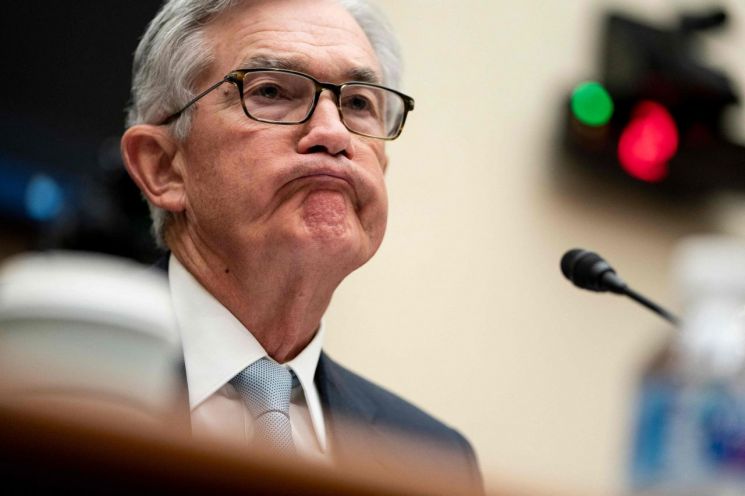
Following the crises at Silicon Valley Bank (SVB) and Credit Suisse (CS), Germany's Deutsche Bank has also been engulfed in crisis rumors, intensifying global financial instability. Amid this, the recently deepening slump in the 'commercial real estate' market has emerged as a key variable in the crisis. Both South Korea and the United States have seen their commercial real estate markets significantly contract due to COVID-19 and rapid interest rate hikes, leading to analyses that this could exacerbate bank loan defaults and accelerate liquidity crises.
According to financial markets and major foreign media on the 27th, the U.S. commercial real estate loan market is under increasing pressure as the real estate market freezes due to the Federal Reserve's continued tightening. Non-residential properties such as offices and retail spaces generally have high loan-to-value ratios, making them vulnerable to high interest rates. Over the past few years, vacancy rates have surged due to COVID-19, and recent concerns about financial crises like the SVB bankruptcy have further contracted the market overall.
The UK's Financial Times (FT) also pointed out in relation to the sharp drop in shares of Deutsche Bank, Germany's largest investment bank, that "commercial real estate risks are causing more worries," noting that "more than half of Deutsche Bank's commercial real estate (CRE) loan exposure is in the U.S., which is larger than that of its competitors." Earlier, Bloomberg and The Wall Street Journal (WSJ) expressed concerns that over 70% of U.S. commercial real estate-backed loans, approximately $2.3 trillion, are held by small and medium-sized banks, raising the possibility of significant deterioration in bank soundness.
South Korea is also experiencing considerable financial instability surrounding real estate project financing (PF). According to the Bank of Korea, the volume of commercial real estate transactions dropped by more than half from 35,000 cases at the end of 2021 to 15,000 cases by the end of last year. While Seoul and the metropolitan area are relatively stable, non-residential real estate in provincial areas is facing more severe stagnation. Particularly, many of these projects have loans from non-bank sectors such as savings banks, which could act as a financial instability trigger going forward.
If the commercial real estate market worsens further due to high interest rates and economic recession, leading to higher business loan delinquency rates, banks will inevitably have to lower the value of collateral, which will deteriorate the financial condition of small and medium-sized banks. Additionally, reducing the overall loan volume could fuel liquidity concerns.
Both the Bank of Korea and the Fed are closely monitoring the possibility that a real estate slump could hasten a financial crisis. A Bank of Korea official stated, "The risk of defaults has increased, such as rising PF loan delinquency rates," adding, "It is difficult to definitively say how much further the slump must deepen before the financial sector reaches a dangerous situation." Fed Chair Jerome Powell also acknowledged the issue of small banks' concentration in CRE during a recent Federal Open Market Committee (FOMC) meeting.
However, some opinions suggest that unlike the U.S., South Korea's banking sector is less likely to see expanded instability, and the real estate downturn is slowing, so there is no need to overinterpret the crisis potential. Bloomberg recently reported that "activist investors beyond the global financial turmoil are considering South Korea as an investment target."
Yoon Seon-jung, a researcher at NH Futures, explained, "Since global major investment banks (IBs) are also considering the possibility of a commercial real estate market crisis, banks are exposed to commercial real estate risks," but added, "The risk of default among the five major domestic commercial banks is minimal, and the government is continuously implementing measures to address non-bank sector default risks, so the impact on South Korea is limited."
© The Asia Business Daily(www.asiae.co.kr). All rights reserved.

















