Conflicting Opinions at Apple Senior Demo Event
"Expensive and Inconvenient" VS "Success Like Apple Watch"
Recently, 100 senior executives from Apple gathered at the Steve Jobs Theater within Apple Park in Cupertino, California. The purpose was to view the newly unveiled Mixed Reality (MR) headset. Since 2018, this meeting had secretly introduced the headset, but this time the atmosphere was reportedly different. The fact that the headset demonstration event was held in the Steve Jobs Theater, where official events are primarily conducted, is interpreted as a sign of Apple's intention for an official launch.
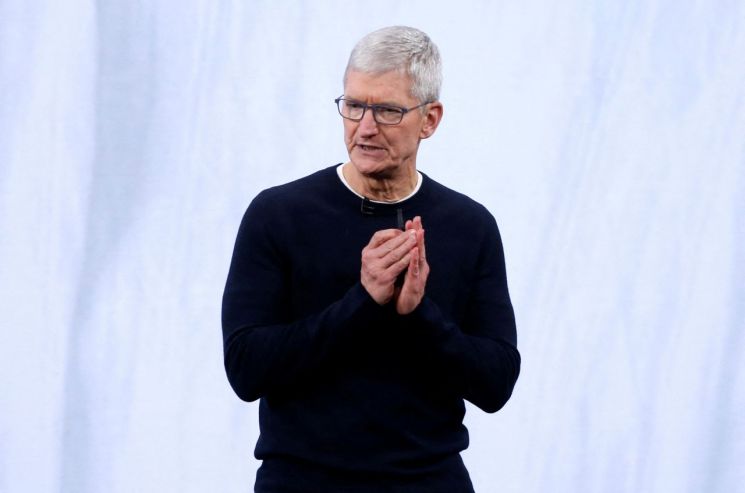
On the 26th (local time), Bloomberg reported that "Apple gathered 100 senior executives to unveil a demo version of the MR device ahead of its June release," stating that the headset has become Apple's hope. Apple has spent seven years developing the MR headset. Unlike the iPhone and iPad, which all started under Steve Jobs' leadership, the headset is regarded as the first product entirely led by CEO Tim Cook.
This reflects CEO Cook's strong determination to launch the product. Although Apple delayed the release of several new products due to ongoing recession concerns since last year, it is said that the headset is being prepared for release as scheduled in June.
Inside Apple, it is difficult to predict the success or failure. There is skepticism that the high price of $3,000 (approximately 3.9 million KRW) and unclear usage will make success challenging. However, there is also hope that it could grow similarly to the Apple Watch, which initially faced uncertainty but found its role and gradually increased sales after launch.
◆ Growing Skepticism Inside Apple: "Expensive and Uncomfortable"
The New York Times (NYT) cited multiple sources inside and outside Apple, reporting that skepticism about the success of the MR headset Apple plans to unveil is emerging.
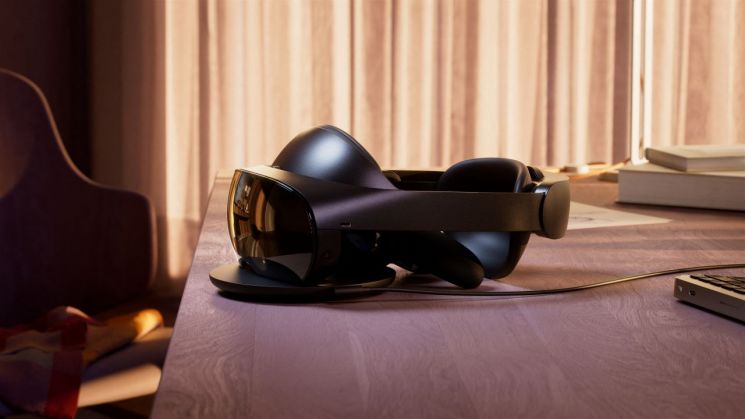
First, the price is an issue. Meta Platforms, which released a virtual reality (VR) headset before Apple, lowered the price of its Quest Pro model from $1,499.99 to $999.99 on the 3rd. When it launched in October last year, the market considered the price excessively high, and after starting sales without profit, Meta eventually lowered the price within four months. In this situation, there are predictions that Apple's headset, priced twice as high as Meta's, will face sluggish sales.
Bloomberg reported that Apple expects to sell about one million headsets in the first year, but market research firms like Counterpoint Research predict sales will not even reach 500,000 units. Even if Apple sells the expected one million units, the headset's revenue, priced at $3,000 each, would be about $3 billion annually. Foreign media evaluated that this would represent a very small portion of Apple's total revenue ($400 billion). Last year, Apple shipped over 200 million iPhones and more than 50 million Apple Watches.
The uncomfortable design and limited content are also cited as factors making it difficult for Apple's headset to succeed. The headset, which looks like ski goggles, has a battery on the outside that needs to be replaced every few hours. Additionally, people who wear glasses cannot use it immediately and Apple plans to sell prescription lenses for the display separately.
Above all, unlike the iPod, which stored digital music files, or the iPhone, which added phone functions to a music player, the unclear functionality of the headset is one of the reasons for skepticism, NYT reported.
◆ Still Hopeful for Late Success Like Apple Watch?
Despite the skepticism, some expect the headset to follow a trajectory similar to the Apple Watch, showing growth after launch.
When the Apple Watch was first released in 2015, it was criticized for having ordinary applications, a confusing interface, a slow processor, and unclear usage purposes. However, Apple improved these issues over time and strengthened its health features, earning recognition for establishing its position after eight years.
Carolina Milanesi, a consumer technology analyst at research firm Creative Strategies, explained that Apple initially described the watch as a miniature iPhone, but after consumers understood what they could do with the watch, the focus shifted to fitness accessories.
Notably, in February, foreign media reported that Apple made significant progress in developing a blood glucose meter that can measure blood sugar without drawing blood, which could be integrated into the Apple Watch. If this feature materializes, millions of diabetic patients worldwide are expected to purchase the Apple Watch, and related stocks rose following the report.
Bloomberg reported, "Apple executives expect consumer interest to grow once the headset model is released," adding, "Versions priced at half the cost and more advanced successors following the first model are also in preparation, and these products are expected to be released within two years after the first product launch."
© The Asia Business Daily(www.asiae.co.kr). All rights reserved.