Yoon Expected to Veto Grain Management Act Amendment Bill
The Presidential Office on the 26th expressed its position on the amendment to the Grain Management Act, which was passed by the National Assembly plenary session led by the opposition party, stating, "We will listen carefully to the positions of farmers and those affiliated with organizations and make a comprehensive judgment." This means they intend to examine all procedural issues and the practical impact on related industries. However, since President Yoon Seok-yeol has repeatedly expressed concerns about the amendment to the Grain Management Act, some analyses suggest that the exercise of the re-deliberation request right, also known as the 'veto power,' now only depends on the timing of the final decision.
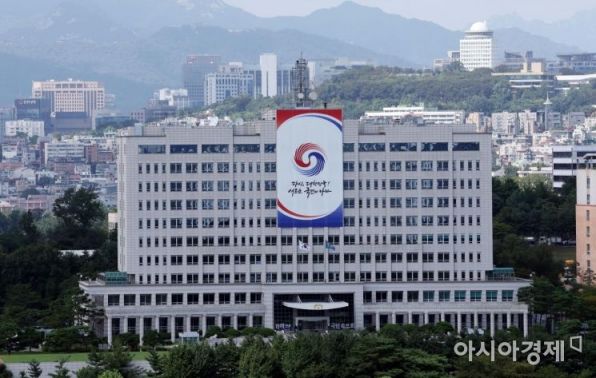
A key official from the Presidential Office told reporters at the Yongsan Presidential Office on the same day, "Farmer organizations are expressing various positions," conveying this stance. Earlier, the Presidential Office had stated, "Once the bill amendment is transmitted to the government, we plan to listen to opinions including concerns from various sectors and deliberate thoroughly."
The amendment to the Grain Management Act, passed by the National Assembly plenary session on the 23rd, centers on the government purchasing all excess rice production when the surplus exceeds 3-5% of rice demand or when rice prices fall by 5-8% compared to the previous year. However, President Yoon has maintained opposition to the Grain Management Act. During a door-stepping event in October last year, when the amendment passed the National Assembly standing committee, he expressed his refusal, saying, "I ask the National Assembly to conduct in-depth discussions," and emphasized, "The amendment passed the standing committee, but it should be left to government discretion. Gradually reducing the gap between supply and demand cannot prevent waste of finances and agricultural products. It does not help farmers."
In the Ministry of Agriculture, Food and Rural Affairs briefing in January, he also expressed the view that "It is reasonable for the government to intervene to some extent to stabilize prices and provide predictability for our farmers' production, so the unlimited purchase system under the Grain Management Act is ultimately undesirable for our agriculture." The implication is that the current method, where the government purchases all rice produced regardless of market absorption capacity, is not helpful at all.
The variable is the timing of President Yoon exercising his veto power. If the amendment to the Grain Management Act is not approved, other government-level agricultural promotion measures must be introduced. Moreover, with the Presidential Office's official stance the day before stating, "We will thoroughly consider concerns from all sectors," there is interest in how the opinion-gathering process will proceed. Given issues revealed in policy promotion during the push for flexible working hours and the announcement of solutions to forced labor, the Presidential Office intends to manage the process meticulously, but there is also a risk that one-sided message delivery could weaken the momentum of policy implementation.
If President Yoon exercises his inherent veto power, it will be the first use since the government was launched in May last year. It will also be the first veto in about seven years since then-President Park Geun-hye exercised veto power in May 2016 against the amendment to the National Assembly Act, which aimed to hold 'permanent hearings' in standing committees. However, it is expected to take some time from the review of the amendment by the Ministry of Agriculture and the Office for Government Policy Coordination to the Cabinet meeting's resolution on the re-deliberation request for the Grain Management Act amendment.
© The Asia Business Daily(www.asiae.co.kr). All rights reserved.
!["The Woman Who Threw Herself into the Water Clutching a Stolen Dior Bag"...A Grotesque Success Story That Shakes the Korean Psyche [Slate]](https://cwcontent.asiae.co.kr/asiaresize/183/2026021902243444107_1771435474.jpg)
















