Seoul Apartment Sales Supply-Demand Index Nears Recovery at 70
Average Sale Price per ㎡ in Seoul Metropolitan Area Surpasses 7 Million KRW
Experts: "Urgent Sale Listings Depleted, Transactions Entering Dormant Phase Again"
Due to the easing of real estate regulations following the January 3rd measures, buying sentiment for apartments in the Seoul metropolitan area is reviving. In Seoul, the number of people looking to buy homes is gradually increasing, bringing the sales supply-demand index close to recovering to the 70 level for the first time in four months. However, some experts caution that it is premature to view this change in sentiment as a sign of a real estate market revival.
According to the Korea Real Estate Board on the 26th, the sales supply-demand index for apartments in the Seoul metropolitan area for the third week of March (as of the 20th) rose 1.4 points (p) from 71.4 the previous week to 72.8, marking the second consecutive week above 70. The sales supply-demand index below 100 indicates that there are more sellers than buyers in the market.
The sales supply-demand index for Seoul apartments in the third week of March rose 0.9p from 68.4 the previous week to 69.3, continuing an upward trend for three consecutive weeks. If this trend continues, it is expected to surpass the 70 level soon. The Seoul apartment sales supply-demand index had remained around the 60 level since the first week of November last year (70.7).
The sales supply-demand index rose across all five regions of Seoul. By region, the Northeast area, which includes Nowon, Dobong, and Gangbuk districts (Nodogang), increased from 72.9 to 73.3. The Southeast area, which includes the Gangnam 3 districts (Gangnam, Seocho, Songpa), also rose from 72.0 to 72.5.
The Central area, including Jongno and Yongsan districts, recovered from 72.6 to 72.8. The Northwest area, including Mapo and Seodaemun districts, rose from 62.4 to 63.3, and the Southwest area, including Yeongdeungpo and Yangcheon districts, increased from 61.9 to 63.9.
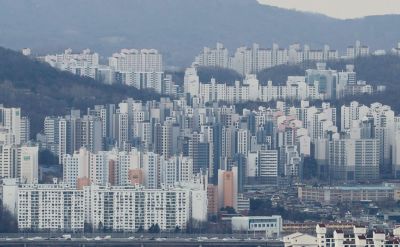
The government’s large-scale deregulation efforts this year to prevent a hard landing in the real estate market are interpreted as improving buying sentiment. Earlier, through the January 3rd measures, all areas except the Gangnam 3 districts and Yongsan district were removed from regulated zones, and loan and tax regulations on multi-homeowners were also eased. As a result, transaction volumes have increased mainly for high-quality, low-priced urgent sales, and apartment prices have somewhat recovered.
In fact, according to the Korea Real Estate Board’s apartment transaction price index, the average apartment sale price per square meter in the Seoul metropolitan area recovered to the 7 million KRW range in January this year for the first time in seven months.
The average sale price per square meter for apartments in the Seoul metropolitan area was 7.6 million KRW in January last year but fell to 6.84 million KRW in July of the same year, breaking the 7 million KRW level. It then stayed in the 6 million KRW range for six consecutive months until December last year, before rising to 7.21 million KRW in January this year. In Seoul, the price per square meter also rose to 12.93 million KRW in January this year from 12.69 million KRW the previous month.
However, experts say that although the easing of regulations has led to a noticeable recovery in the real estate market centered on the Seoul metropolitan area recently, it is still too early to see this as a sign of a market revival.
Kim Woongsik, a research fellow at RealToday Research Institute, explained, "The buying sentiment has revived due to the deregulation trend," but added, "Since the U.S. Federal Reserve has raised interest rates again and many transactions have already been made mainly for urgent sales, it is still too early to say that the market will fully recover."
Yeo Kyunghee, senior researcher at Real Estate R114, said, "As urgent sales were exhausted early this year, transactions have slowed again this month," and predicted, "With the largest-ever drop in publicly announced prices significantly reducing holding tax burdens, multi-homeowners or owners of high-priced homes may maintain high asking prices while watching the market instead of rushing to sell, which could lead to another market slump."
© The Asia Business Daily(www.asiae.co.kr). All rights reserved.

![Clutching a Stolen Dior Bag, Saying "I Hate Being Poor but Real"... The Grotesque Con of a "Human Knockoff" [Slate]](https://cwcontent.asiae.co.kr/asiaresize/183/2026021902243444107_1771435474.jpg)














