Due to the bankruptcy of small and medium-sized banks such as the US SVB (Silicon Valley Bank) and still high loan interest rates, domestic housing demand is showing signs of contraction again. The demand movement, which had been centered on quick sales, seems to have somewhat slowed down this month. However, thanks to the effects of loan and financial regulation easing and tax regulation relaxation policies that have been rapidly implemented since the end of last year, the transaction volume is likely to gradually recover.
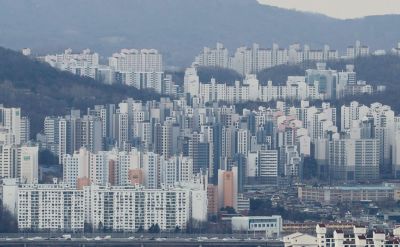
According to Real Estate R114 on the 26th, apartment prices in Seoul fell by 0.06% this week, showing a similar decline to last week (-0.05%). Reconstruction apartments dropped by 0.01%, and general apartments fell by 0.08%. New towns and Gyeonggi·Incheon areas fell by 0.06% and 0.04%, respectively.
In Seoul, 19 out of the 25 districts showed weakness, including ▲Seongdong (-0.17%) ▲Seodaemun (-0.16%) ▲Yeongdeungpo (-0.16%) ▲Gwanak (-0.14%) ▲Dongjak (-0.13%). New towns mainly saw declines in first-generation new towns such as ▲Pyeongchon (-0.18%) ▲Sanbon (-0.09%) ▲Dongtan (-0.09%) ▲Ilsan (-0.08%). Among residents, expectations for the promotion of special laws related to the maintenance of aging cities remain low.
In Gyeonggi·Incheon, areas such as ▲Paju (-0.18%) ▲Suwon (-0.11%) ▲Incheon (-0.08%) ▲Gimpo (-0.07%) ▲Namyangju (-0.07%) ▲Yongin (-0.06%) ▲Gunpo (-0.04%) ▲Osan (-0.03%) experienced declines.
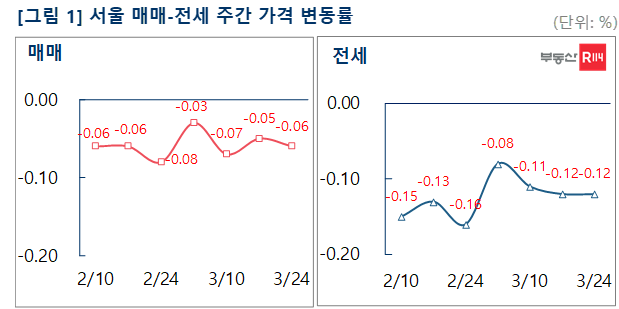
In the jeonse (long-term lease) market, some demand that had shifted to monthly rent is moving back to jeonse, but transactions are mainly focused on low-priced properties. Seoul fell by 0.12%, new towns by 0.10%, and Gyeonggi·Incheon by 0.05%. In Seoul, transactions are mainly for properties priced below market value, with declines in ▲Seongdong (-0.35%) ▲Yeongdeungpo (-0.35%) ▲Gwanak (-0.27%) ▲Geumcheon (-0.26%).
New towns saw declines in ▲Pyeongchon (-0.25%) ▲Sanbon (-0.23%) ▲Ilsan (-0.19%) ▲Pangyo (-0.14%). Gyeonggi·Incheon areas such as ▲Paju (-0.19%) ▲Incheon (-0.12%) ▲Suwon (-0.12%) ▲Bucheon (-0.10%) ▲Namyangju (-0.08%) ▲Ansan (-0.06%) ▲Yongin (-0.06%) ▲Guri (-0.05%) ▲Gimpo (-0.05%) also experienced declines.
Real demand buyers, who had been reluctant to trade due to the burden of property taxes, are expected to consider price, interest rates, and loan regulations more heavily than taxes in their decision-making going forward. Yoon Ji-hae, chief researcher at Real Estate R114, predicted, “By region, housing transaction volumes are expected to increase mainly in Seoul and the metropolitan area, where government policy effects are concentrated, and as a reaction to this, the price decline range is also expected to narrow.”
© The Asia Business Daily(www.asiae.co.kr). All rights reserved.

![Clutching a Stolen Dior Bag, Saying "I Hate Being Poor but Real"... The Grotesque Con of a "Human Knockoff" [Slate]](https://cwcontent.asiae.co.kr/asiaresize/183/2026021902243444107_1771435474.jpg)
















