Protein Helps Alleviate Heavy Metal Toxicity
"1.1g Protein Needed Per 1kg Body Weight"
As yellow dust from China flows in, worsening domestic air quality from the 23rd, experts have advised that protein intake can help alleviate the toxicity of heavy metals in the body.
On the 24th, Oh Han-jin, a professor of family medicine at Eulji University, who appeared on YTN Radio's "Wise Radio Life," stated, "Both fine dust and ultrafine dust are classified as Group 1 carcinogens by the World Health Organization (WHO)," emphasizing, "There must be sufficient protein to neutralize the toxicity when heavy metals enter the body."
According to Professor Oh, heavy metals contained in fine dust and ultrafine dust continue to accumulate in the body after entering and emit toxicity. To alleviate the toxicity of these heavy metals, zinc, an enzyme produced by protein, is necessary.
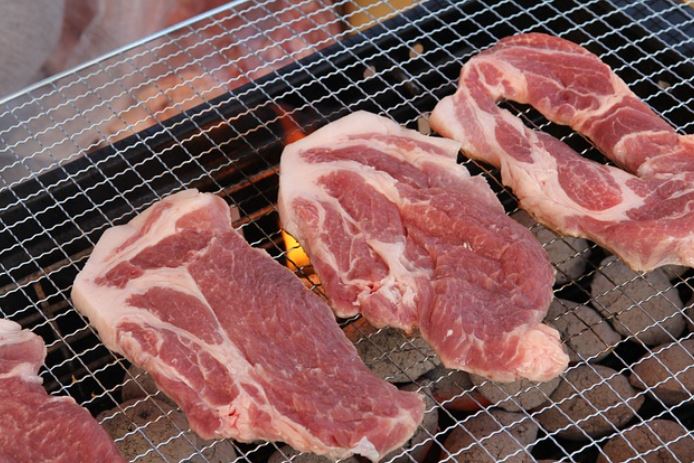
Professor Oh explained, "An adult needs 1.1g of protein per 1kg of body weight. So, for someone weighing 50kg, about 55g of protein should be consumed daily."
He added, "Red lean meat is helpful. Red meat contains a lot of zinc and also includes vitamin B complex," further stating, "Red lean meats such as beef and pork, oysters, eggs, and nuts are also beneficial."
In addition, he suggested that adequate water intake greatly helps in waste elimination. Professor Oh said, "Water helps to expel harmful substances in the body through urine, feces, or sweat," and added, "Since it is necessary to quickly eliminate heavy metals, drinking slightly more water than usual can be helpful."
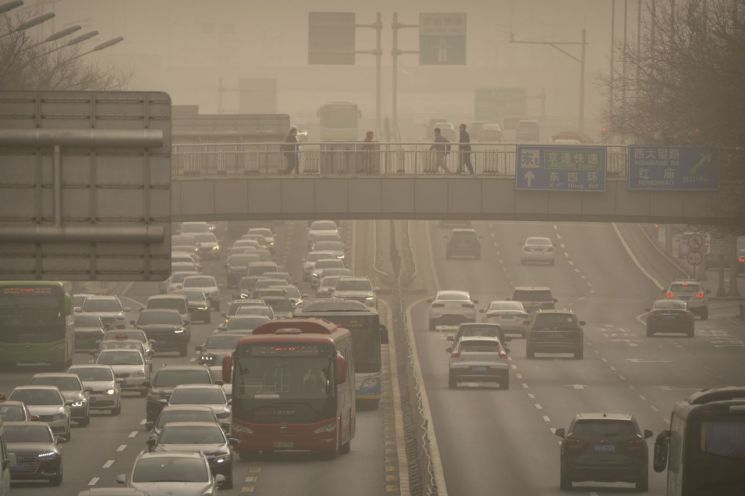 On the 22nd (local time), the downtown area of Beijing, China, was hazy due to yellow dust. [Image source=Yonhap News]
Meanwhile, the Seoul Environmental Corporation issued the first fine dust warning of this spring in Seoul as of 9 p.m. on the 23rd. Earlier, the Korea Meteorological Administration observed on the 21st that yellow dust originating from the Gobi Desert in Mongolia and Manchuria in China was carried by northwesterly winds to the west coast of Korea.
The yellow dust continues to affect air quality nationwide on the 24th. The National Institute of Environmental Research's Air Quality Integrated Forecast Center stated, "On the 24th, some central regions and most southern regions will still have residual yellow dust from the previous day, and additional inflow through the upper layers is expected to cause high fine dust concentrations."
© The Asia Business Daily(www.asiae.co.kr). All rights reserved.
![User Who Sold Erroneously Deposited Bitcoins to Repay Debt and Fund Entertainment... What Did the Supreme Court Decide in 2021? [Legal Issue Check]](https://cwcontent.asiae.co.kr/asiaresize/183/2026020910431234020_1770601391.png)

















