Court: "Social service without carrying arms or military training does not threaten freedom of conscience"
The Supreme Court has ruled that social service agents who do not bear arms or undergo military training and refuse to serve due to religious beliefs cannot claim a "justifiable reason" and can be punished for violating the Military Service Act.
This is the first ruling that held that even if the fulfillment of service that does not involve bearing arms or military training is enforced, it does not constitute an excessive restriction on freedom of conscience or a threat to its essential content.
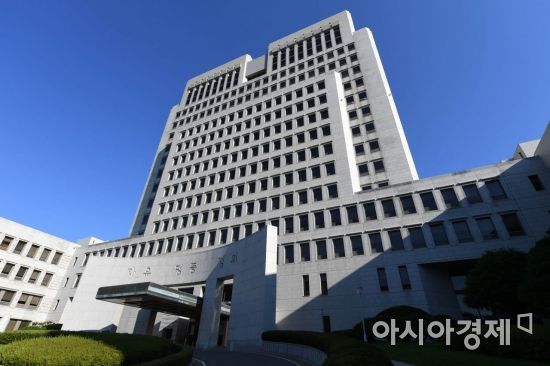
The Supreme Court's 3rd Division (Presiding Justice Oh Seok-jun) announced on the 26th that it overturned the lower court's acquittal of Jehovah's Witness member Mr. A, who was indicted for refusing to work as a social service agent in violation of the Military Service Act, and remanded the case with a guilty verdict.
Mr. A was exempted from military training based on a conscription physical examination result of grade 4 for mood disorders such as depression and began serving as a social service agent at the Fair Trade Commission around June 2014, serving for about one and a half years. Later, Mr. A was prosecuted for unauthorized absence about six months before his scheduled discharge date, citing that "it is difficult to view serving as a social service agent under the jurisdiction of the Military Manpower Administration under the Ministry of National Defense as unrelated to the military, and it is not acceptable to his conscience."
The first and second trials found Mr. A guilty of violating the Military Service Act and sentenced him to one and a half years in prison. However, the appellate court remanded the case for additional review, stating that "genuine conscientious objection to military service" corresponds to a "justifiable reason" under Article 88, Paragraph 1 of the Military Service Act, based on a plenary session ruling.
On remand, the court ruled that Mr. A's desertion from social service was based on a deep, firm, and sincere conscience formed on religious beliefs and constituted a justifiable reason under the Military Service Act, acquitting him.
However, the Supreme Court's final ruling differed. The court judged that Mr. A's desertion did not constitute a justifiable reason. The court stated, "Even if social service agents are compelled to fulfill service that does not involve bearing arms or military training, it cannot be considered an excessive restriction on freedom of conscience or a threat to its essential content," and "Refusal to serve by social service agents on grounds of freedom of conscience such as religious beliefs does not constitute a justifiable reason under the relevant provision unless there are special circumstances."
Furthermore, the court ruled, "Since it cannot be considered that the Military Manpower Administration directly and specifically commands and supervises the service of social service agents, refusal to fulfill service on the grounds of being subject to the administration and supervision of the Military Manpower Administration also does not constitute a justifiable reason under the Military Service Act."
© The Asia Business Daily(www.asiae.co.kr). All rights reserved.

















