KT President Yoon Kyung-rim Resigns Two Weeks After Appointment
Unprecedented Situation, Management Vacuum Expected to Continue Until Mid-Year
"Is the owner of KT the government or the board of directors? The shareholders are the owners."
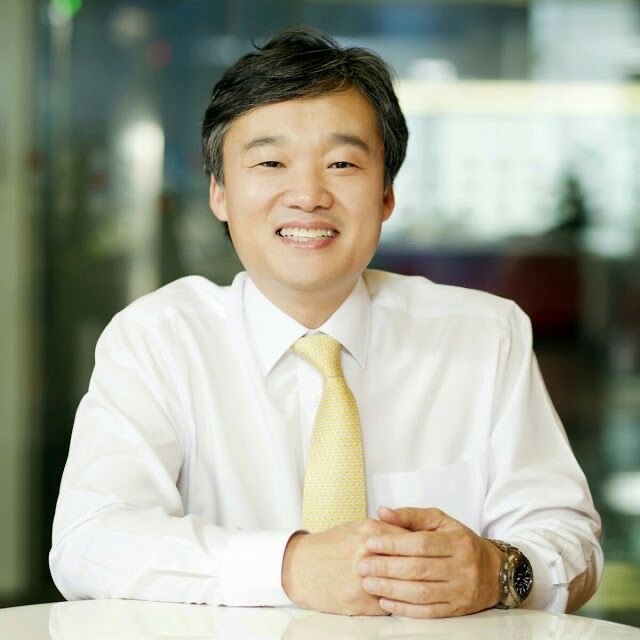
This is a lamenting voice from a KT OB (Old Boy) official. A storm is approaching KT as Yoon Kyung-rim, head of the Group Transformation Division (President) and the next CEO candidate, announced her intention to resign just two weeks after her appointment. Following CEO Koo Hyun-mo, President Yoon Kyung-rim also stepped down from the candidacy, confronting an unprecedented situation of a 'management vacuum.'
An Unprecedented Situation in KT's 130-Year History
On the 22nd, President Yoon announced her resignation at a board of directors' breakfast meeting. Although the directors tried to dissuade her, she reportedly said, "If I hold on, KT will deteriorate further." The cause behind President Yoon's resignation is attributed to political pressure. A KT board member said, "I understand that the political pressure became increasingly severe to the point that (President Yoon) could not endure it." Jo Seung-rae, a member of the National Assembly's Science, Technology, Information and Broadcasting Committee and the Democratic Party's floor leader, pointed out, "The Presidential Office issued a final ultimatum, and the prosecution and police began a full-scale investigation into KT, resulting in pressure," adding, "The damage to the free market economy order has gone beyond money."
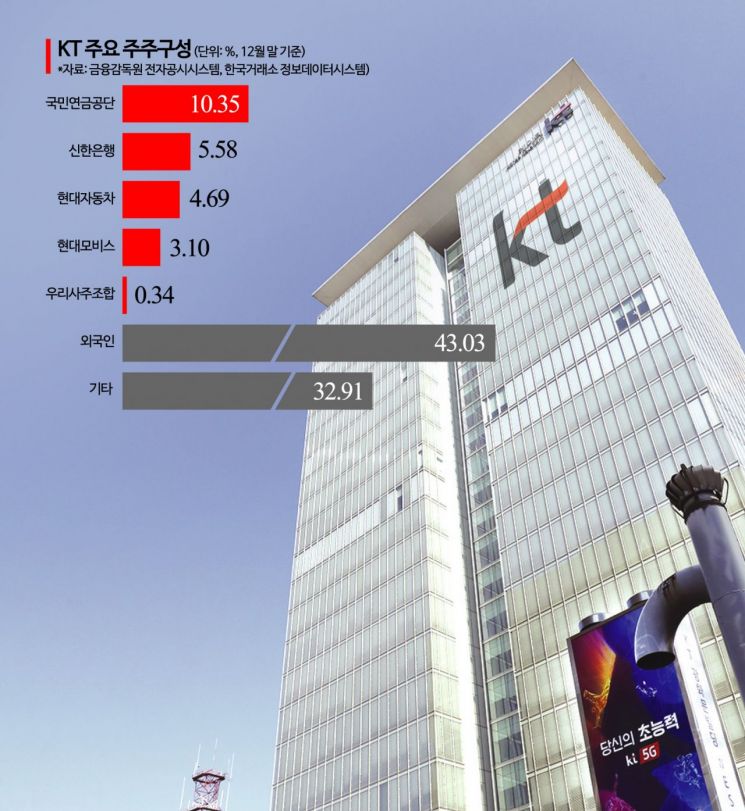
The ruling party continuously raised issues regarding President Yoon's final candidacy. Members of the People Power Party on the Science, Technology, Information and Broadcasting Committee criticized President Yoon as part of an 'interest cartel' and called her 'Koo Hyun-mo's avatar.' A civic group has filed complaints against former CEO Koo and President Yoon, and investigations are underway. The likelihood of winning the vote at the regular shareholders' meeting is low. The largest shareholder, the National Pension Service, has repeatedly raised concerns about the CEO appointment process. The second-largest shareholder, Hyundai Motor Group, has also turned to an opposing stance.
Voices demanding accountability from the board of directors are also emerging. The KT labor union stated, "The board of directors and management bear the greatest responsibility for the situation reaching this point," and insisted, "They should all resign." They criticized, "While going through the next CEO appointment process, communication with major shareholders and corporate stakeholders should have secured management stability, but failing to gain trust has caused confusion." The KT union is affiliated with the Korean Federation of Trade Unions IT Federation and is the majority union representing about 16,000 members, 99% of all KT union members.
What About the Management Vacuum?
If President Yoon's resignation is accepted, the CEO appointment agenda will be excluded from the regular shareholders' meeting on the 31st. The agenda for appointing Song Kyung-min, CEO of KT SAT, and Seo Chang-seok, head of the Network Division, as inside directors will also be discarded. According to KT's articles of incorporation, if all CEOs or inside directors are incapacitated, their duties are performed in the order prescribed by organizational regulations. After CEO Koo's term ends on the 31st, an emergency management system will be established. According to regulations, it is highly likely that Park Jong-wook, head of the Management Planning Division, and Kang Guk-hyun, head of the Customer Division, both at the president level, will serve as acting CEOs.
However, this is only a temporary position. Since the new CEO must take over once appointed, it is impossible to carry out organizational restructuring, personnel changes, or new business initiatives. Setting long-term goals or freely signing various contracts is also not possible.
KT's management clock has stopped since November 8 last year, when CEO Koo Hyun-mo announced his intention to renew his term. Even if KT restarts the CEO appointment process, the management vacuum is expected to continue until the first half of the year. Considering that it takes several months for a new CEO candidate to familiarize themselves with the work, it effectively means that KT's business for the entire year of 2023 is lost.
In contrast to competitors SK Telecom and LG Uplus, which conducted executive personnel changes and organizational restructuring early in November-December last year and are actively moving forward, KT's management plan for this year remains a blank slate. For over a quarter, KT has been unable to push forward with executive personnel changes or organizational restructuring. Especially in new businesses where the direction changes with a change in decision-makers, it is reported that KT cannot even attempt new initiatives.
KT is not alone. About 50 affiliates are also anxiously waiting due to the delay in KT's CEO appointment. Affiliates such as KT Skylife and BC Card are facing management vacuums as their CEOs' terms end but new CEOs have not been appointed due to delays in executive personnel decisions. KT Cloud's investment attraction decisions are also being postponed.
Previously, KT experienced management vacuums twice. Although emergency management systems were established at those times, the company was effectively closed due to the CEO vacancy. At the end of 2013, former Chairman Lee Seok-chae resigned mid-term. KT operated under an emergency management system with former Telecom & Convergence Division President Pyoh Pyung-myung acting as CEO. In 2008, former President Nam Joong-soo announced his resignation, and former Vice President Seo Jung-soo acted as CEO, with five vice presidents forming an emergency management committee.
© The Asia Business Daily(www.asiae.co.kr). All rights reserved.


















