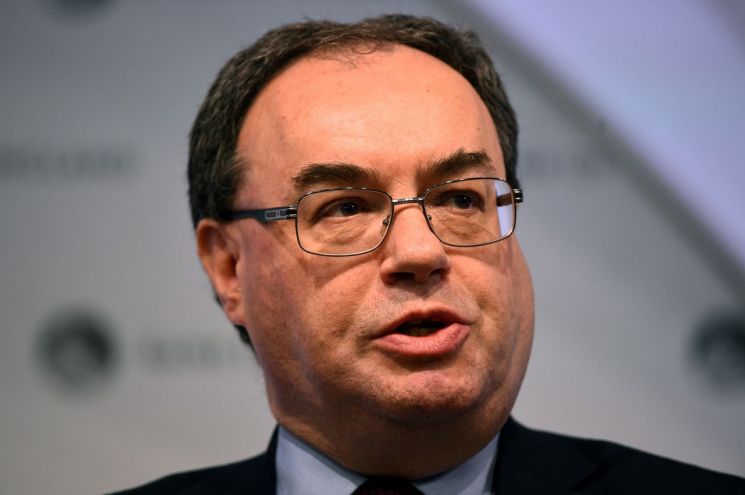
The Bank of England (BOE), the central bank of the United Kingdom, raised its key interest rate by 0.25 percentage points on the 23rd (local time). Despite the expansion of financial risks following the Silicon Valley Bank (SVB) crisis in the United States, the BOE focused on price stability as inflation was confirmed to be higher than expected.
On the day, the BOE held a monetary policy meeting and decided to raise the key interest rate by 0.25% to 4.25%. This marks the 11th consecutive rate hike since the BOE began raising rates in December 2021, bringing the UK’s key interest rate to its highest level since the global financial crisis in 2008.
However, the size of the rate hike was half that of the previous month (0.5 percentage points). It was also the smallest increase in nine months since June last year, indicating a slowdown in the pace of rate hikes.
Regarding the 0.25% rate increase, 7 out of 9 BOE monetary policy committee members voted in favor. They expected the UK economy to avoid a recession and identified inflation as the greatest risk. The BOE stated, "If there is evidence that more persistent (price) pressures continue, further tightening of monetary policy will be necessary," leaving the door open for additional rate hikes.
The BOE’s decision was anticipated. This was due to the UK’s February consumer price inflation rate, announced the day before, recording 10.4%, higher than initially expected. The inflation rate rose compared to the previous month (10.1%), reversing the downward trend in prices after four months. Investors who had expected the BOE to pause rate hikes shifted to anticipating increases after confirming inflationary pressures.
In raising rates, the BOE explained that the resilience of the UK and global economies was stronger than expected. The UK’s second-quarter gross domestic product (GDP) is expected to rise slightly, leading to an upward revision of forecasts compared to last month’s (-0.4%). Inflation is projected to fall to single digits within a few months due to expanded government energy subsidies and a drop in wholesale gas prices. The labor market remains robust, but wage growth is easing faster than expected, the BOE analyzed.
Additionally, the rate hikes by the European Central Bank (ECB) and the U.S. Federal Reserve (Fed)?0.5 percentage points and 0.25 percentage points respectively?following the SVB collapse are also interpreted as factors influencing the BOE’s decision to raise rates.
Bloomberg analyzed, "Despite the threat of economic instability due to the financial market crisis, the BOE focused on curbing inflation," suggesting that controlling inflation is the top priority over concerns about the banking system.
However, two BOE monetary policy committee members reportedly advocated for holding the rate steady. They argued that the current policy rate is already impacting the economy and is sufficiently restrictive, suggesting that the BOE may need to reconsider its decision.
© The Asia Business Daily(www.asiae.co.kr). All rights reserved.

















