The Supreme Court's full bench has ruled that it is unfair for grandchildren to inherit debts along with the spouse even if the deceased debtor's (the person who owed money to creditors) children renounce their inheritance.
This marks a change in the Supreme Court precedent after about seven years, which previously held that if the children renounced inheritance, the grandchildren would become joint heirs with the debtor's spouse.
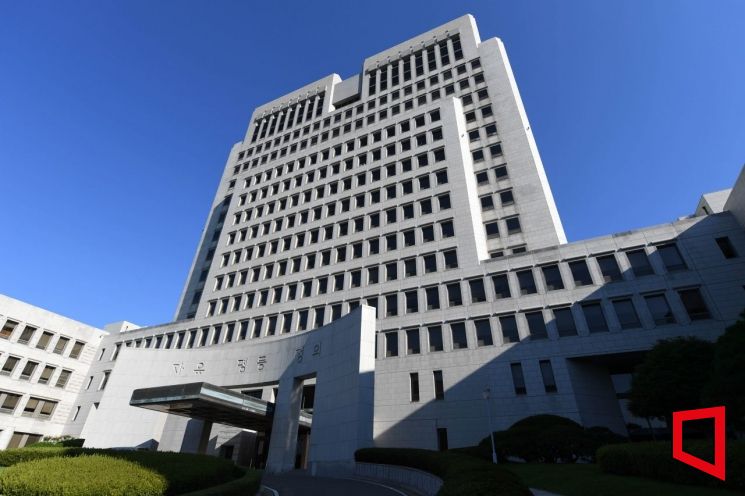
On the afternoon of the 23rd, the Supreme Court full bench (Presiding Judge Chief Justice Kim Myeong-su, Presiding Justice Min Yu-suk) remanded the special appeal case filed by Mr. A's grandchildren against the creditor's application for the issuance of a succession enforcement document, stating that the lower court's dismissal of the application must be re-examined and judged by the Busan District Court.
The majority opinion of the Supreme Court (11 justices) pointed out, "The lower court violated the applicants' constitutional rights to property protection through due legal process, which affected the trial and constituted a constitutional violation."
Previously, after Mr. A died in 2015, his wife made a limited acceptance of inheritance on the condition that she would repay Mr. A's debts and legacies from the inherited property. In the same year, all four children renounced their inheritance.
However, Mr. A had already lost a civil lawsuit in 2011, and the creditor claimed that Mr. A's wife and grandchildren were joint heirs. In 2020, the creditor applied for the issuance of a succession enforcement document notifying them that "the debt was inherited due to the debtor's death and compulsory execution will be carried out accordingly," which the court accepted.
The grandchildren, who were minors at the time of inheritance, argued that they were not heirs of Mr. A and filed an objection to the issuance of the succession enforcement document.
The issue in this case was whether to maintain or change the 2015 Supreme Court precedent. At that time, the Supreme Court ruled that "when the spouse and all children renounce inheritance, if there are grandchildren or direct ascendants, the spouse becomes a joint heir with those grandchildren or direct ascendants."
The first trial court dismissed the application in line with the existing Supreme Court precedent, holding that "the grandchildren are indeed joint heirs with Mr. A's wife."
The grandchildren appealed this decision to the Supreme Court through a special appeal. A special appeal is a system that allows re-appealing to the Supreme Court on the grounds of serious constitutional or legal violations in the lower court's decision.
On this day, the Supreme Court majority opinion stated, "There is a need to change the precedent," and overturned and remanded the lower court's decision. Since Mr. A's spouse and all children renounced inheritance, only the spouse becomes the sole heir.
They further explained, "It is natural to view that the children who renounced inheritance did so to fundamentally prevent the debtor's debts from being inherited by themselves and their children," and "It is against the parties' expectations and intentions, as well as general social legal sentiment, to consider that the spouse and grandchildren or direct ascendants become joint heirs simply because all children renounced inheritance."
Additionally, "Article 1043 of the current Civil Act stipulates that 'if any joint heir renounces inheritance, their share of the inheritance shall accrue to the other heirs.' The term 'other heirs' includes the spouse, and if all children renounce inheritance, the inheritance share should be attributed to the spouse," the court explained.
However, two justices dissented, stating, "The existing precedent is a reasonable judgment that does not deviate from our legal system and general social conventions, and changing the precedent could cause serious confusion in the stability of established legal relationships." The full bench consists of 13 justices (including the Chief Justice, excluding the Court Administration Chief), and a decision is made when at least two-thirds are present and a majority opinion is reached.
A Supreme Court official explained, "This full bench decision changes the existing precedent by ruling that if all children renounce inheritance, the spouse becomes the sole heir. It clearly establishes the spouse's status in inheritance and the interpretation of Article 1043 of the Civil Act, and it is meaningful in that it allows heirs who inherit debts to promptly and clearly resolve legal relationships related to inheritance in a way that better reflects the heirs' intentions."
© The Asia Business Daily(www.asiae.co.kr). All rights reserved.
![Clutching a Stolen Dior Bag, Saying "I Hate Being Poor but Real"... The Grotesque Con of a "Human Knockoff" [Slate]](https://cwcontent.asiae.co.kr/asiaresize/183/2026021902243444107_1771435474.jpg)










