Sustainment Brigade and ROK-US Combined Division Conduct Joint Operations at Yeongpyeong Firing Range
Joint Forces Deployed for Verification as Part of Outdoor Field Training
"North Korea continues provocations during the ROK-US exercises? That actually helps us focus on the training. It only stimulates us to intensify the training."
Brandon Anderson, Colonel and Deputy Chief of Operations of the US 2nd Infantry Division/ROK-US Combined Division, firmly responded to questions about concerns over North Korean provocations during the exercises in front of about 30 domestic and foreign reporters who visited the Yeongpyeong Shooting Range (Rodriguez) in Pocheon, Gyeonggi Province on the afternoon of the 22nd.
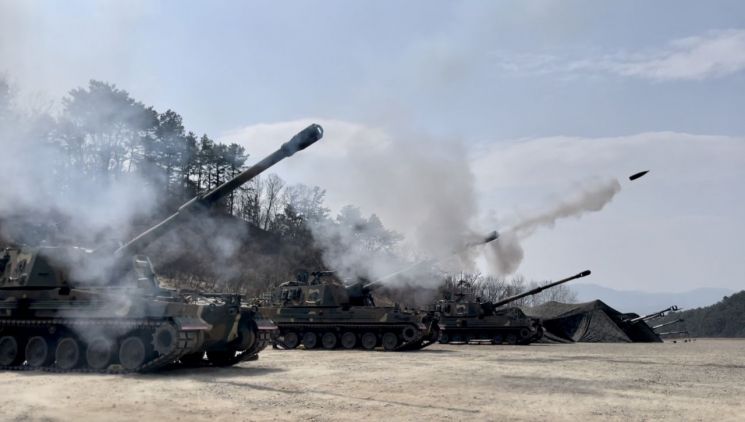
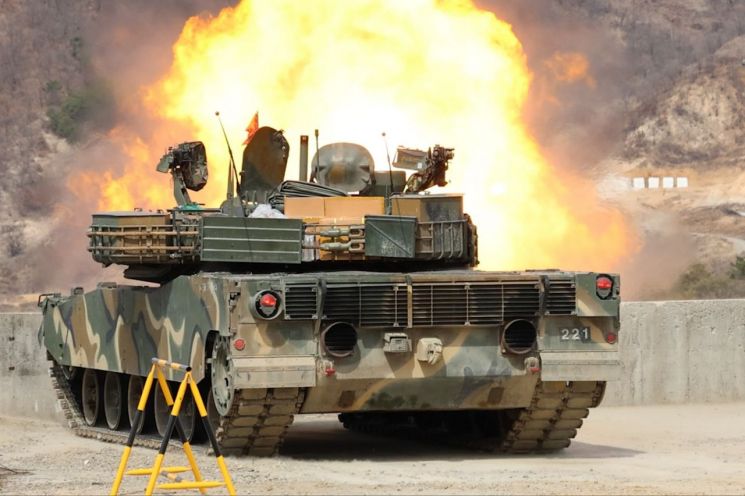
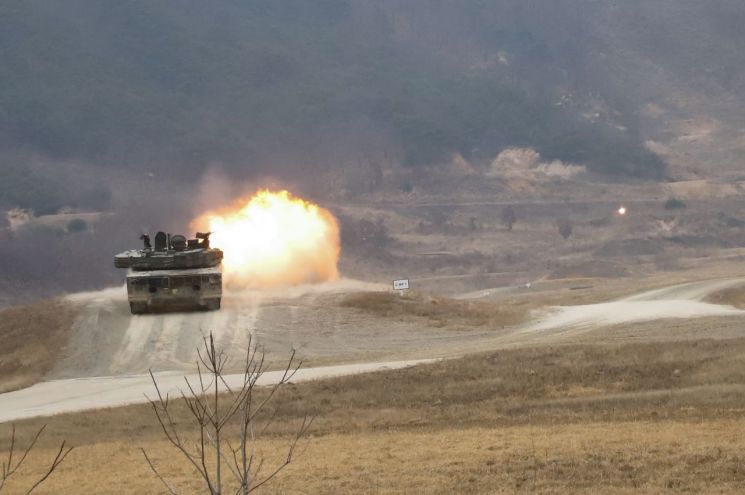
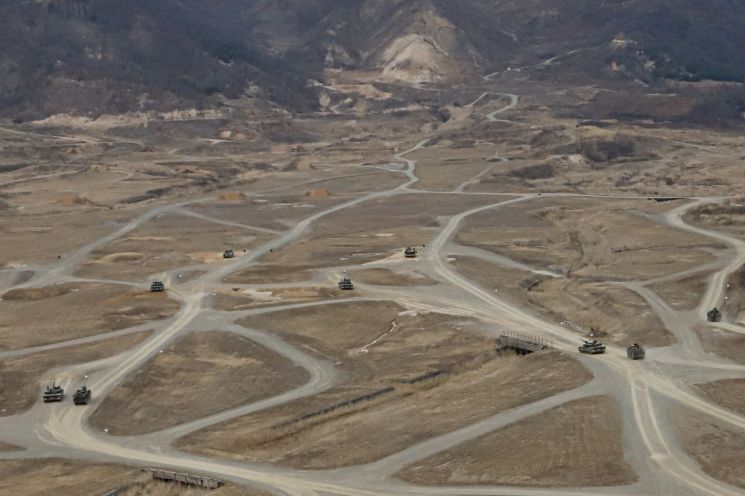
On that day, the ROK-US forces publicly demonstrated the combined arms live-fire exercise conducted by the Army Capital Mechanized Infantry Division (hereafter, Capital Mechanized Infantry Division), the US 2nd Infantry Division, and the ROK-US Combined Division at the Yeongpyeong Shooting Range from the 20th to the 23rd. This combined arms live-fire exercise was planned as part of the outdoor field training exercise (FTX) of the 'Freedom Shield' (FS) ROK-US combined exercise, which began on the 13th. It is a training designed to enhance wartime combined operational capabilities by forming a combined arms joint unit together.
The Army field training was named FS/TIGER by combining the Army’s symbol 'TIGER.' During the entire training period, about 100 pieces of equipment including K1A2 tanks, K9A1 self-propelled howitzers, and US Stryker armored vehicles, and about 800 ROK-US soldiers were mobilized. Various combined forces were deployed, including the Capital Mechanized Infantry Division’s tank, artillery, engineer, and intelligence units, the 5th Corps Chemical, Biological, Radiological, and Nuclear (CBRN) Battalion, the US 2nd Infantry Division/ROK-US Combined Division’s subordinate Stryker Brigade, and US artillery and intelligence units, to verify combined operational capabilities.
Colonel Anderson explained, "This is not a training conducted individually by specific units or branches, but a multi-dimensional combined arms exercise applying as realistic scenarios as possible."
The exercise shown to the press unfolded in the order where the US M777 towed howitzer fired preparatory attack shots at enemy positions located on the Bulmusan ridge opposite the control tower, then the Capital Mechanized Infantry Division’s K1A2 tanks devastated enemy air defense assets and key facilities below the enemy position to secure the route, followed by the Stryker armored vehicles maneuvering deep into enemy territory.
When the radio message announcing "US firing start" was received, the US M777 towed howitzer stationed beyond the mountain at the 4 o’clock direction struck the enemy position on the hillside. Smoke and dust rose as a thunderous explosion shook the area. After the US bombardment of the enemy position, five K1A2 tanks of the Capital Mechanized Infantry Division maneuvered to destroy enemy air defense assets and key facilities. Before the troops advanced, two K221 armored vehicles maneuvered on both sides to protect friendly forces by deploying smoke screens on the front line, and the Capital Mechanized Infantry Division’s obstacle-clearing tank K600 advanced with US engineers to clear the route together.
Meanwhile, a K200 armored vehicle towed the MICLIC (Mine Clearing Line Charge) mine-clearing equipment to remove mines. After clearing mines and obstacles, four Stryker armored vehicles carrying troops swiftly maneuvered and lined up at the front line.
At that moment, gunfire erupted again, and smoke rose from the enemy position on the hillside. This time, the Army’s K9A1 fired 30 rounds at the enemy position, joined by the US M777 towed howitzer, devastating the enemy position. Amid the thunderous gunfire, the Stryker armored vehicles unleashed machine gun covering fire.
Colonel Kim Seon-gyu, Lieutenant Colonel and Tank Battalion Commander of the Capital Mechanized Infantry Division, emphasized, "In this combined exercise, the ROK-US units enhanced mutual understanding of operational execution and mastered cooperation procedures. Our Maengho (Fierce Tiger) unit will firmly establish a decisive posture to fight and win against the enemy with stronger firepower and faster maneuvering."
The original training scenario included sharing target information transmitted by reconnaissance drones operated by the US forces through the command and control center for firing, but on this day, the drones could not fly due to US circumstances. Excluding the US drones, the realistic scene showed the Army’s K9A1 self-propelled howitzers, K1A2 tanks, K600 tanks, K200 vehicles with MICLIC mine-clearing equipment, and the US M777 towed howitzers and Stryker armored vehicles operating together in one space. Colonel Anderson emphasized, "We applied the most realistic scenarios possible."
This FS exercise is a theater-level combined exercise revived after five years, and the ROK-US forces conducted about 20 FTXs intensively, including this exercise by the Capital Mechanized Infantry Division, the US 2nd Infantry Division, and the ROK-US Combined Division. Since the Stryker Brigade was deployed to the Korean Peninsula in October last year, this is its first participation in FS.
Colonel Anderson said, "It has been six years since the 2nd Infantry Division and the ROK-US Combined Division conducted such a large-scale combined exercise, and it is the first time the Stryker Brigade has participated," adding, "The 2nd Infantry Division is conducting training at six locations this time." On the day of the combined arms live-fire exercise, General Paul LaCamera, Commander of US Forces Korea, visited the site to oversee the training. This indicates the significant importance the US military places on this FS. Eleven major media outlets including AFP, Reuters, NBC, CNN, Al Jazeera, and The Telegraph participated in the on-site coverage, showing keen interest.
North Korea has continued retaliatory military actions such as launching intercontinental ballistic missiles (ICBMs) and simulated nuclear warhead tests, denouncing this as a 'preemptive invasion exercise.' Even at the moment of the FS on-site coverage, breaking news of North Korea’s cruise missile launch was reported.
Colonel Anderson emphasized, "This is a regular exercise prepared over a considerable period and is essentially defensive. North Korea’s provocations only make us focus on training and stimulate us to intensify the training."
As the press departed, the ROK-US artillery fire continued in the darkened shooting range.
© The Asia Business Daily(www.asiae.co.kr). All rights reserved.



















