Jeongeup City in Jeollabuk-do announced on the 23rd that it will promote the national cancer screening and medical expense support projects for cancer patients to detect cancer, the leading cause of death in Korea, at an early stage and to reduce cancer patient mortality and medical expense burdens.
This year, the national cancer screening targets are those born in odd-numbered years.
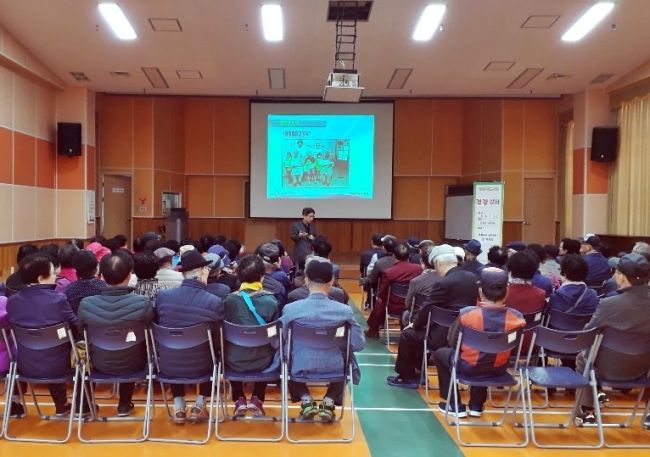 Jeongeup City is promoting cancer screening and medical expense support projects for cancer patients.
 [Photo by Jeongeup City]
Stomach cancer, liver cancer (high-risk groups among men and women), and breast cancer apply to those aged 40 and over; cervical cancer applies to women aged 20 and over; lung cancer applies to high-risk individuals aged 54 to 74 (such as smokers with a smoking history of over 30 years).
Colon cancer screening is targeted annually for those aged 50 and over, and fecal occult blood tests are conducted using fecal sample containers available at public health centers, health sub-centers, and health clinics.
Screenings can be received free of charge nationwide at any medical institution designated as a health screening institution.
Designated screening institutions can be checked on the National Health Insurance Service website.
The medical expense support project for cancer patients is divided into adults and children. Among adult cancer patients, medical aid beneficiaries and those eligible for reduced out-of-pocket expenses in the lower-income bracket can receive up to 3 million KRW annually regardless of whether the expenses are covered or not.
Although new support for general health insurance subscribers has been discontinued, those diagnosed with any of the five major cancers (stomach, liver, colon, cervical, breast) within two years after undergoing national cancer screening by June 30, 2021, and those diagnosed with lung cancer by June 30, 2021, can receive up to 2 million KRW annually if they meet the health insurance premium criteria.
Among pediatric cancer patients, medical aid beneficiaries and those eligible for reduced out-of-pocket expenses in the lower-income bracket can all receive support, and health insurance subscribers can receive up to 20 million KRW annually (30 million KRW for leukemia) if they meet the criteria through income and property investigations.
A public health center official said, “It is very important to detect and treat cancer early,” and urged, “Those eligible for this year’s national cancer screening should not delay and get screened promptly.”
Jeongeup = Kim Jaegil, Honam Reporting Headquarters, Asia Economy baekok@asiae.co.kr
© The Asia Business Daily(www.asiae.co.kr). All rights reserved.
![User Who Sold Erroneously Deposited Bitcoins to Repay Debt and Fund Entertainment... What Did the Supreme Court Decide in 2021? [Legal Issue Check]](https://cwcontent.asiae.co.kr/asiaresize/183/2026020910431234020_1770601391.png)















