Ministry of Culture, Sports and Tourism Announces 'Local Era Regional Cultural Policy Promotion Strategy'
Creation of Regional Vitality Towns, 7 Areas to be Selected This Year
Customized Lifecycle Education and Job Creation/Matching for Local Youth
The government is taking steps to foster regional culture to prevent regional extinction caused by population decline, including relocating national cultural infrastructure to local areas and creating regional vitality towns.
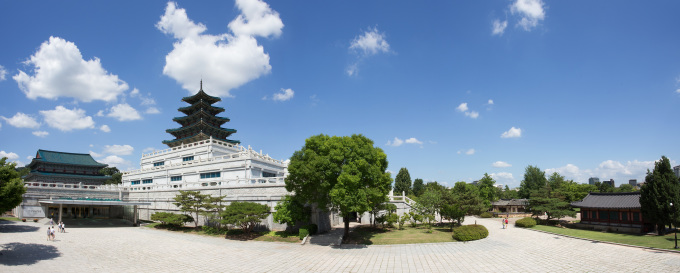
On the 23rd, the Ministry of Culture, Sports and Tourism announced the ‘Local Era Regional Culture Policy Promotion Strategy’ containing these measures.
Jeon Byeong-geuk, the first vice minister, emphasized at a pre-briefing held the previous day at the Seoul Government Complex annex, "We will create an environment where diverse cultures thrive throughout the regions and all citizens can enjoy culture anywhere."
The Ministry of Culture, Sports and Tourism presented three major strategies for regional cultural policy: ▲ Free and fair cultural enjoyment anywhere in the Republic of Korea ▲ Discovery and dissemination of unique regional cultural attractions ▲ Regional self-reliance and development through culture.
With the policy vision of ‘Culture enjoyed together, regions attractive through culture,’ the goal is to reduce the cultural gap between metropolitan areas and eup/myeon (township and town) areas, which currently exceeds 10 percentage points, to within 5 percentage points by 2027.
According to the Ministry’s recently released '2022 National Cultural Arts Activity Survey and National Leisure Activity Survey,' the cultural and arts attendance rates in metropolitan areas and eup/myeon areas were 60.7% and 50%, respectively, showing a 10.7 percentage point difference. Leisure life satisfaction also showed a 10% gap between metropolitan areas (58.6%) and eup/myeon areas (49.4%). The Ministry plans to reduce this gap to less than 5 percentage points by 2027.
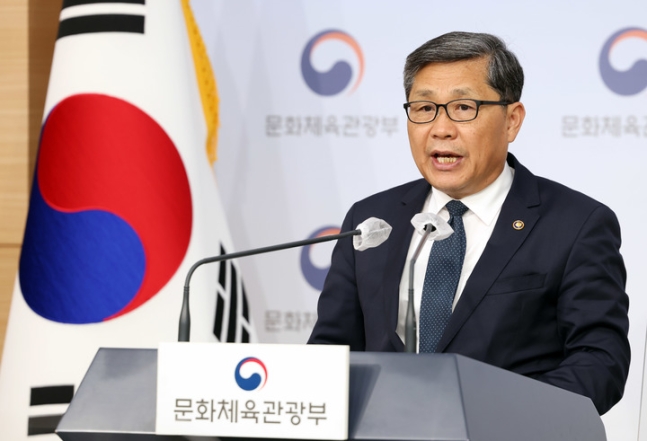 Jeon Byeong-geuk, the 1st Vice Minister of the Ministry of Culture, Sports and Tourism, is giving a preliminary briefing on the 22nd at the briefing room of the Government Seoul Office Annex before announcing the 'Local Era Regional Culture Policy Promotion Strategy.'
 [Photo by Ministry of Culture, Sports and Tourism]
Expansion of National Cultural Facilities Including Relocation of National Folk Museum and Construction of Regional Branches of National Museum of Korea
The Ministry of Culture, Sports and Tourism is promoting the relocation and establishment of major cultural facilities to local areas so that people outside the metropolitan area can enjoy cultural life comparable to that in the capital region.
The relocation of the National Folk Museum, currently located in Seoul, to Sejong will begin next year. The project, which had been delayed due to budget issues, will proceed with adjusted funding aiming for completion by 2030. Additionally, regional branches of the National Museum of Korea will be constructed in Chungju, Chungbuk, and Jinju, Gyeongnam, by 2027. A National Document Preservation Center will also be established in Pyeongchang, Gangwon.
To enable high-quality cultural and artistic experiences in local areas, the Ministry will also expand regional tours by national art groups and museums. Performances by the National Opera, Ballet, and Choir, which were held in 81 regions last year, are planned to expand by 25% to 101 regions this year.
The touring exhibitions of major collections from the National Museum of Korea will continue. The ‘Lee Kun-hee Collection Regional Touring Exhibition,’ which received great responses last year, will be held again this year.
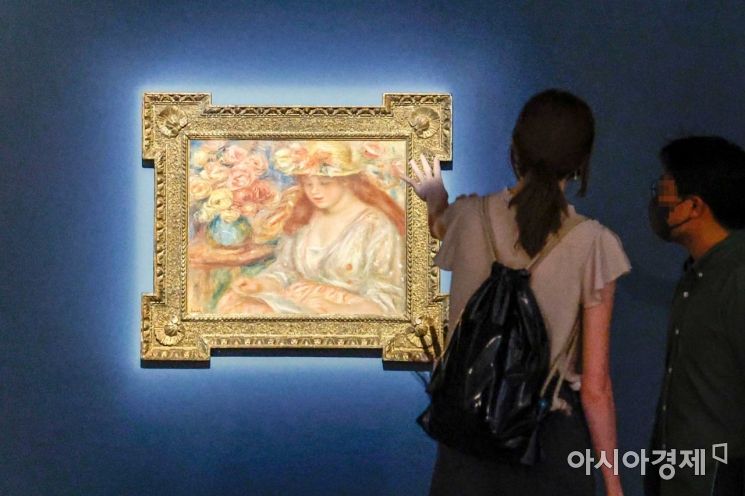 On the 21st, the "Lee Kun-hee Collection Special Exhibition: Monet and Picasso, Beautiful Moments in Paris" was opened to the public at the National Museum of Modern and Contemporary Art, Gwacheon./Gwacheon=Photo by Kang Jin-hyung aymsdream@
Creation of 10,000 '15-Minute Culture Access Zones' to Enjoy Culture in Everyday Spaces Like Bookstores and Cafes
Linked with the ‘Cultural City’ project based on unique regional culture, ‘15-minute culture access zones’ will be created where people can enjoy culture in everyday spaces such as cafes and local bookstores.
Currently, 3,407 neighborhood cultural spaces operate in 18 cities; this will be expanded to about 10,000 by 2027 to build an environment for enjoying culture in daily life. Various visual art contents will be showcased in about 60 local galleries and unused exhibition spaces.
Policies for local youth will also be promoted. To foster pride in their regions through culture and make it a driving force for regional development, tailored education and job creation/matching related to culture and arts will be systematically implemented throughout life cycles.
In addition, new programs will be introduced aiming to support cultural arts education linked with school education (‘Art Flower Seed Schools’) and to train 1,850 regional cultural planners. Based on the production of educational materials for local classes, plans are underway to develop ‘regional textbooks’ in the future.
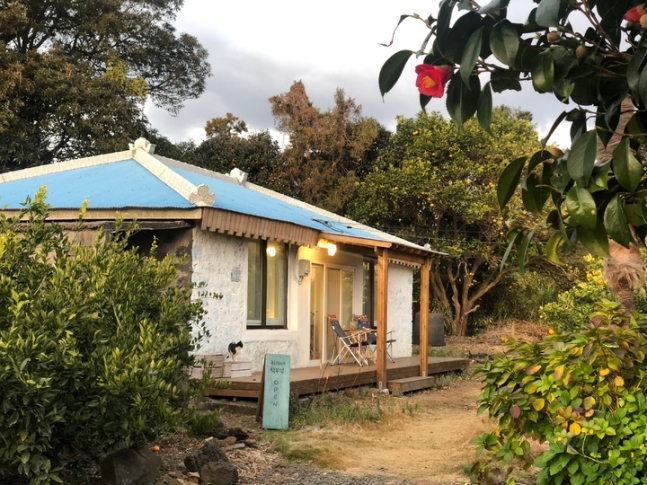 A view of Kirane Book Kitchen, used as a 'Village Lounge' in Seogwipo City, selected as a cultural city.
 [Photo by Ministry of Culture, Sports and Tourism]
‘Top 100 Regional Cultural Attractions’ Discovered Through Regional Culture Exploration, Prioritized Support for Population Declining Areas
Population-declining areas will receive preferential and focused support by awarding additional points in four tourism and culture-related public contest projects. Legal standards for operating art galleries and museums will also be relaxed in these areas as a special policy exception.
Through the ‘Regional Culture Vitality Promotion Support Project’ supporting culturally vulnerable areas, seven new regional vitality towns will be promoted this year. Selected local governments will receive support for building national sports centers and operating cultural programs to create living hubs combining housing, living infrastructure, and lifestyle services.
Projects to discover and preserve unique regional cultural attractions will also be promoted. To preserve and discover regional cultural assets, a ‘Regional Culture Integrated Information System’ will be established by 2024 to digitize and provide local historical materials and modern records. Support will be given for developing specialized content utilizing regional cultural resources, and the ‘Top 100 Regional Cultural Attractions’?both tangible and intangible cultural resources discovered through this?will be selected and actively promoted.
© The Asia Business Daily(www.asiae.co.kr). All rights reserved.



















