The yellow dust that struck China is gradually clearing. However, in some areas, air pollution remains at disaster warning levels, leading to recommendations to avoid going outside.
According to the China Central Meteorological Observatory on the 23rd, a sandstorm advisory was issued from 8 a.m. on the 23rd to 8 a.m. on the 24th in regions including southwestern Xinjiang, Inner Mongolia, northeastern Qinghai, central Gansu, northern Ningxia, and northern Shanxi. Meteorological experts explained that the sandstorm, which had continued since the evening of the 21st, would ease from the 23rd due to strong winds.
Heavy rain advisories were issued in some areas. Until 8 a.m. on the 24th, heavy rain is expected in southeastern Guizhou, southern Hunan, central and southern Jiangxi, and southern Zhejiang. Thunderstorms and strong winds may also accompany the rain.
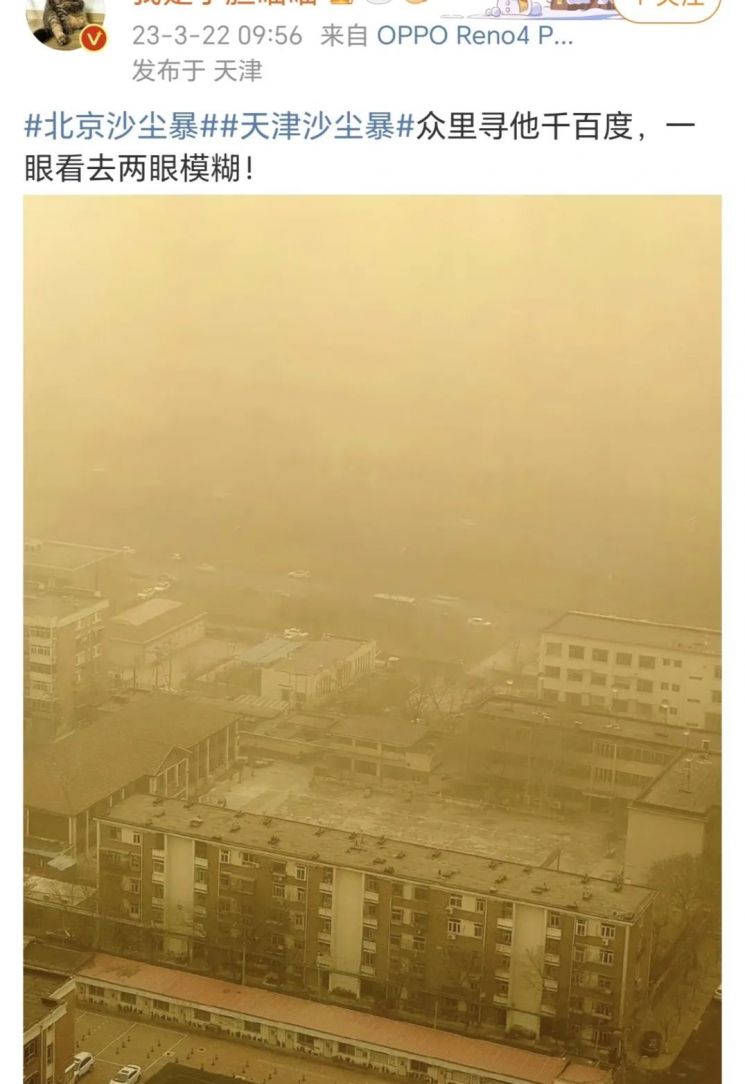
The previous day, the Air Quality Index (AQI) in some areas reached the worst level, grade 6 "Severe Pollution." China's AQI is divided into six levels: Excellent (0?50), Good (51?100), Light Pollution (101?150), Moderate Pollution (151?200), Severe Pollution (201?300), and Hazardous Pollution (301?500). Some areas, including Beijing and Tianjin, recorded the highest measurable value (500) on the 22nd. As of the morning of the 23rd, the AQI was around 120. Beijing city recommended that the elderly, children, and people with respiratory diseases refrain from going outside.
The Korea Meteorological Administration stated that yellow dust has begun to originate not only from the Gobi Desert and Inner Mongolian Plateau in China but also from the Manchurian region. The National Institute of Environmental Research predicted that fine dust concentrations would be high on the 23rd, especially along the west coast, due to the yellow dust.
© The Asia Business Daily(www.asiae.co.kr). All rights reserved.

















