Option 1: Urban-Rural Mixed Electoral District System
Option 2: Open List Large Electoral District System
Option 3: Single-Member District + Regional Proportional Representation
The National Assembly's Special Committee on Political Reform adopted an amendment to the election law on the 22nd as a "Resolution on the Improvement of the National Assembly Election System," which includes a mixed urban-rural electoral district system, an open-list large electoral district system, a single-member district system, and a regional proportional representation system. All three proposals maintain the current total number of National Assembly members at 300.
On the same day, the Special Committee on Political Reform held a plenary session at the National Assembly and passed the resolution related to the election law amendment. Initially, the Political Relations Law Improvement Subcommittee of the Special Committee accepted the National Assembly Speaker's advisory committee's proposals, suggesting ▲Plan 1: single-member district + regional parallel proportional representation ▲Plan 2: single-member district + regional semi-proportional representation ▲Plan 3: large electoral district system (mixed urban-rural electoral district system) + regional parallel proportional representation. However, Plans 1 and 2 included increasing the National Assembly seats by 50, which became controversial as this was accepted as an agreement between ruling and opposition parties to increase the number of lawmakers.
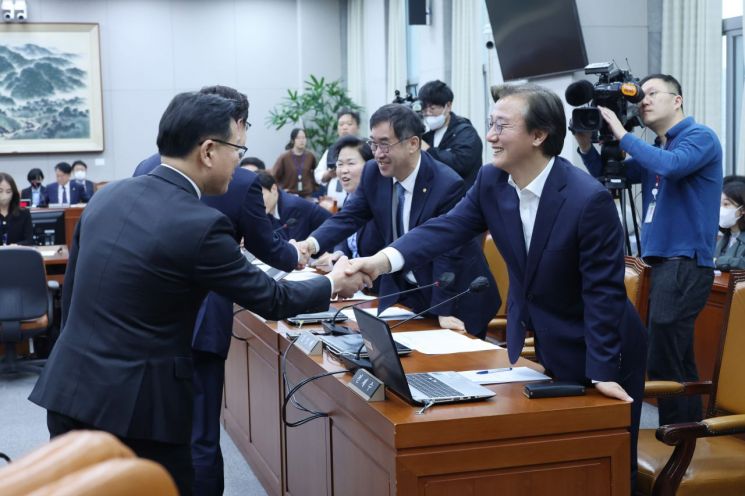
In this regard, the Special Committee on Political Reform prepared a revised proposal through consultations among the floor leaders. All revised proposals included maintaining the number of National Assembly seats at 300. Accordingly, Plan 3, which was originally the only proposal maintaining the 300-seat total?large electoral district system (mixed urban-rural electoral district system) + regional parallel proportional representation?was adopted as Plan 1 in the final resolution.
Plan 2 is a newly added proposal that includes an open-list large electoral district system with nationwide parallel proportional representation. This plan sets electoral districts with 4 to 7 members, allowing voters to mark both parties and candidates. The allocation of constituency seats is calculated by multiplying each party's vote share by the number of seats in the respective electoral district. Winners are determined based on the candidates' vote rankings within the seats allocated to their party. Proportional seats are elected through a nationwide election using a semi-proportional representation method.
Plan 3 is similar to the proposal discussed as Plan 2 in the subcommittee, consisting of a single-member district + regional semi-proportional representation system, but the number of members was adjusted to 300.
With the resolution passing the Special Committee on Political Reform, it will proceed to the plenary session on the 23rd, and from the 27th, the full committee will convene to begin substantive discussions on the election law.
© The Asia Business Daily(www.asiae.co.kr). All rights reserved.

















