
In the future, COVID-19 vaccines will also be administered once a year like influenza (flu) shots, but it is uncertain whether this will lead to active participation from the public. Since the first COVID vaccine rollout in South Korea in February 2021, 8 out of 10 people participated in the first and second doses, showing high enthusiasm; however, subsequent vaccination rates have been very low compared to flu vaccination rates. Experts say, “Unlike flu vaccines, many people are concerned about potential side effects from the COVID vaccine,” and add, “To establish annual vaccination successfully, enhancing trust is also necessary.”
The quarantine authorities established the ‘2023 COVID-19 Vaccination Basic Direction’ on the 22nd, aiming to provide free COVID vaccine shots to all citizens between October and November. Since last October, bivalent vaccines from Moderna and Pfizer have been used for the winter vaccination campaign, but the types of vaccines to be used this time will be decided considering development trends, circulating variants, and effectiveness.
The reason for promoting annual COVID vaccination is that about 70% of the population already has COVID antibodies. In particular, so-called 'hybrid immunity' (combined immunity) obtained through vaccination and infection has been shown to maintain antibodies that prevent severe illness and death for more than 10 months. The authorities explained, “As of last month, the average duration between two infection episodes was 10 months (309 days), which is 5 months longer than the 5 months (161 days) observed in July last year.” According to the World Health Organization (WHO), even after 12 months from the first or second vaccination or infection, the effectiveness in preventing hospitalization and severe illness is 97.4%, and reinfection prevention effectiveness is 41.8%. With COVID immunity lasting long-term, countries like the United States and Japan are also planning annual vaccinations.
“Enhancing Trust in COVID Vaccines is Key”
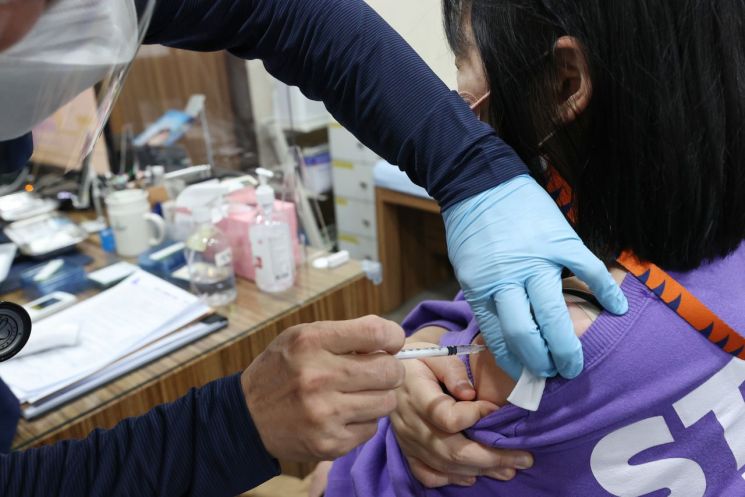
The key issue is whether people will participate in annual COVID vaccination as they do with flu shots. The flu vaccination rate as of the 16th is high, with 82% for those aged 65 and older and 72% (first dose) for children aged 6 months to 13 years. In contrast, the COVID winter vaccination rate as of the 21st is only 14%, and 33% for those aged 60 and above. Despite COVID-19 causing far more infections and deaths than the flu, vaccination rates show the opposite trend. As a result, 80% of the COVID vaccines introduced last year (35 million doses out of 42 million) will have to be discarded from cold storage in logistics centers by the end of September. According to authorities, the COVID-19 vaccination budget last year was 573.3 billion KRW, and calculating the discarded doses means about 458.6 billion KRW will be wasted.
Professor Kim Yoon from Seoul National University College of Medicine’s Department of Medical Management said, “In South Korea, early in the vaccination campaign, participation rates were much higher than abroad due to government encouragement, but compensation for adverse events was not adequately provided,” and added, “Only commonly occurring adverse events recognized by WHO were compensated, while rare cases were not.” Professor Kim also stated, “Even if causality is unclear, if there is a possibility that an adverse event is related to the vaccine, compensation should be provided to help establish annual vaccination.”
In response, Director Ji Young-mi of the Korea Disease Control and Prevention Agency said, “To compensate for adverse events, we are expanding the list of recognized causality diseases through the COVID-19 Vaccine Safety Research Center, and this year’s budget has been secured at more than twice last year’s to provide maximum compensation support,” adding, “We will work with the National Assembly to improve related systems.”
© The Asia Business Daily(www.asiae.co.kr). All rights reserved.
![Clutching a Stolen Dior Bag, Saying "I Hate Being Poor but Real"... The Grotesque Con of a "Human Knockoff" [Slate]](https://cwcontent.asiae.co.kr/asiaresize/183/2026021902243444107_1771435474.jpg)

















