When reconstructing apartments in Seoul, increasing safety and care facilities or applying open designs that harmonize with the surrounding landscape can now earn up to a 20 percentage point floor area ratio (FAR) incentive. With the relaxation of FAR regulations, buildings can be constructed taller, increasing the number of housing units.
On the 22nd, the Seoul Metropolitan Government announced that it will revise the "Incentive Standards for Allowable FAR in Multi-family Housing" applied to apartment construction such as reconstruction and redevelopment to reflect these changes.
For 15 years since 2008, the standards could only include six items: green buildings, energy efficiency ratings, renewable energy supply rates, excellent design, long-life housing, intelligent buildings, and historical and cultural preservation, with no additions allowed.
The city judged that to respond more swiftly to various policy and social changes and to consider the characteristics of each region, the existing uniform and rigid incentive standards must be changed, leading to this improvement plan.
The revised standards provide up to a 20 percentage point FAR incentive if the following requirements are met: ▲ improved safety performance ▲ secured care facilities ▲ creation of emotionally appealing design complexes ▲ improvement of the surrounding environment.
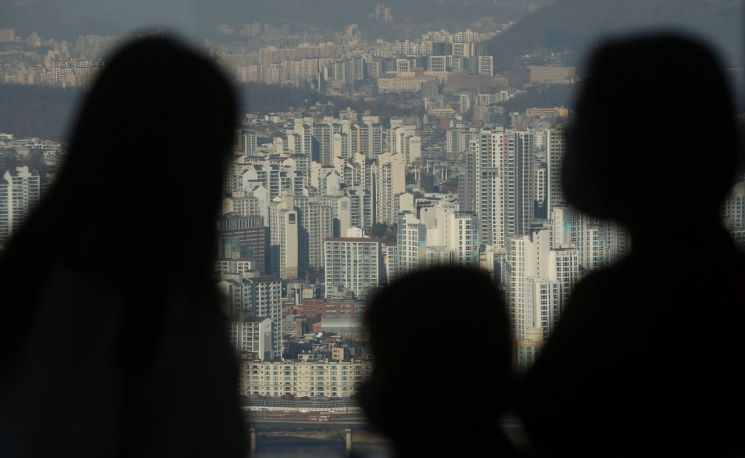
By category, if the performance of disaster safety facilities such as fire, firefighting, and evacuation is improved beyond the standards set by relevant laws, a 5 percentage point incentive is granted.
Additionally, installing child care and play facilities such as public daycare centers, neighborhood care centers, and indoor playgrounds applies a 5 percentage point FAR incentive. The portion of care and play facilities exceeding the legally mandated area is excluded from FAR calculation to prevent a reduction in residential FAR.
Furthermore, a new emotional design incentive category has been established to encourage apartment complexes to serve as emotional spaces that communicate and share with the surrounding area.
If plans are made for open complexes featuring specialized low-rise designs, open perimeters, no fences, or street-type commercial areas (shops arranged along roads), or if publicly accessible spaces such as parks or plazas are installed in locations with good accessibility for local residents, up to a 5 percentage point FAR incentive is provided.
Regarding public pedestrian pathways created within the complex, FAR incentives of up to 10 percentage points are granted depending on the installation area.
A new "region-customized incentive" has also been created to improve the surrounding environment and promote coexistence with local residents.
If local environments directly related to the project site, such as school routes or parks, are improved, a FAR incentive of up to 5 percentage points is applied.
The revised standards will be applied immediately from June 23 for the establishment of project plans for apartment construction such as reconstruction and redevelopment.
A Seoul city official stated, "This is a flexible improvement of rigid incentive conditions to align with social changes," adding, "We expect it to increase the supply of good housing that enhances citizens' quality of life."
© The Asia Business Daily(www.asiae.co.kr). All rights reserved.
!["The Woman Who Threw Herself into the Water Clutching a Stolen Dior Bag"...A Grotesque Success Story That Shakes the Korean Psyche [Slate]](https://cwcontent.asiae.co.kr/asiaresize/183/2026021902243444107_1771435474.jpg)
















