Hwang Jun-guk, UN Ambassador: "North Korea's Nuclear Threat Endangers Neighboring Countries' Daily Lives"
North Korea Issues Continuous Critical Statements... "Stop Slander"
Foreign Ministry: "Admitting Weakness... Strengthening ROK-US-Japan Cooperation"
It has been belatedly confirmed that our government was the first to mention concerns about the leakage of radioactive materials from the 'Punggye-ri nuclear test site' in the international community. While private-sector issues have been raised so far, this is the first time that concerns have been expressed at the government level. With the argument that North Korea's nuclear development should be approached not only as a security issue but also as a human rights issue, attention is focused on whether this can lead to coordinated pressure on North Korea.
According to diplomatic authorities on the 22nd, Ambassador Hwang Jun-guk, the permanent representative to the United Nations, pointed out the possibility of radioactive material leakage from North Korea's nuclear test site at an informal meeting held on the 17th (local time) at the UN Trusteeship Council chamber at the UN headquarters in New York, USA. This is the first time that a representative of the South Korean government has raised concerns about radiation exposure caused by North Korea's nuclear weapons in the international community or that this issue has been mentioned at a UN-level meeting.
Concerns about Radiation Exposure at Punggye-ri Nuclear Test Site... First Mention at the UN
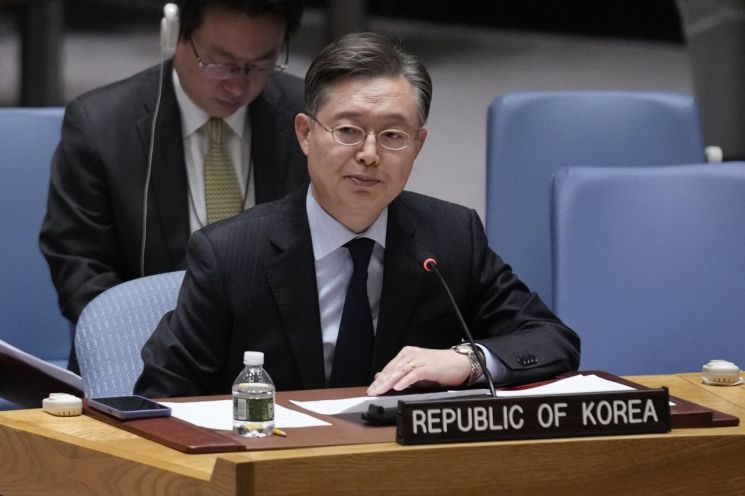 Hwang Jun-guk, South Korean Ambassador to the United Nations, speaking at the UN Security Council meeting
 [Photo by Yonhap News]
According to the statement obtained by this paper, Ambassador Hwang said, "Recently, some experts have raised the possibility of radioactive material leakage near the Punggye-ri nuclear test site and have also warned about the safety of the Yongbyon nuclear facility," and emphasized, "this starkly reminds us that North Korea's nuclear program threatens not only North Korea but also the daily lives of people in neighboring countries."
Recently, some experts have raised the possibility of the leakage of radioactive materials near the Punggye-ri nuclear test site and warned about the safety of the Yongbyon nuclear complex. This is a stark reminder that the DPRK's nuclear program also threatens the everyday lives of the people in the DPRK and neighbouring countries.
He added, "North Korea's reckless pursuit of nuclear weapons and totalitarian control over its own people are two sides of the same coin, and the North Korean authorities are making such extreme decisions to maintain their regime," emphasizing again that "if efforts to resolve North Korea's human rights situation are not expanded, the resolution of the nuclear issue cannot be expected either."
The United Nations Security Council (UNSC) has held official meetings regularly since 2014 to discuss the human rights situation in North Korea, but since 2018, meetings have not been held due to opposition from China and Russia. Instead, discussions have continued through informal consultations called the 'Arria-Formula,' and our government participated in this meeting as a 'co-sponsor.'
North Korea Strongly Condemns Human Rights Organizations Raising Radiation Exposure Concerns
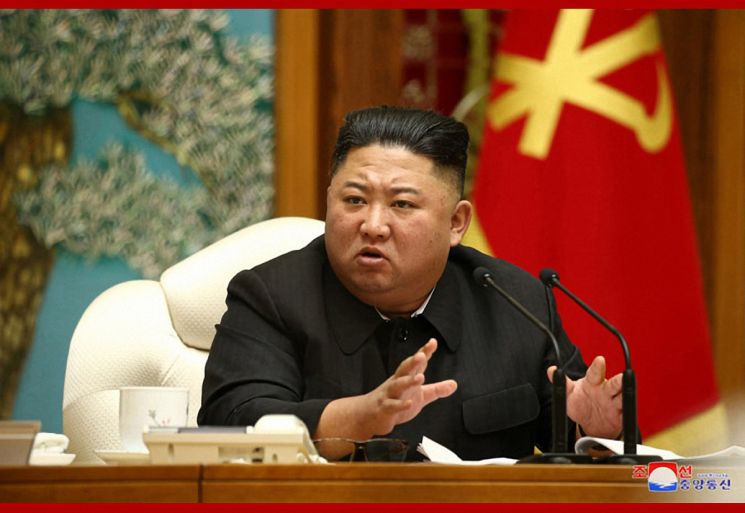
North Korea responded with a series of statements and remarks immediately after the meeting. The North Korean Mission to the UN issued a statement on the 19th threatening, "The Democratic People's Republic of Korea's determination to severely punish the illegal and unscrupulous 'human rights' slander campaign with the strongest means is thorough and clear." Condemnatory remarks were also issued consecutively under the names of Kim Sun-kyung, Deputy Director of the Ministry of Foreign Affairs in charge of international organizations, and Jo Cheol-su, Director of the Ministry of Foreign Affairs' International Organizations Bureau.
While North Korea's official position focused on opposing the 'human rights discussion' itself, its propaganda media explicitly criticized the South Korean human rights organization Transition Justice Working Group (TJWG), which had raised concerns about radioactive material leakage from the nuclear test site. Although they avoided mentioning radiation exposure concerns, likely because internal residents might access the information, directly naming a North Korean human rights organization is quite unusual.
On the 19th, the North Korean propaganda media Tongil-ui Mea-ri (Echo of Unification) stated in a commentary, "By inciting human scum groups including the anti-Republic human rights slander organization 'Transition Justice Working Group,' they launched a public opinion war with all kinds of slanders and fabrications against us," and argued, "It is clear that the purpose of such reckless acts is to justify confrontation among compatriots by using human filth and (omitted) to revive the international anti-DPRK pressure cooperation atmosphere."
Earlier, the Transition Justice Working Group published a special report on the 21st of last month containing the results of a four-year investigation, warning that radioactive materials from the Punggye-ri nuclear test site could spread to hundreds of thousands of residents through groundwater.
Ministry of Foreign Affairs: "North Korea's Backlash Admits Weakness... Strengthening Joint Response"
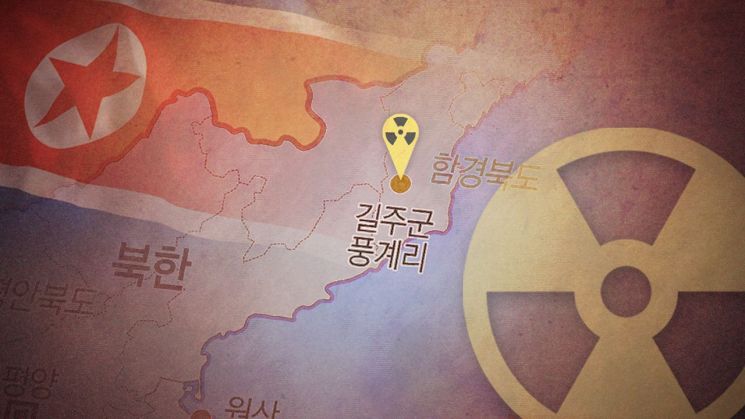 North Korea's nuclear test site located in Punggye-ri, Kilju County, Hamgyongbuk-do [Image source=Yonhap News]
The issue of North Korean human rights has recently been actively discussed at the UN level. Following the UNSC informal meeting, a dialogue with the UN Human Rights Council Special Rapporteur was held on the 20th (local time) at the UN headquarters in Geneva, Switzerland. A Ministry of Foreign Affairs official assessed North Korea's backlash against human rights discussions as "perhaps evidence of how much they themselves consider this issue a weakness."
Regarding the fact that North Korean human rights issues were discussed at the UNSC meeting, which deals with security issues, the official explained, "It means that North Korean human rights issues are not only universal values but also elements that threaten international security." He added, "The three countries, South Korea, the United States, and Japan, share the recognition that activating discussions on North Korean human rights in the international community is a common task," and announced plans to strengthen joint responses on human rights issues.
The two main ministries involved in the 'North Korean human rights' issue are the Ministry of Foreign Affairs and the Ministry of Unification. However, while the diplomatic authorities have taken steps to pressure North Korea through the international community, the Ministry of Unification has not achieved significant results. Three days after the Transition Justice Working Group's report was published on the 21st of last month, the Ministry of Unification announced a plan to conduct a full survey of radiation exposure among defectors on the 24th, but as of about a month later, no concrete plan has been established.
Lee Young-hwan, head of the Transition Justice Working Group, said, "I had hoped that it would be confirmed that nuclear testing is a human rights issue that threatens the right to life, and it is encouraging that the Ministry of Foreign Affairs emphasized the seriousness of this issue at the UN," but added, "On the other hand, the Ministry of Unification remains passive. If they have the will not to repeat inadequate investigations, they should disclose their plans for testing and how they will study and utilize the results, and accept advice from external experts from the initial stage."
© The Asia Business Daily(www.asiae.co.kr). All rights reserved.
![Clutching a Stolen Dior Bag, Saying "I Hate Being Poor but Real"... The Grotesque Con of a "Human Knockoff" [Slate]](https://cwcontent.asiae.co.kr/asiaresize/183/2026021902243444107_1771435474.jpg)













