Four Local Governments in the Seomjin River Area Proclaim the 'First Year of the Seomjin River Tourism Era'
Sponsorship and New Initiatives like 'River Market@Seomjin River' Stand Out
The 22nd Gwangyang Maehwa Festival, held for the first time in four years amid the expectations and support of the entire nation, concluded with a grand finale, attracting the largest number of spring visitors in its history.
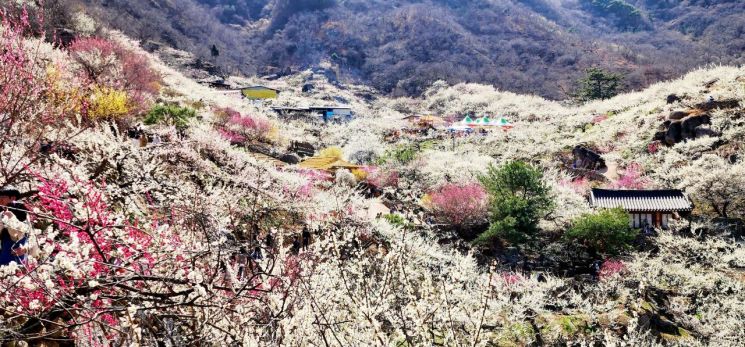
The city announced that the 22nd Gwangyang Maehwa Festival, held over ten days from the 10th to the 19th, drew a cumulative total of approximately 1.22 million visitors, marking a splendid finale for Korea’s first spring flower festival.
Starting with the opening ceremony on the 10th, the 22nd Gwangyang Maehwa Festival embarked on a ten-day journey, expanding the festival’s significance with the proclamation of the ‘First Year of the Seomjingang Tourism Era’ by four local governments in the Seomjingang region: Gwangyang, Gurye, Hadong, and Gokseong.
The opening and proclamation ceremonies were attended by about 200 guests, including Kim Young-rok, Governor of Jeollanam-do, Seo Dong-yong, Member of the National Assembly, Jeong In-hwa, Mayor of Gwangyang, the heads of the four local governments in the Seomjingang region, and city and county council chairs, creating a lively atmosphere.
This year’s festival, themed ‘Reunion after 4 Years,’ actively reflected tourism trends in the endemic era with the slogan ‘Gwangyang is Spring, Meeting Maehwa Again,’ featuring small-scale, open, and clean concepts.
The festival transitioned into a revenue-generating event by operating paid experience zones and paid parking lots, and for the first time introduced sponsorship, an advanced festival management method from developed countries, to enhance the festival atmosphere and attempt multifaceted changes.
The ‘Golden Maehwa GET’ event, utilizing sponsorship, was a major event that invigorated the local economy by awarding prizes such as golden maehwa worth approximately 5 million KRW to visitors who presented receipts of 30,000 KRW or more spent within the area.
Additionally, numerous programs reflecting idea contests and expert consultations, such as AR life shots and a Maehwa flower path BGM repository, were introduced to enhance the quality of the festival.
The ‘River Market@Seomjingang,’ held on the Seomjingang riverbank, was the first European-style flea market outside the metropolitan area, showcasing products infused with the passion and sensibility of local youth and sellers.
The River Market, located between the riverbank parking lot and the shuttle bus boarding area, encouraged the use of the somewhat distant riverbank parking lot while making the path to the festival venue more enjoyable, receiving positive evaluations.
ESG programs, shuttle bus operations, and tourism accessibility measures such as wheelchair and stroller rentals for vulnerable tourists provided an inclusive tourism environment that impressed visitors.
In particular, the introduction of ESG programs like ‘Walking and Picking Up Trash in the Maehwa Festival’ and eco-friendly camps aimed to raise awareness of the importance of nature and pursue a meaningful festival that practices social responsibility.
The city also made various efforts to provide convenience, such as operating a 40-seat round-trip temporary bus daily between Gwangju, Gwangyang-eup, and Gwangyang Maehwa Village throughout the festival period.
Nighttime landscape lighting was installed throughout the festival area, and various linked programs such as KBS National Singing Contest and Namdo Accommodation Discount Big Events were planned to expand the festival atmosphere throughout the city.
On the first weekend of the festival, the 11th, a record crowd of about 170,000 people visited in a single day, prompting the city to take measures such as increasing free shuttle buses to ensure a safe festival environment.
Moreover, due to the explosive response to the weekend Gwangyang City Tour, which allows visitors to enjoy the Gwangyang Maehwa Festival, the number of tour buses was increased, and the policy was changed to operate tours on weekdays as well when there are reservations for 10 or more people.
The city mobilized all administrative power until the end of the festival to ensure a pleasant and comfortable festival environment, prioritizing visitor safety by installing additional restrooms, cracking down on illegal street vendors and night markets, and eradicating overcharging.
Especially, before the festival began, real-time traffic information for key sections such as Suwoljeong and Sinwon Intersection was provided through the city hall website, receiving positive feedback from citizens and tourists.
Performances by the city’s art troupe on the main stage in front of the Maehwa Culture Center and various genres of youth busking held at Ttukebi Park in front of Suwoljeong captivated spring visitors and added to the excitement.
At 2 p.m. on the closing day of the festival, the 19th, a high-quality performance by the Gwangyang City Choir, featuring songs such as ‘When Maehwa Flowers Scatter on the Seomjingang’ and ‘People Are More Beautiful Than Flowers,’ marked the grand finale of the 22nd Gwangyang Maehwa Festival.
Jeong In-hwa, Mayor of Gwangyang, said, “It is difficult to time a flower-themed festival to coincide with the blooming period, but the 22nd Gwangyang Maehwa Festival, held after four years, was able to show the peak of the flowers during the festival period, which was a relief. We made every effort to welcome tourists with an upgraded festival reflecting endemic era trends and differentiated programs.”
Asia Economy Honam Reporting Headquarters, Reporter Heo Seon-sik hss79@asiae.co.kr
© The Asia Business Daily(www.asiae.co.kr). All rights reserved.

















