Lifting Import Restrictions and Contaminated Water Discharge Raise 'Food Safety' Concerns
Presidential Office Reaffirms Principles of 'Safety and Public Sentiment'
Public anxiety is growing over the lifting of import restrictions on agricultural and marine products from Fukushima and the discharge of contaminated water from the nuclear power plant. This follows reports from Japanese local media that related discussions were brought up at the recent South Korea-Japan summit. The government has stated its principle of deciding based on safety inspections and public sentiment, but some worry that the inspection results cannot be trusted and that consumer distrust will lead to a shrinking market size.
According to a Sankei Shimbun report on the 20th, Japanese Prime Minister Fumio Kishida requested President Yoon Suk-yeol at the South Korea-Japan summit to lift import restrictions on seafood from Fukushima.
Since the Great East Japan Earthquake in 2011, which caused the Fukushima nuclear accident, South Korea has completely banned imports of all fishery products from Fukushima and eight surrounding prefectures. Regarding agricultural products, imports of 27 items from 14 prefectures, including rice and mushrooms from Fukushima Prefecture, are also prohibited.
While Japan emphasizes the safety of agricultural and marine products from Fukushima, public anxiety in South Korea remains high. Especially if Fukushima products are labeled based on nearby processing locations, South Korean consumers will find it difficult to distinguish them, and lifting the current restrictions would mean losing even the minimal protective barrier.
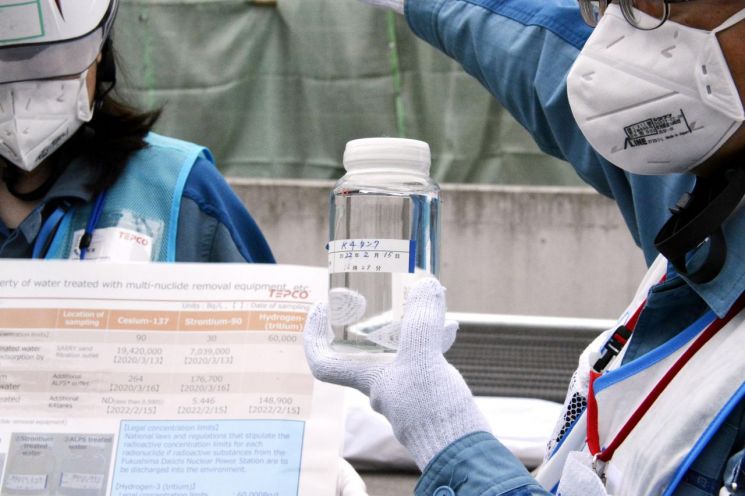
Fukushima agricultural and marine products are not being imported immediately. A presidential office official explained to reporters at the Yongsan Presidential Office briefing room on the 20th that "it cannot be disclosed whether the two leaders specifically discussed this," but added, "it was brought up during visits by other Japanese political figures to President Yoon Suk-yeol."
The official reaffirmed the government's principle on the issue of opening imports of Fukushima agricultural and marine products, stating, "Our government's position is clear. We will never accept anything that threatens the safety and health of our people." He also mentioned that including Korean experts in safety investigations would help in accepting the results.
Sankei also reported that there was "no progress" regarding the import of Fukushima seafood.
However, Japan has already announced plans to discharge contaminated water into the ocean. Even if Fukushima agricultural and marine products are not imported, there are concerns that the discharge of nuclear plant contaminated water will threaten the safety of South Korean food through ocean currents. On the 17th, Japan's cross-party group, the Japan-Korea Parliamentary League, reportedly sought understanding from President Yoon regarding the discharge of Fukushima contaminated water, according to Japanese NHK.
Japan maintains that the contaminated water is diluted below discharge standards and poses no problem. Most radioactive nuclides contained in the contaminated water are treated within discharge standards through the Advanced Liquid Processing System (ALPS), and tritium, which cannot be filtered out, will be diluted with seawater to lower its concentration before discharge.
Regarding this, Professor Yoo Cheon of Mokpo National University’s Department of Trade pointed out that it is difficult to trust Tokyo Electric Power Company (TEPCO) because it has not disclosed the contaminated water treatment process and information. On the 20th, on KBS's 'Starting the West Coast Era,' Professor Yoo said, "Japan's claim that Fukushima contaminated water will have no impact on human health is based on the assumption that the nuclear removal facility, that is, this filter, works perfectly," adding, "The reliability of the data Japan has announced or provided so far is low."
He also highlighted issues that TEPCO remains silent about beyond tritium. Professor Yoo explained, "They tested a total of 64 nuclides but only inspected 9, and they have not disclosed information about the concentration of waste at the bottom of the tanks, so we cannot trust the Japanese government's announcement that it is scientifically safe." This means that no investigation has been conducted on the high-level sludge (residue), i.e., fine particles, remaining at the bottom of the tanks after the contaminated water treatment process.
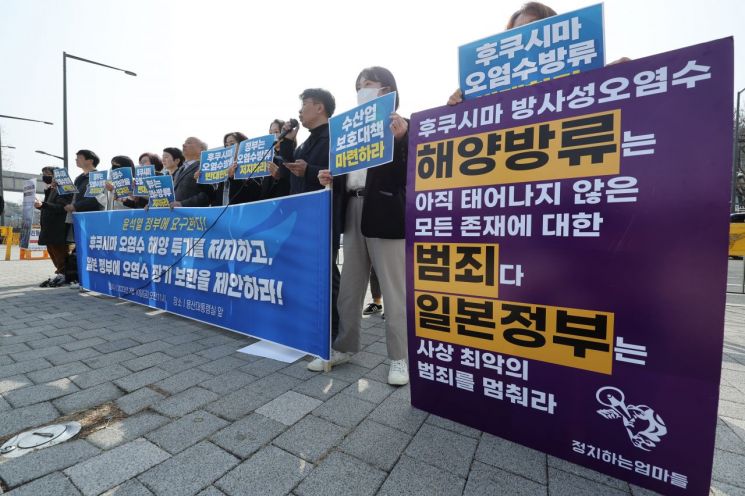
As consumer distrust and aversion toward seafood grow, there are concerns that the seafood market size will shrink. If import restrictions on seafood are lifted or the discharge of nuclear plant contaminated water begins, the Fukushima nuclear accident of 2011 will be reemphasized, increasing public anxiety and weakening seafood consumption sentiment. This issue is directly related to the livelihoods of those working in the fisheries industry and fishing villages.
In addition, food processing industries using seafood and local tourism industries may also suffer damage.
Professor Yoo emphasized the need for a diplomatic solution. He suggested, "With Japan planning to discharge in June, legal measures are already too late, and it seems necessary to resolve this diplomatically. Multi-faceted economic pressure appears necessary. If China, Japan's top export destination, along with South Korea (3rd), Hong Kong (4th), and Thailand (5th), simultaneously apply pressure, it might be difficult for Japan to proceed with the contaminated water discharge."
© The Asia Business Daily(www.asiae.co.kr). All rights reserved.
![User Who Sold Erroneously Deposited Bitcoins to Repay Debt and Fund Entertainment... What Did the Supreme Court Decide in 2021? [Legal Issue Check]](https://cwcontent.asiae.co.kr/asiaresize/183/2026020910431234020_1770601391.png)