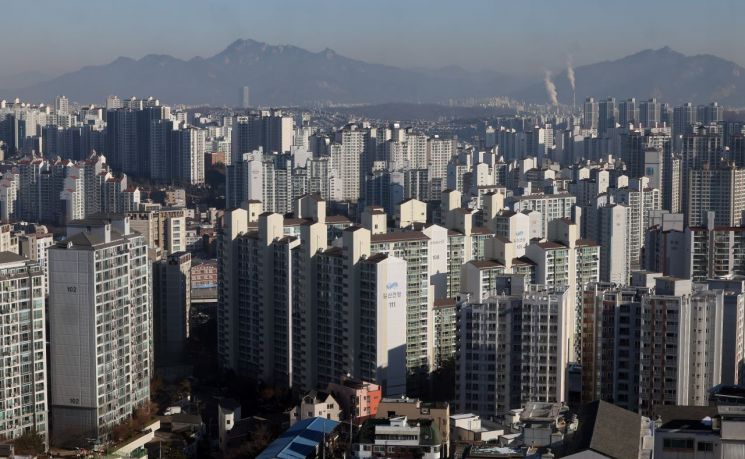
The street housing maintenance projects and small-scale reconstruction projects, known as ‘mini reconstruction’ in Seoul, are gaining momentum. This is attributed to the relatively lower cost burden compared to reconstruction and the consecutive easing of regulations on street housing maintenance projects, which has increased demand. However, there are also forecasts that the growth of mini reconstruction will slow down as the government recently eased reconstruction regulations for large complexes.
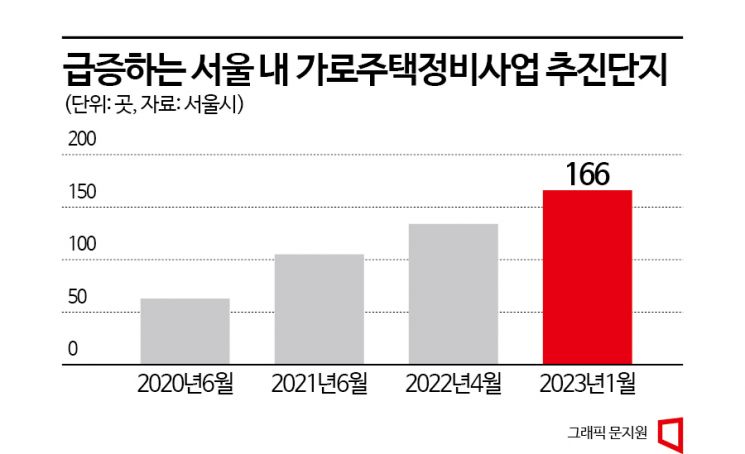
According to Seoul City on the 21st, as of January this year, there were 166 locations in the city pursuing street housing maintenance projects. This is an increase of 32 locations (23.8%) in seven months compared to April last year (134 locations), and a sharp rise compared to 63 locations as of June 2020 and 105 locations as of June 2021.
Street housing maintenance projects involve renovating old houses in small-scale district units to improve the residential environment. The process is simplified compared to general reconstruction, as procedures such as safety inspections, designation of maintenance districts, and formation of promotion committees are omitted, resulting in a shorter project duration. Small-scale reconstruction typically takes about 3 to 4 years, roughly half the length of general reconstruction projects, which usually exceed 8 to 10 years.
By region, Seongbuk-gu had the most with 22 locations, followed by Jungnang-gu (16 locations) and Yangcheon-gu (15 locations). The Gangnam 4 districts (Gangnam, Seocho, Songpa, and Gangdong-gu), where supply is insufficient, also pursued a total of 44 street housing maintenance projects, accounting for 26.5% of the total.
The activation of street housing maintenance projects appears to be a result of expanded incentives. Last year, the Ministry of Land, Infrastructure and Transport revised the ‘Small-scale Housing Maintenance Act Enforcement Decree,’ setting the criteria for allowing the transfer of association member status for one household, one house owners to 5 years of ownership and 3 years of residence. Following the expansion of the allowable area for street housing maintenance projects from 10,000㎡ to 20,000㎡ in July 2021, additional regulations were eased.
Additionally, the previous height restriction of ‘15 floors or less’ for street housing maintenance projects was removed, allowing local governments to autonomously set height limits. The founding general meeting procedure for establishing associations was also specified, allowing the appointment of representatives with the consent of the majority of landowners and confirming association bylaws and appointing association executives and delegates at the founding general meeting.
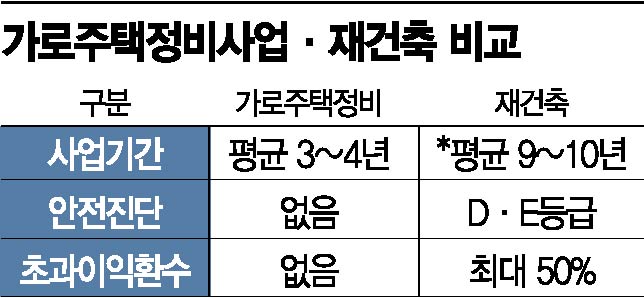
Furthermore, the sluggish easing of reconstruction project regulations last year is also considered to have had an impact. As more reconstruction complexes failed to pass safety inspections, residents burdened by project delays turned their attention to street housing maintenance projects and others. Moreover, by including public rental housing to strengthen public interest, they can avoid the price ceiling system applied to private land, and the fact that the excess profit recovery system does not apply is also considered an advantage.
However, there are also forecasts that the popularity of mini reconstruction may not be as strong as before due to the recent easing of general reconstruction regulations. Song Seung-hyun, head of Urban and Economy, said, "Street housing maintenance projects have been activated because their smaller scale and lower cost burden compared to reconstruction have been highlighted," adding, "However, with the recent easing of reconstruction regulations, it will be difficult for them to increase explosively as before."
© The Asia Business Daily(www.asiae.co.kr). All rights reserved.
![User Who Sold Erroneously Deposited Bitcoins to Repay Debt and Fund Entertainment... What Did the Supreme Court Decide in 2021? [Legal Issue Check]](https://cwcontent.asiae.co.kr/asiaresize/183/2026020910431234020_1770601391.png)


















