Since the second half of last year, ‘gap investment (purchasing a house with a jeonse deposit)’ has been increasing in Sejong City, where housing prices have sharply declined. Although the overall market shows a larger drop in jeonse prices compared to sale prices, resulting in a lower jeonse-to-sale price ratio, the rapid depletion of low-gap urgent sale properties in areas with significant price drops is believed to be the cause.
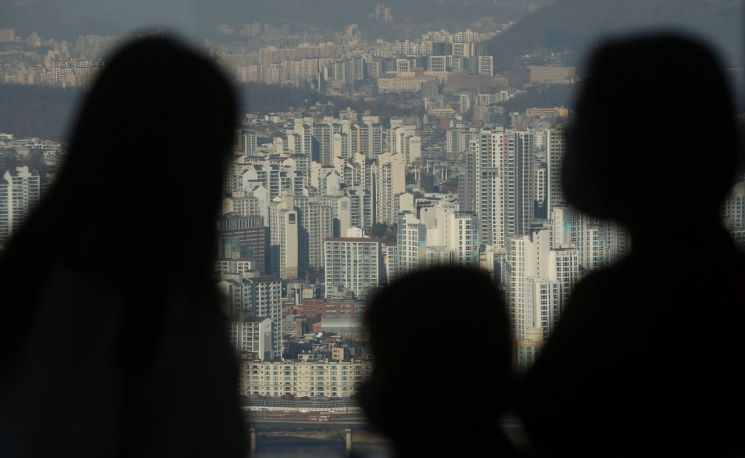
According to the real estate big data company ‘Asil’ on the 21st, 65 gap investments were made in Sejong City over the past three months based on city, county, and district units. This is the second highest number nationwide, following Hwaseong City in Gyeonggi Province, which recorded 77 cases. Asil classifies gap investment as purchasing an apartment and not residing in it directly, but signing a jeonse or monthly rent contract within three months.
The reason for the increase in gap investment in this area appears to be the larger decline in apartment sale prices in Sejong City compared to other regions. Typically, as housing prices fall, the gap (difference between sale price and jeonse price) decreases, and last year, apartment prices in Sejong City dropped sharply. According to the Korea Real Estate Board, while nationwide apartment prices fell by 7.22% last year, Sejong City’s apartment prices plunged by a staggering 16.74%, more than double the national average.
As apartment sale prices in this area plummeted, the burden of gap investment seems to have eased. For example, an 84㎡ unit in Hansol-dong, Cheotmaeul 6th Complex Hillstate, was sold for 300 million KRW on January 31, and a jeonse contract was signed last month for 180 million KRW. The buyer effectively invested 120 million KRW to purchase the apartment. This apartment recorded a peak price of 748 million KRW in October 2020. At the same time, the jeonse deposit was 290 million KRW, resulting in a gap of 458 million KRW. About two years ago, purchasing this apartment as a gap investment required over 400 million KRW, but now the financial burden has been reduced to less than half.
There are also cases of gap investment with small amounts under 100 million KRW. For instance, an 84㎡ unit in Gajae 4th Complex Sejong Centreville was sold for 413 million KRW in January this year, followed by a jeonse contract at 350 million KRW, meaning the buyer needed only 63 million KRW to purchase the property.
However, as the drop in jeonse prices compared to sale prices widens, the jeonse-to-sale price ratio is declining, and gap investment is expected to shrink for the time being. In a high-interest-rate era, lower jeonse prices increase the loan amount and interest burden required for home purchases. In particular, according to KB Kookmin Bank, as of February, the jeonse-to-sale price ratio for Seoul apartments was 51.2%, marking a decline for five consecutive months. Simply comparing figures, this is the lowest level in 11 years and 1 month since January 2012 (51.2%).
Park Hapsu, an adjunct professor at Konkuk University Graduate School of Real Estate, said, "Recently, as jeonse prices have fallen along with sale prices, the jeonse-to-sale price ratio is decreasing. Given the ongoing interest rate risks and persistent concerns about economic recession, it is necessary to observe the market more carefully and be cautious about gap investment at this time."
© The Asia Business Daily(www.asiae.co.kr). All rights reserved.

















