Non-Economically Active Youth 'Rested' at 500,000
Largest Scale Since January 2003 Statistics
Youth Employment Decreased by 125,000
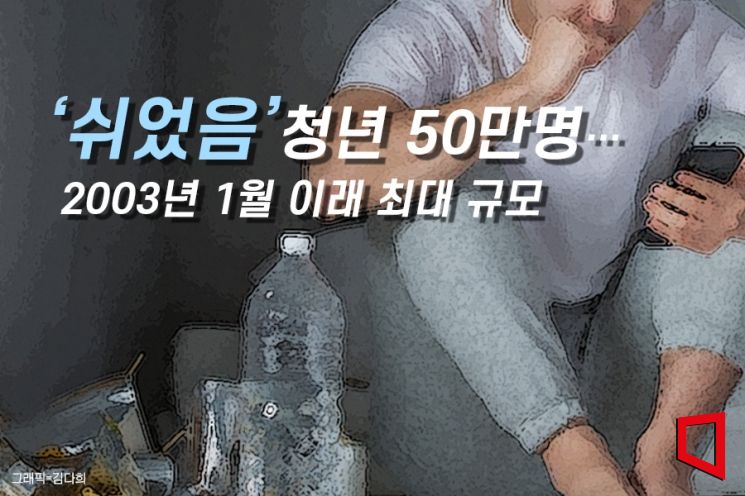
Last month, the number of young people (aged 15 to 29) who responded that their economic activity status was 'resting' reached 500,000.
According to the National Statistical Office's National Statistical Portal (KOSIS) on the 21st, among the non-economically active population (those who are neither employed nor unemployed) in February, 497,000 young people answered that their activity status was 'resting.' This is the largest figure since statistics began being compiled in January 2003.
The number of young people classified as 'resting' increased gradually from 386,000 in February 2019 to 438,000 in February 2020, 449,000 in February 2021, and 453,000 in February 2022, reaching 497,000 this February.
This represents an increase of 45,000 (9.9%) over one year.
In the Statistical Office's survey, those who actively sought jobs in the past four weeks and are immediately available for employment are classified as unemployed.
Among the population aged 15 and over, those who were neither employed nor unemployed are categorized by activity status into childcare or housework, schooling or attending courses, elderly, physical or mental disabilities, and others.
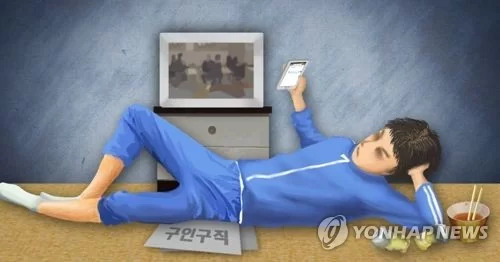
'Resting' falls under the 'others' category. This is a different concept from preparing for employment, preparing for further education, or waiting for military enlistment; it literally means 'doing nothing and resting' without job searching or employment preparation.
The Statistical Office conducts an annual survey on the main reasons for 'resting.'
According to the reasons given in August last year by those who responded 'resting,' the most common was 'not feeling well (39.4%),' followed by ▲ 'difficulty finding desired jobs or work (18.1%)' ▲ 'continuing to rest after resignation (including retirement) (17.3%)' ▲ 'lack of jobs or work (7.8%)' ▲ 'resting to prepare for the next job (7.1%).'
However, since this survey covers all age groups, it is speculated that the proportions might differ when looking only at the youth population.
Meanwhile, the number of employed young people aged 20 and under in February was 3,853,000, a decrease of 125,000 compared to one year ago. This is the largest decline in two years since February 2021 (-142,000).
The youth employment rate also fell by 0.4 percentage points to 45.5% compared to one year ago. This marks the first decline in two years since February 2021.
© The Asia Business Daily(www.asiae.co.kr). All rights reserved.


















