Food Ingredient Prices Rise 2-3 Times, Causing Public Anxiety
Government Faces Backlash After Recommending Chicken Feet Consumption
Amid severe economic hardship, the Egyptian government recommended that citizens consume chicken feet, only to face a strong backlash, the British BBC reported on the 19th (local time).
Unlike in Asian countries such as Korea, chicken feet in Egypt are primarily used not as food ingredients but rather to make pet food for dogs and cats.
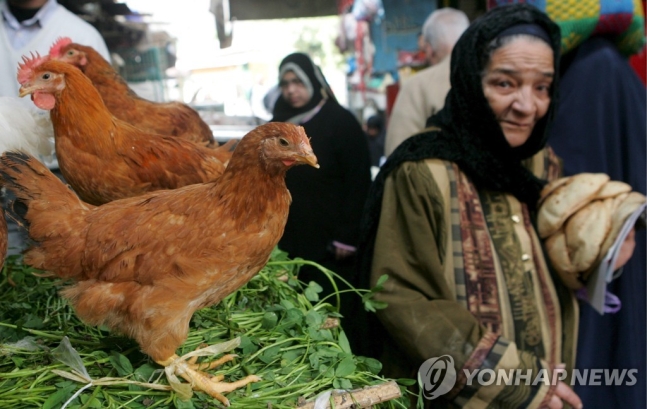 British broadcaster BBC reported on the 19th (local time) that the Egyptian government faced strong backlash after encouraging its citizens to consume chicken feet amid severe economic hardship.
 [Photo by EPA·Yonhap News]
BBC explained that promoting these chicken feet as a protein-rich part amid rising prices caused by the Ukraine war and other factors, in an already difficult situation, added fuel to the public’s anger.
In Egypt, prices of basic food items such as cooking oil and cheese have risen two to three times over the past few months. This month’s inflation rate has exceeded 30%. In particular, complaints have erupted that meat has become scarce on dining tables due to the sharp rise in meat prices.
The current situation Egypt faces is due to its high overseas dependence on food imports. Egypt is the world’s second-largest wheat importer. When war broke out between Russia and Ukraine, which accounted for about 29% of the world’s wheat exports, the supply of wheat to the international grain market sharply declined, and Egypt could not avoid the impact.
Currency Value Halved Due to Aftermath of Ukraine War
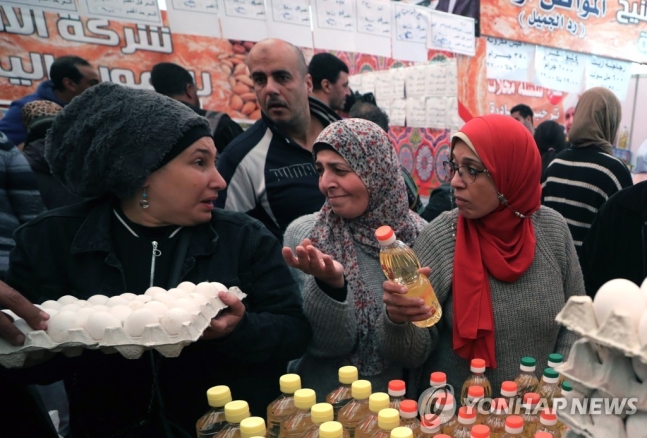 In Egypt, the prices of basic food ingredients such as cooking oil and cheese have increased two to three times over the past few months. This month's inflation rate has exceeded 30%.
 [Photo by EPA·Yonhap News]
To make matters worse, the foreign exchange crisis triggered by the Ukraine war caused the value of the Egyptian currency to halve over the past year, which is also considered to have had a significant impact on soaring prices.
The exchange rate, which was 15 Egyptian pounds per dollar as of January last year, dropped to a record low of 32.1 Egyptian pounds per dollar within a year. As of the 20th, the exchange rate is 30.3 Egyptian pounds per dollar. The tourism industry, which accounts for about 5% of Egypt’s gross domestic product (GDP), was also hit hard due to the COVID-19 pandemic and other factors.
BBC reported that Egypt requested bailout funds from the International Monetary Fund (IMF) four times over the past six years and that about half of the government’s revenue is used for debt repayment. Some critics argue that the government’s massive spending on national projects has accelerated the economic crisis.
The Egyptian government is currently pouring enormous costs into large-scale construction projects such as the new administrative capital near Cairo, the northern Alamein government office and new city, as well as high-speed rail and nuclear power plant construction. As a trade-off, investment in the private sector has sharply declined, and many foreign investors have left Egypt.
BBC assessed that past economic hardships triggered riots that toppled the former regimes of Hosni Mubarak and Mohamed Morsi, and signs are emerging that public anger over the economic crisis could lead to unrest.
An Egyptian housewife posted a video on social networking services (SNS) in which she said to President Abdel Fattah El-Sisi, "We cannot express in words how much our women regret voting for you," and "You have made our lives hell," BBC added.
© The Asia Business Daily(www.asiae.co.kr). All rights reserved.


















