350-Year-Old Plum Tree Decorated with Bright Flower Lanterns
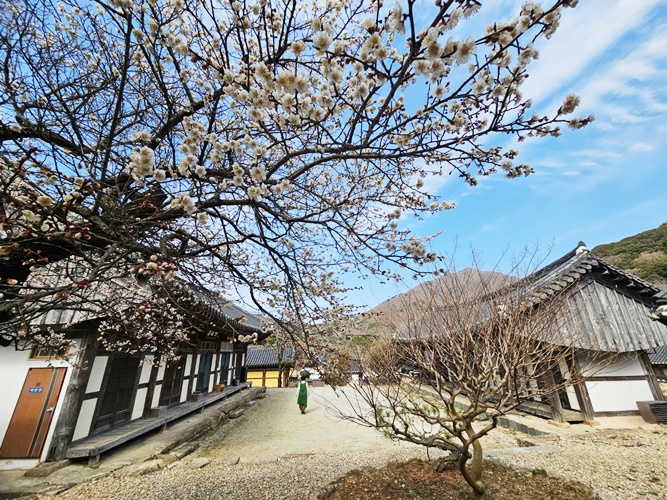
In front of Jeongmukdang at Daeheungsa Temple in Haenam-gun, Jeollanam-do, the ‘Daeheungmae (大興梅)’ plum trees are all bursting into bloom, filling the mountain temple with a subtle fragrance.
According to the county on the 20th, the Daeheungmae is a plum tree approximately 350 years old, especially loved by the monk Cho-ui Seonsa, and is therefore called Cho-uimae.
Cho-ui Seonsa (1786?1866), known as the Tea Saint (Daseong, 茶聖), was the 13th head monk of Daeheungsa Temple. He advocated the philosophy of Seon and tea as one (Seoncha Illyu, 禪茶一如) and led the revival of tea culture in the late Joseon Dynasty.
At that time, Cho-ui Seonsa, who resided at Daegwangmyeongjeon (Dongguk Seonwon), which he personally founded, moved the only plum tree that survived the 1811 fire at Cheonbuljeon to Jeongmukdang next to Daegwangmyeongjeon and cared for it dearly.
The Daeheungmae that has come down to the present day is an ancient tree about the size of an adult’s embrace, exuding dignity. Every spring, it lights up the thousand-year-old temple with bright blossoms.
Photographer Cheon Gi-cheol introduced, “The Daeheungmae is especially fragrant and its flowers shine with a dazzling pure white color, so many consider it one of the five great plums of Honam. Although Daeheungsa has many famous trees such as yeolliji (intertwined trees), many visitors love the Daeheungmae because of its connection with Cho-ui Seonsa.”
© The Asia Business Daily(www.asiae.co.kr). All rights reserved.

















