High-End Alcohol Market Drives 활기 in Empty Bottle Market
Overseas, Collections Worth Tens of Millions of Won
Used as Small Items, Interior Decor, and Decanters
"It's not even filled, so why are empty liquor bottles so expensive?"
While browsing a secondhand trading site, office worker A (30) suddenly wondered upon seeing empty liquor bottles being sold. Most bottles that once contained imported spirits or whiskey were priced in the tens of thousands of won, with some high-end products reaching hundreds of thousands of won. Of course, these bottles contained limited-edition premium liquors and had sophisticated designs, but it was hard to understand why empty bottles?essentially 'recycled glass bottles'?were being sold at such high prices.
As premium soju, whiskey, and other high-end liquors gain attention domestically, the 'empty bottle resale' market is also becoming active. Although online sales of liquor between individuals are illegal under current law, empty bottles face no particular regulations. These bottles have become targets for some collectors or are used as interior decorations in liquor stores, causing prices to skyrocket.
Empty Bottles That Held Premium Liquor... Highly Valued in Secondhand Markets
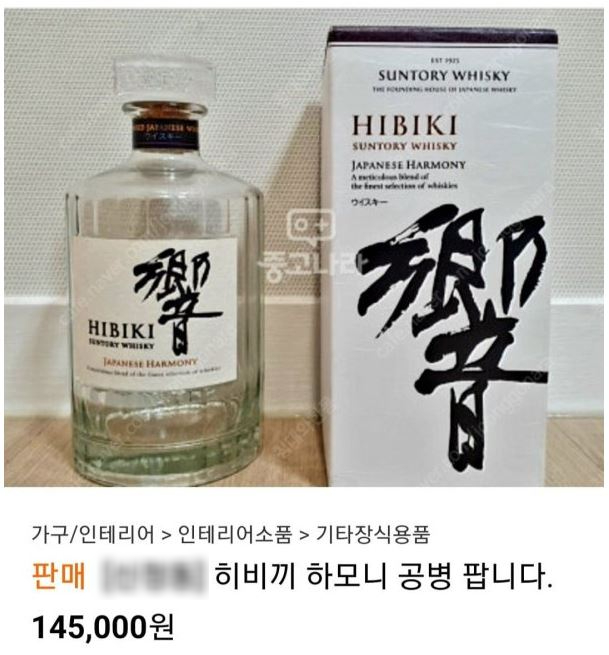 An advertisement selling 'empty bottles' of limited edition premium liquor attracted the attention of netizens. [Image source=Used Trading Platform]
Empty bottle reselling mainly takes place on secondhand trading platforms. On popular platforms, posts selling limited-edition liquor bottles at high prices are commonly found. Since the types of bottles vary greatly, prices also range widely. Some bottles sell for just a few thousand won, while others exceed 140,000 won.
The bottles being sold are not ordinary liquors but limited-edition premium distilled spirits and imported whiskeys. One bottle priced at 145,000 won was a 'Hibiki Harmony' whiskey bottle produced by the famous Japanese liquor company Suntory. Suntory's whiskeys are so popular that individual bottles have sold for hundreds of millions of won at liquor auctions.
The empty bottle of the 'Louis XIII Black Pearl,' released in 2007 as a limited edition of 786 bottles worldwide, was being traded for a staggering 4.5 million won. The sales post emphasized the bottle's rarity with phrases like "an untouchable supreme presence" and "a liquor specially produced only for the French Remy Martin family." This liquor reportedly has an auction winning price of about 30 million won and is known to have only six bottles in South Korea.
As the Premium Liquor Market Opens, Empty Bottle Collecting Also Flourishes
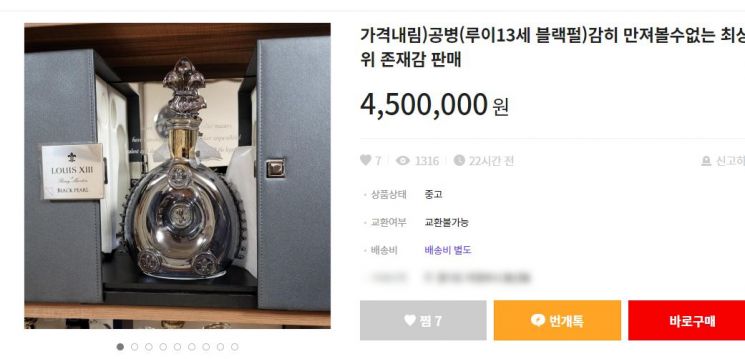 An empty bottle of Louis XIII Black Pearl, of which only 786 bottles were sold worldwide.
 [Image source: Secondhand trading platform]
Collecting empty bottles is actually a hobby with centuries of history overseas. The design of bottles that held premium liquors itself becomes a collectible element. According to the antique information website 'VIP Art Fair,' the market price for empty bottles in Western countries currently ranges from $60 (about 78,700 won) to $20,000 (about 26.24 million won).
Empty bottles mainly collected overseas include ▲ bottles that became rare due to discontinued production long ago ▲ bottles that contained limited-edition liquors ▲ bottles specially custom-made for select customers, each possessing 'collectible value.' If the liquor was made by a master craftsman from a historic distillery or was brewed for royalty or nobility, adding a 'behind-the-scenes story,' prices can soar into the tens of millions of won.
In contrast, the domestic liquor market in the past had little room for 'liquor bottles worth collecting.' Most soju consumed in Korea was mass-produced using inexpensive raw materials. However, as premium distilled liquors like 'Hwayo' and 'Wonsoju' attract the attention of MZ generation consumers and imports of premium foreign liquors such as wine and whiskey increase, limited-edition liquors have been released domestically, and more people are taking on the role of 'empty bottle resellers.'
"Great as a Decanter"… Stimulating Collecting Desire, Also Used as Interior Decoration
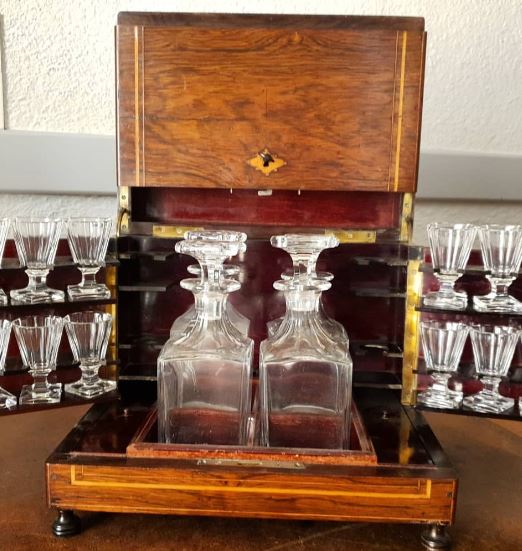 An empty bottle and wooden packaging box of 1860 vintage brandy revealed by an antique shop in France. [Image source=Rocaille Antique Instagram]
Currently, empty bottles traded domestically are both collectibles and decorative items. Most secondhand trading platforms classify empty bottles under 'interior' or 'decorative items.' As a result, distinguishing genuine bottles has become important.
Sellers preserve not only the bottle but also the original packaging bearing the product brand logo and send it to buyers. Limited-edition liquors are usually packaged in elaborate boxes, so the packaging itself serves as a kind of 'authenticity certification.'
One seller said the empty bottle is "also excellent as a decanter, not just for collecting." A decanter refers to a bottle used in Western countries like the U.S. and Europe to hold small amounts of wine or liquor. This means there is demand for home decoration as well.
High-end bars, clubs, and other liquor retailers are also major players in the empty bottle market. Lee Mo (33), who works at a bar in the metropolitan area, said, "Some places display empty bottles like decorations on shelves. It adds a professional feel." He added, "Of course, it's rare for places to buy large quantities of bottles priced in the tens of thousands of won just for decoration. But at least reselling empty bottles is more profitable than simply discarding limited-edition liquor bottles."
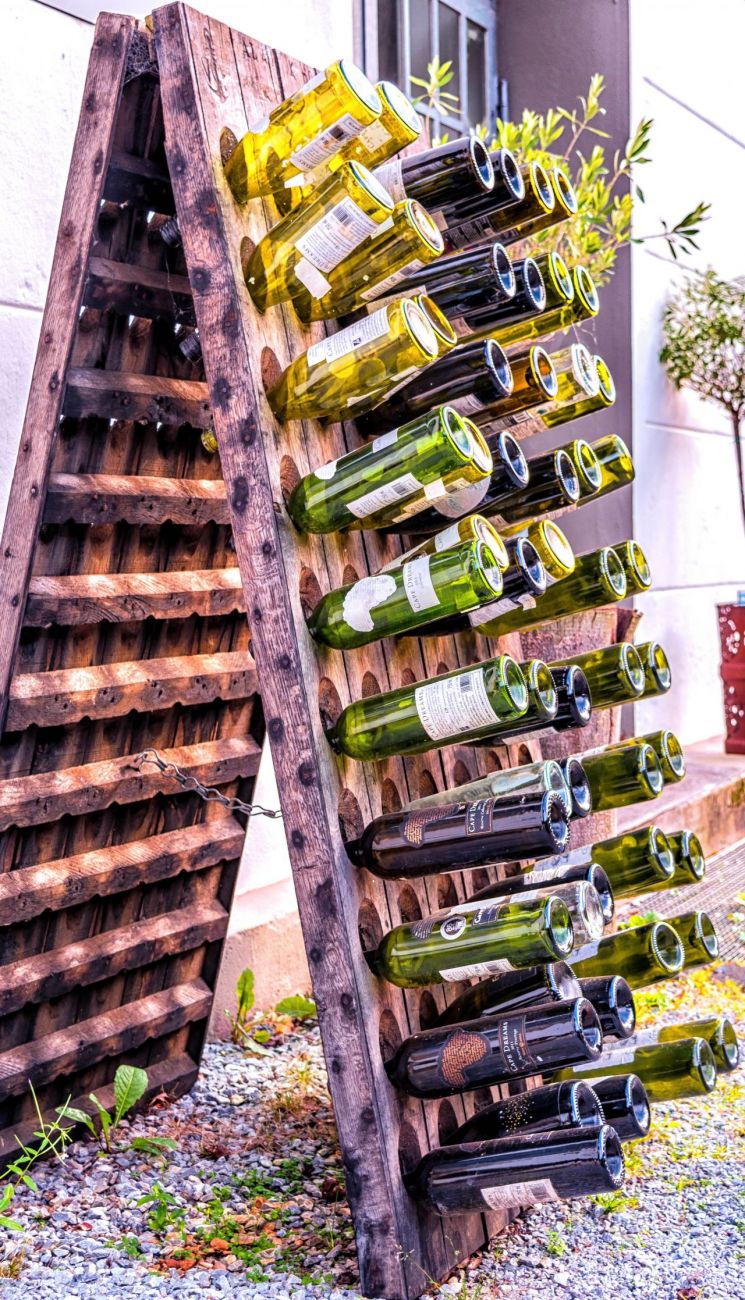
The prohibition of liquor sales between individuals in Korea may also have contributed to the popularity of empty bottle reselling. Under current liquor tax law, liquor can only be sold face-to-face at authorized locations by those licensed for liquor retail or equivalent sales. Selling liquor without a proper license can result in imprisonment for up to three years or a fine of up to 30 million won.
Lee speculated, "Even in the West, limited-edition liquors are collectibles rather than for drinking. Since liquor auctions are less active in Korea, people may collect empty bottles to experience a more affordable 'vicarious satisfaction.'"
© The Asia Business Daily(www.asiae.co.kr). All rights reserved.



















