'2023 Banking Sector Financial Supervisory Briefing'
Provisioning Ratio Against Total Loans of 5 Major Banks at 0.51%
Lower Than Advanced Countries
Improvement Encouraged Through Memorandums of Understanding (MOU) or Commitment Letters Rather Than Bank Sanctions
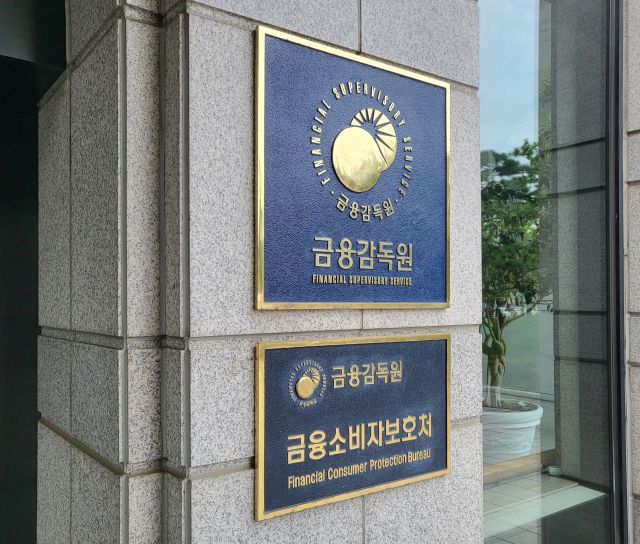
The Financial Supervisory Service (FSS) stated, "So far, the soundness indicators of domestic banks are generally at a favorable level," and added, "Since 2021, the loan loss provisions of the five major banks (Kookmin, Shinhan, Woori, Hana, Nonghyup) have been continuously increasing."
On the 17th, the FSS held the '2023 Banking Sector Financial Supervisory Briefing.' At this event, Kim Jun-hwan, Director of the Banking Supervision Bureau at the FSS, emphasized, "However, as the provision coverage ratio against total loans declines during the asset growth process, it is necessary to continuously strengthen the loss absorption capacity going forward."
As of September last year, the provision coverage ratio against total loans of the five major banks was 0.51%. Director Kim stated, "In advanced countries, the provision coverage ratio against total loans is around 1.6 to 1.7%, which is higher than that of South Korea," adding, "There is still a long way to go."
The FSS announced that it will respond to potential risks amid the emergence of financial market uncertainties caused by global complex crises such as the collapse of Silicon Valley Bank (SVB).
The key supervisory tasks include ▲ 'System risk management' to address potential risks and corporate credit risks arising from complex crises ▲ 'Strengthening soundness supervision,' including enhancing banks' loss absorption capacity ▲ 'Expanding inclusive finance' by supplying funds to vulnerable borrowers and real demanders ▲ 'Supporting financial innovation,' which includes improving the separation of banking and industry by expanding banks' ancillary businesses and investment scope in subsidiaries.
Kim Young-joo, Deputy Governor of the FSS, explained at the event, "We will strengthen the inspection of potential risk factors to prevent overseas-originated uncertainties, such as the recent collapse of the U.S. Silicon Valley Bank (SVB), from transferring into systemic risks in the domestic financial market."
He continued, "Even in the event of economic deterioration, we plan to induce the expansion of loss absorption capacity by introducing special loan loss reserves and improving the countercyclical capital buffer (CCyB) accumulation standards so that banks can smoothly perform their fund intermediation functions."
He also mentioned, "Due to the increased interest burden caused by rising interest rates, difficulties for households and businesses are growing, so it is necessary to expand win-win finance by banks," adding, "If the banking sector strengthens its social responsibility, such as supporting vulnerable groups, it will ultimately lead to improved bank reputation and expanded customer base, which will also help bank growth."
The FSS also revealed its supervisory direction for this year. Park Chung-hyun, Director of the Banking Inspection Division 1, said about this year's 'improvement-focused bank inspection direction,' "Previously, sanctions were often imposed on individuals, but going forward, sanctions will be focused on institutions," and added, "We will also provide financial companies with time to improve through memorandums of understanding (MOUs) or commitments rather than sanctions." He further stated, "If improvements are made during on-site inspections, measures may be omitted."
To prevent potential risks such as economic slowdown and deterioration of debt repayment ability, the FSS said it will check the adequacy of risk management including 'investment, liquidity, and credit risks.' Monitoring of high-risk operators related to real estate project financing (PF) will also be strengthened.
Regarding the sharp rise in loan interest rates and the resulting worsening financial difficulties for businesses and households, the FSS said, "We will inspect for unfair and unsound business practices and violations of the Financial Consumer Protection Act." To strengthen responsible management of bank holding companies, the FSS plans to examine the adequacy of risk management and internal control systems at the holding company level. It will also review the establishment and operation of governance and the appropriateness of executive performance-based compensation systems.
© The Asia Business Daily(www.asiae.co.kr). All rights reserved.

![Clutching a Stolen Dior Bag, Saying "I Hate Being Poor but Real"... The Grotesque Con of a "Human Knockoff" [Slate]](https://cwcontent.asiae.co.kr/asiaresize/183/2026021902243444107_1771435474.jpg)















