Asthma is a respiratory disease characterized by repeated narrowing of the airways due to allergic inflammation. Symptoms such as shortness of breath and coughing can be controlled with bronchodilators or anti-inflammatory drugs. However, in severe asthma, airway structures can change, and fibrosis, which hardens lung tissue, may also occur. Existing treatments for severe asthma have difficulty restoring damaged lung tissue, so stem cell therapies have recently been actively researched. In this context, a domestic research team has attracted academic attention by proving a key factor that could be a breakthrough in developing stem cell-based treatments for intractable asthma.
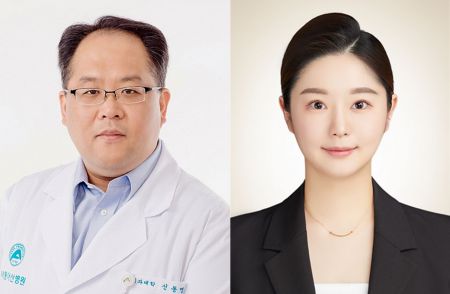 Professor Shin Dong-myeong, Department of Cytogenetics, Ulsan University College of Medicine, Asan Medical Center, Seoul (left), Dr. Ryu Chae-min, Cell Therapy Center.
Professor Shin Dong-myeong and Dr. Joo Hye-in from the Department of Cell Genetics at Ulsan University College of Medicine, Seoul Asan Medical Center, along with Dr. Ryu Chae-min from the Cell Therapy Center, demonstrated that the transcriptional activator 2 (ATF2) protein, which regulates gene expression, is a key factor determining the therapeutic effect of mesenchymal stem cells. Furthermore, in animal experiments, they confirmed that applying mesenchymal stem cell therapy with increased ATF2 reduced bronchial inflammation by about half.
Mesenchymal stem cells can differentiate into various cell types and have anti-inflammatory functions, making them the main raw material for stem cell therapies. However, when culturing mesenchymal stem cells, intracellular reactive oxygen species are generated, which limits their anti-inflammatory function. To overcome this, the research team conducted preliminary studies treating mesenchymal stem cells with a vitamin C derivative (AA2G) during culture and confirmed that the antioxidant function of mesenchymal stem cells was enhanced.
Through this study, Professor Shin’s team revealed that during the process of enhancing the antioxidant function of mesenchymal stem cells by AA2G treatment, the expression and activity of transcriptional activator 2 (ATF2) also increased. Furthermore, by genetically manipulating the expression of ATF2 in mesenchymal stem cells, the core therapeutic effects of mesenchymal stem cells?self-renewal ability, migration to damaged tissue, anti-inflammatory ability, and angiogenesis?also increased or decreased accordingly.
The research team applied this approach to intractable severe asthma by administering mesenchymal stem cell therapy with increased ATF2 expression to an asthma animal model. As a result, compared to administering general stem cell therapy, the number of bronchial inflammatory cells decreased by about 50%, and lung fibrosis decreased by about 70%. Professor Shin Dong-myeong stated, "This study proved that ATF2 is a key factor regulating the therapeutic effects of stem cells. Based on these results, if advanced stem cell therapies are developed, the possibility of treating intractable asthma will open." Dr. Ryu Chae-min added, "The significance of this study lies in providing a starting point for advanced regenerative medical technology for patients with intractable asthma. We will continue to collaborate with various research teams to contribute to the development of next-generation stem cell-regenerative medical therapies to overcome intractable diseases."
The results of this study were recently published in 'Experimental & Molecular Medicine' (IF=12.137), a prestigious journal in the field of biochemistry and molecular biology and a sister journal of Nature.
© The Asia Business Daily(www.asiae.co.kr). All rights reserved.

















