Designation of Child Protection Zones and Expansion of Speed Cameras to Create Safe School Routes
Installation of Sidewalks on Side Streets and Maintenance of Traffic Safety Facilities to Enhance Pedestrian Convenience
Gangdong-gu (Mayor Lee Soo-hee) is continuously promoting pedestrian-priority environment projects to ensure traffic safety for pedestrians, including vulnerable road users, establishing itself as a pedestrian-friendly city.
To this end, the district has established the '2023 Comprehensive Plan for Creating a Walkable and Safe Pedestrian Environment,' implementing 18 unit projects under three main tasks: ▲Providing a safe traffic environment for vulnerable road users ▲Creating a pedestrian-friendly walking environment ▲Managing traffic safety facilities conveniently for residents, aiming to make Gangdong-gu a walkable and safe district.
Providing a Safe Traffic Environment for Vulnerable Road Users
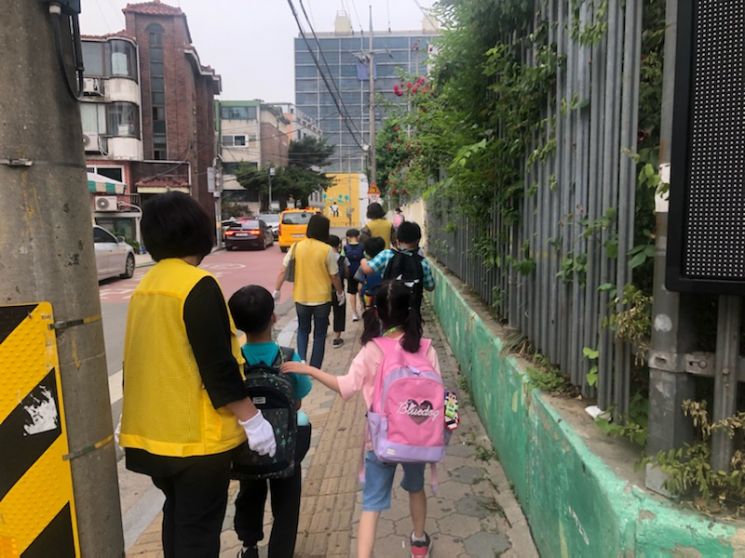
In particular, the district is investing 2.47 billion KRW to implement nine unit projects to prevent traffic accidents involving vulnerable children and create safe school routes.
First, three new or expanded child protection zones will be designated, and eight additional speed enforcement cameras will be installed. Yellow carpets, which mark waiting areas at crosswalks in yellow to help create a safe walking environment for children, and LED signs to enhance driver visibility will be installed. Furthermore, the vehicle speed limit on certain sections will be lowered from 30 km/h to 20 km/h, and pedestrian-friendly traffic safety facilities will be installed on the road surface as part of the School Zone 532 project. The installed traffic safety facilities, road markings, and anti-slip devices will be continuously maintained.
Additionally, traffic guidance personnel such as traffic safety instructors, green traffic safety guardians, and safety guardians for child traffic accident-prone areas will be densely deployed on school routes to ensure children's safe commuting environment.
Creating a Pedestrian-Friendly Walking Environment
To create a pedestrian-priority city where walking is pleasant, 1.46 billion KRW will be spent on three unit projects to improve roads.
Sidewalks and pedestrian paths will be installed along school routes in 10 child protection zones within the area to improve school routes. Side streets with limited pedestrian space will be newly created and maintained as pedestrian-priority roads. Yangjaedaero 89-gil will be newly designated as a pedestrian-priority road, and Godeok-ro 38-gil will undergo pavement maintenance.
Along with this, the Seongnae 2-dong pedestrian environment improvement project will focus on improving old roads and school routes and installing urban regeneration smart crosswalks to create an environment where pedestrians are prioritized.
Convenient Management of Traffic Safety Facilities for Residents
4.9 billion KRW will be invested to implement six unit projects for managing traffic safety facilities.
Maintenance work will be carried out on various traffic safety facilities and worn or damaged crosswalks, lanes, and road markings such as letters. Road guide signs will be replaced with road name guide signs to promote road name addressing and improve urban aesthetics, continuously managing traffic safety facilities for residents' convenience.
Lee Soo-hee, Mayor of Gangdong-gu, stated, “Gangdong-gu is the first autonomous district in Seoul to directly hire and deploy dedicated personnel for children's after-school safety, demonstrating our utmost commitment to the safety of children's school routes.” He added, “We will continue to create a pedestrian-friendly city where not only vulnerable road users but all residents can travel safely and comfortably through the expansion of various traffic safety facilities and sidewalk maintenance.”
Walking and Listening to Gangseo Stories with Cultural Tourism Guides
‘Gangseo Ttubokki Travel’ Walking Three Courses: Heojun Museum, Gyeomjae Jeongseon Art Museum, and Gaehwasan Dulle-gil
‘Gangseo Duruduru Stamp Tour’ Collecting Stamps at Eight Tourist Attractions and Receiving Souvenirs
Seoul Gangseo-gu (Mayor Kim Tae-woo) is operating ‘Gangseo Ttubokki Travel,’ a walking tour with cultural tourism guides visiting local tourist attractions, and ‘Gangseo Duruduru Stamp Tour,’ which allows participants to freely enjoy various cultural heritages, welcoming the fresh spring season.
This program was prepared to deliver the historical significance and value of well-known as well as lesser-known attractions in an engaging way.
‘Gangseo Ttubokki Travel’ is a walking tour program where participants experience tourist attractions while listening to explanations from cultural tourism guides.
The tour courses include three routes: ▲Heojun Museum Course ▲Gyeomjae Jeongseon Art Museum Course ▲Gaehwasan Dulle-gil Course.
The Heojun Museum Course starts at Heojun Theme Street and visits Heojun Neighborhood Park, Heoga Rock, Heojun Museum, and the medicinal herb garden, offering insights into the history of Korean traditional medicine and the footsteps of Guam Heojun.
The Gyeomjae Jeongseon Art Museum Course centers around the Gyeomjae Jeongseon Art Museum and includes visits to Seonghwangsa Temple, Gungsan Tunnel History Exhibition Hall, and Yangcheon Hyanggyo Confucian School. The Gaehwasan Dulle-gil Course allows participants to enjoy nature and history by walking through Yaksasa Temple, the beacon mound and observatory, the barrier-free forest trail, and Banghwa Neighborhood Park.
The tours run every Tuesday through Sunday from 10 a.m., lasting about three hours per course. Reservations can be made up to seven days before departure via the ‘Gangseo-gu Cultural Tourism Website (homepage) - Tourism/Attractions - Cultural Tourism Guide Reservation.’
There is no separate tour fee, and only admission fees for museums, art galleries, and other facilities apply. However, if fewer than three people register, the reservation may be canceled or the schedule changed.
The ‘Stamp Tour’ is a program themed ‘Go, Stamp, Eat, Receive,’ where participants collect stamps at eight local attractions: Heojun Museum, Yangcheon Hyanggyo, Soakru, Gungsan Tunnel History Exhibition Hall, Gyeomjae Jeongseon Art Museum, Seoul Botanic Park, Memorial Monument for National Defense, and Gaehwasan Beacon Mound, and receive souvenirs upon completion.
Stamp books can be obtained at Heojun Museum, Gyeomjae Jeongseon Art Museum, Gungsan Tunnel History Exhibition Hall, and the district office’s Culture and Sports Department. After completing the tour and satisfaction survey, souvenirs are given on a first-come, first-served basis, one per person.
Additionally, a 10% discount coupon attached to the stamp book can be used to enjoy designated restaurants at a reduced price.
Mayor Kim Tae-woo said, “As spring, the perfect season for walking, arrives, I hope people will walk with cultural tourism guides through local attractions steeped in history and tradition to feel the living stories and hidden charms of Gangseo.” He added, “We will develop excellent local tourism resources to create a Gangseo full of culture and arts that attracts visitors from outside.”
© The Asia Business Daily(www.asiae.co.kr). All rights reserved.


















