Criticism of Financial Supervision Failure
"Powell's Misjudgment of 'Temporary Inflation' and Easing of Regulations on Small Banks Cited as Causes"
"Calls for Fed Outsider to Lead SVB Crisis Investigation"
As the fallout from the bankruptcy of the U.S. Silicon Valley Bank (SVB) spreads across the global financial sector, calls for accountability surrounding Jerome Powell, chairman of the U.S. Federal Reserve (Fed), are growing. Critics argue that Powell's decisions?including short-term aggressive tightening, failure in bank supervision, and premature deregulation?led to the SVB crisis.
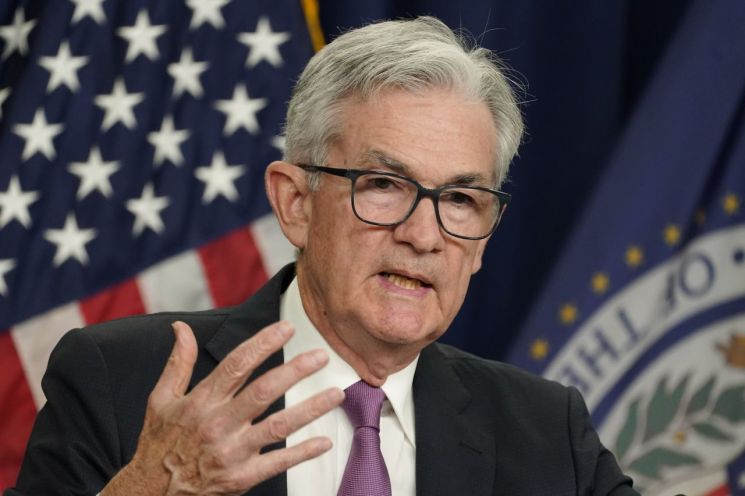
On the 15th (local time), Bloomberg News reported on the growing voices blaming Powell in the U.S. with an article titled "Powell's Legacy Faces Further Damage from SVB Collapse."
They claim that SVB's bankruptcy stemmed from Powell's supervisory failures. The Fed, which serves as the U.S. central bank, holds authority not only over monetary policy but also financial supervision. However, it did not continuously monitor the liquidity issues of the 16th largest bank by asset size, nor did it manage to contain the problem early on. Former Fed director Daniel Tarullo evaluated this by saying, "There was a failure in supervision." However, since there are hundreds of banks in the U.S., some view the responsibility as lying more with the Federal Reserve Bank of San Francisco, which directly supervises SVB under the Fed, rather than the Fed itself, which oversees financial supervision overall.
Another basis for criticism is that Powell holds some stake in the deregulation of small and medium-sized banks, which is considered one of the causes that triggered this crisis. The Trump administration in 2018 raised the asset threshold for banks subject to soundness regulations from $50 billion to $250 billion, significantly easing regulations on regional banks. Powell was the Fed chairman when this legislative amendment, criticized as the spark for SVB’s bankruptcy, passed through Congress. Mid-sized banks, including the now-bankrupt SVB and Signature Bank, which previously had to undergo annual financial soundness evaluations, were allowed to receive such evaluations every two years or be exempted after the deregulation. Senator Elizabeth Warren (D-Massachusetts) sharply criticized, saying, "Powell allowed large banks like SVB to take risks to increase profitability (instead of soundness)," and "he directly contributed to the bank failures."
Powell’s misjudgment and the rapid, aggressive tightening also came under scrutiny. Until 2021, Powell claimed the inflation surge was "transitory," but as prices soared, he hastily raised the benchmark interest rate by 4.5 percentage points over eight hikes from March last year to February this year. Bloomberg pointed out that SVB’s bankruptcy resulted from credit crunches triggered by the Fed’s rate hikes, bank runs (massive deposit withdrawals), and liquidity crises at banks, all stemming from Powell’s misjudgment.
In U.S. political circles, there are calls for an independent figure outside the Fed to lead the investigation into the SVB crisis. Powell has tasked Fed Vice Chairman Michael Barr to lead the Fed’s internal investigation. Professor Catherine Judge of Columbia Law School argued, "The best way to ensure the investigation is thorough and trustworthy is to have someone very, very far removed from the series of events that led to SVB’s demise lead the investigation."
© The Asia Business Daily(www.asiae.co.kr). All rights reserved.

















