Sephora, Chicor and Other Offline Stores Closing One After Another
Sales Slump and Operating Losses Widened Due to COVID-19 Impact
Barely Sustained Through Online and Offline Hybrid Strategy
Global beauty select shops such as Chicor and Sephora are struggling in the domestic market. Having entered Korea in the 2010s and brought a fresh breeze to the beauty industry, their major offline stores have been closing one after another due to the direct impact of COVID-19. Although they are virtually maintaining their presence through online sales strategies, it remains uncertain whether they will successfully revive by increasing offline stores again as we enter the endemic era.
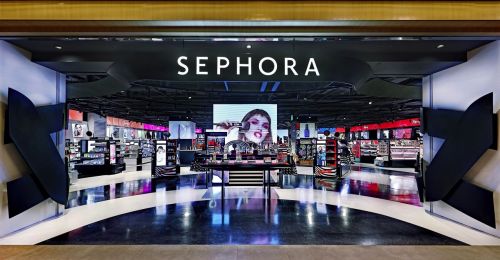
According to the distribution industry on the 16th, Sephora will close its Yeouido branch on this day. This comes about a year after closing the Myeongdong branch in January last year. As a result, only four Sephora stores remain in Korea.
A Sephora representative stated, "The closure of the Yeouido store is merely part of the process of relocating to another location and cannot be seen as a reduction in domestic operations," adding, "A new store will open soon." However, the location of the new branch and the reopening schedule have not been disclosed.
Sephora, established in France in 1970 and acquired by the global luxury group Louis Vuitton Mo?t Hennessy (LVMH) in 1997, is the world's largest cosmetics select shop. It operates over 2,600 offline stores in 34 countries including Europe, the United States, and China. In Korea, it opened its first store in October 2019 at Parnas Mall in Samseong-dong, Gangnam, Seoul.
When Sephora first entered Korea, it expressed ambitions to expand to 30 stores nationwide, but it has consistently faced operational difficulties. Its strength in offline cosmetic experience services was hit hard by COVID-19, rendering these services virtually useless and rapidly weakening its competitiveness. Some analysts also point out that its differentiation is weak in the already saturated domestic beauty market, centered around Olive Young and others.
Chicor, operated by Shinsegae Department Store and called the "Korean version of Sephora," also grew rapidly, surpassing 30 stores within two years after opening its first store in Daegu in 2017. However, it had to close major stores such as those in Myeongdong and Garosu-gil due to the direct impact of COVID-19. Currently, the number of offline stores nationwide has decreased to 23, and it is pursuing a two-track strategy of online and offline.
Earlier, Lalavla, operated by GS Retail for 17 years since 2004, experienced a painful exit from both online and offline businesses in November last year. Once aggressively expanding with a goal of 300 stores nationwide, Lalavla was also hit hard by COVID-19 like other beauty select shops. The number of stores decreased annually from 168 in 2018 to 140 in 2019, 124 in 2020, and 70 in 2021, while losses continued to grow.
Currently, CJ Olive Young is virtually the only survivor in the market. Olive Young maintains solid growth despite the impact of COVID-19, based on an omni-channel strategy linking online and offline. As of the end of last year, Olive Young had 1,298 stores, an increase of 33 stores from 1,265 at the end of 2021, even during the COVID-19 period.
A beauty industry insider advised, "The rapid increase in beauty select shops in the domestic cosmetics market has quickly led to saturation, causing some companies to struggle," adding, "They need to respond by simultaneously pursuing online and offline strategies, enhancing price competitiveness, and diversifying product lines to create differentiation."
© The Asia Business Daily(www.asiae.co.kr). All rights reserved.
![From Bar Hostess to Organ Seller to High Society... The Grotesque Con of a "Human Counterfeit" [Slate]](https://cwcontent.asiae.co.kr/asiaresize/183/2026021902243444107_1771435474.jpg)
















