The bankruptcy of the U.S. Silicon Valley Bank (SVB) has triggered a countdown to discussions on strengthening financial regulations by the U.S. government and political circles. While there is consensus that the authorities' swift response to prevent the crisis from spreading throughout the financial system was appropriate, the diagnosis of the causes and solutions to the incident sharply diverge between the Democratic and Republican parties, making legislative progress difficult.
On the 14th (local time), The Wall Street Journal (WSJ) reported that Democrats and Republicans are facing a tough battle to produce a bipartisan bill to resolve the SVB crisis. Since they express differing views on the causes of the SVB bankruptcy, the likelihood of the two parties agreeing on legislation to strengthen financial regulations in Congress appears low.
With the House of Representatives, which holds legislative and budgetary authority, having shifted to Republican control this year, and given the parties' confrontations over major issues such as support for the Ukraine war and raising the debt ceiling, it is expected to be difficult to reach a dramatic agreement on financial regulatory reforms.
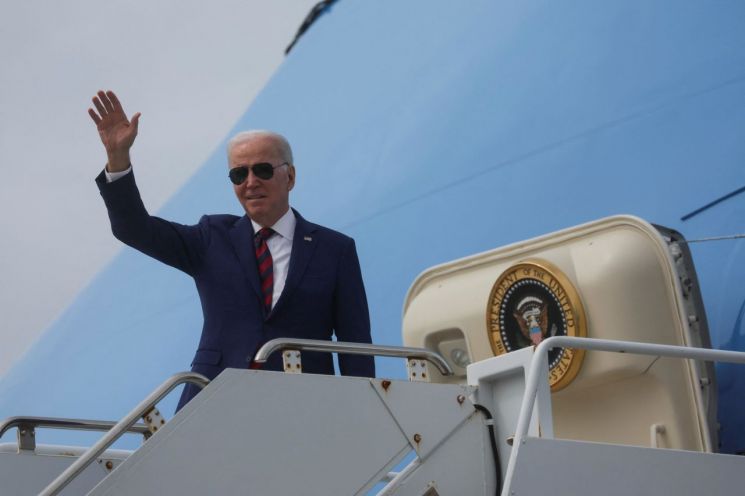
First, regarding the essence of the incident, President Joe Biden and the ruling Democratic Party argue that the relaxed financial regulations during the previous administration led to the SVB bankruptcy. At a press conference the day before, President Biden mentioned the easing of the Dodd-Frank Act under the Donald Trump administration and said he would urge Congress and financial authorities to strengthen bank-related regulations.
In 2018, the Trump administration significantly raised the asset threshold for banks required to undergo annual stress tests from $50 billion to $250 billion, which benefited SVB, whose assets totaled $209 billion, by easing regulations.
Senator Elizabeth Warren, who opposed the easing of this law, claimed, "This is the essence of the SVB incident."
On the other hand, the Republican majority in the House points to excessive government spending as the direct cause of the SVB bankruptcy. To curb inflation caused by excessive fiscal spending, the U.S. Federal Reserve (Fed) rapidly raised benchmark interest rates, and the accumulated tightening exposed weaknesses in the financial system, leading to SVB's collapse.
House Speaker Kevin McCarthy reportedly told House members during a call that night that the SVB bankruptcy was due to regulatory failures regarding management issues and inflation caused by excessive fiscal spending. He also noted that there was consensus that Congress does not feel the need to introduce new financial regulations, according to WSJ citing sources.
Foreign media also pointed out that the Republicans' intention to strengthen their negotiating position in the imminent debt ceiling negotiations is at play. Currently, the Republicans, who are opposing the Biden administration by demanding spending cuts related to next year's budget, believe it is politically advantageous to emphasize the government's excessive fiscal spending as much as possible. The Republicans are also refusing to cooperate with the Biden administration by demanding spending cuts on the federal government's debt ceiling, which has already been reached.
© The Asia Business Daily(www.asiae.co.kr). All rights reserved.

















