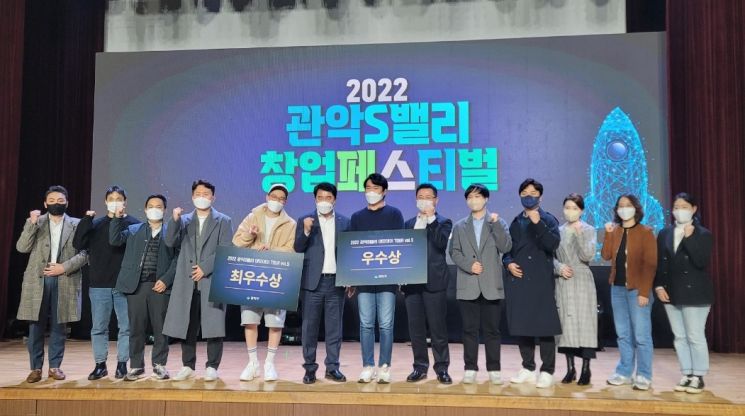
 Commemorative photo of the award ceremony at the Gwanak S Valley Startup Festival Demo Day Tour last year
‘Gwanak S-Valley 2.0 Comprehensive Implementation Plan’ Launch
Promotion of 14 Projects in 5 Areas Including Expansion of Startup Infrastructure; Targeting Attraction of 450 Companies and Creation of 3,100 Jobs
Establishment of (Tentative Name) Gwanak Small and Venture Business Promotion Agency for Systematic Support of SMEs and Venture Companies
Gwanak-gu (Mayor Park Jun-hee) has established the ‘Gwanak S-Valley 2.0’ comprehensive implementation plan and is beginning full-scale promotion to revitalize the local economy through attracting and supporting the growth of venture and startup companies.
‘Gwanak S-Valley 2.0’ is a key project of Gwanak-gu that aims to attract more than 1,000 venture and startup companies over the next four years, transforming the entire region into a genuine hub for ventures and startups, building on the achievements of the Gwanak S-Valley project, including designation as a venture business promotion district.
In 2023, the district aims to attract a cumulative total of 450 companies, create 3,100 jobs, and secure 140 billion KRW in investment. To achieve this, it will promote 14 detailed projects across five areas: ▲expansion of startup infrastructure ▲support for growth of venture and startup companies ▲raising awareness of Gwanak S-Valley ▲building cooperative systems ▲institutional support.
The district will expand startup infrastructure by constructing ‘Startup HERE-RO 1’ within Seoul National University and remodeling the Seoul National University Research Park. Additionally, a feasibility study by the Ministry of the Interior and Safety will be conducted to establish ‘Seoul Startup Hub Gwanak,’ which will serve as a hub for startups in the southwestern region.
Plans include building cooperative relationships with private shared office companies and actively promoting related systems such as requirements and benefits for venture business cluster facilities and knowledge industry centers, laying the foundation for private-led expansion of startup infrastructure.
Support for company growth will also be provided. Projects include ‘Startup Scale-Up,’ which offers up to 50 million KRW in commercialization funds, ‘Technical Consulting Support,’ where universities and research institutes help solve companies’ technical issues, and ‘Regular Demo Day,’ providing opportunities to meet investors.
In particular, a (tentatively named) ‘Gwanak S-Valley Corporate Support Fund’ worth 6 billion KRW will be established to support early-stage companies facing difficulties in attracting investment. The ‘Open Innovation’ project will also be promoted to encourage co-growth through technology partnerships between large corporations and startups.
In October, a ‘Gwanak S-Valley Startup Festival’ will be held in collaboration with Seoul National University, KT, KB Financial Group, Woori Financial Group, and others, offering various programs such as lectures, startup recruitment fairs, corporate promotions, and resident experiences to raise awareness of ‘Gwanak S-Valley.’
Furthermore, the district plans to establish the ‘Gwanak Small and Venture Business Promotion Agency (tentative name)’ to provide systematic and comprehensive support for SMEs and venture companies. After a feasibility review by the Seoul Institute this year, related ordinances will be enacted, aiming for completion in October 2024.
Mayor Park Jun-hee said, “Gwanak-gu, once almost a barren land for ventures and startups, is rapidly emerging as a mecca for startups among entrepreneurs. We will make Gwanak-gu a genuine center for ventures and startups by implementing sustainable startup ecosystem policies centered on ‘Gwanak S-Valley 2.0.’”
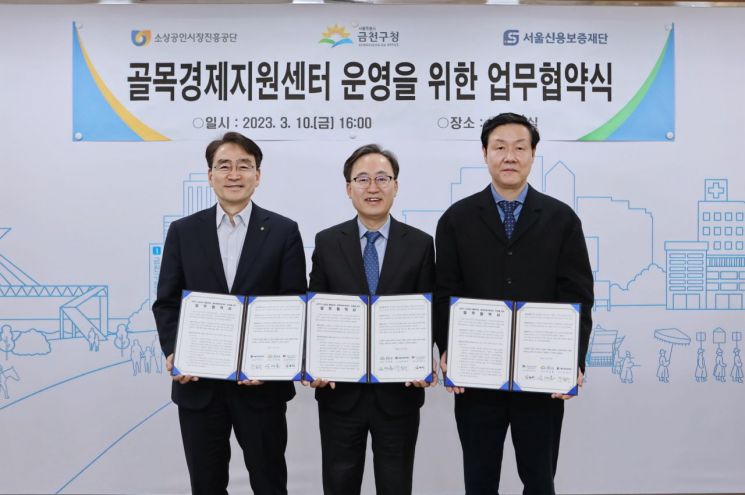
Geumcheon-gu Signs Business Agreement to Operate ‘Alley Economy Support Center’ for Integrated Support of Small Business Owners
Small Enterprise and Market Service and Seoul Credit Guarantee Foundation Sign Business Agreement
Three Organizations Collaborate to Explore Sustainable Support Measures for Small Business Owners
Geumcheon-gu (Mayor Yoo Sung-hoon) signed a business agreement with the Small Enterprise and Market Service and the Seoul Credit Guarantee Foundation, which operate support policies for small business owners, to provide comprehensive guidance on policies for small business owners.
Through this agreement, the three organizations will jointly cooperate to ▲share information for comprehensive guidance on small business support projects ▲link and expand support policies among institutions to reach more small business owners ▲collaborate on promoting integrated ESG activities within the region.
Previously, small business-related policies were divided among institutions, causing confusion for small business owners in need of assistance.
Going forward, the ‘Alley Economy Support Center’ within the district’s local economy department will provide comprehensive guidance, linking support policies implemented by the Small Enterprise and Market Service and the Seoul Credit Guarantee Foundation to ensure more local small business owners can benefit.
Mayor Yoo Sung-hoon of Geumcheon-gu said, “I hope the Alley Economy Support Center will become a foundation to provide multifaceted policy support for small business owners. We will take the lead to ensure small business owners, the backbone of the local economy, can have hope.”
Gwangjin-gu Accelerates Toward 2050 Carbon Neutrality... Holds Final Service Report Meeting
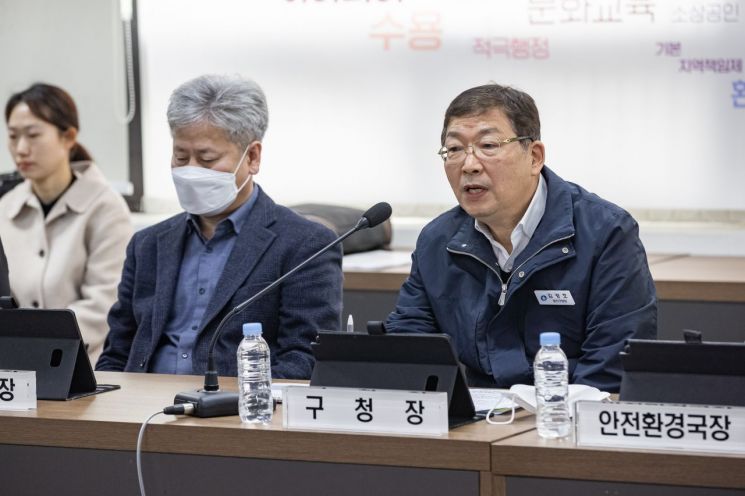
‘2050 Carbon Neutrality Service Final Report Meeting’ Held on the 15th at the District Office Planning Situation Room
Sejong University Industry-Academic Cooperation Foundation Research Service Draws Blueprint for Carbon Neutrality Realization
Plans to Establish Mid- to Long-Term Comprehensive Plan for Carbon Neutral Eco-Friendly City
Gwangjin-gu (Mayor Kim Kyung-ho) held the ‘2050 Carbon Neutrality Service Final Report Meeting’ at the district office on the 15th to discuss a blueprint for realizing green growth.
To effectively respond to the climate crisis, the district partnered with Sejong University Industry-Academic Cooperation Foundation since June last year to conduct a research service. The tasks included ▲building a greenhouse gas inventory ▲climate change response plan ▲climate crisis adaptation measures, with the ultimate goal of setting specific directions and strategies for achieving carbon neutrality.
At the meeting, the research results over the past nine months and Gwangjin-gu’s ‘2050 Carbon Neutrality Comprehensive Plan’ were discussed. The Sejong University research team presented a blueprint for establishing a specialized comprehensive plan for Gwangjin-gu through SWOT (Strengths, Weaknesses, Opportunities, Threats) analysis, resident surveys, and expert consultations.
Specifically, nine strategies reflecting Gwangjin-gu’s regional characteristics were established in the areas of carbon neutrality related to ▲buildings and renewable energy ▲roads and transportation ▲parks, green spaces, and waste. The detailed implementation plans total 46.
Considering that about 70% of greenhouse gas emissions in the district come from buildings, the plan proposes expanding green buildings and promoting rooftop greening projects to improve energy efficiency. It also encourages the spread of renewable energy, eco-friendly vehicles, public transportation, and bicycle use.
Additionally, to address the high use of disposable products due to the concentration of single-person households, alternatives such as installing smart paper pack collection bins, promoting disposable-free funeral halls, and using bioplastics were explored.
Based on this, the district plans to establish the ‘2050 Carbon Neutrality Comprehensive Plan’ aiming to reduce greenhouse gas emissions by 40% compared to 2018 by 2030. Given the strong necessity for environmental protection, ambitious goals aligned with government policies were set. The district intends to build effective and proactive response strategies through public-private cooperation to realize an eco-friendly city.
Mayor Kim Kyung-ho of Gwangjin-gu said, “As the eco-friendly consensus has greatly expanded due to the climate crisis, we are considering various policies for environmental protection. We will carefully and strategically develop plans to realize carbon neutrality by incorporating the research results well.”
Gangbuk-gu Establishes Public Design Promotion Plan... Adds Expertise to Public Design
Proposes Public Design Guidelines Reflecting Gangbuk-gu’s Identity
Bidding Announcement Starts in March, Plan Completion by December... ‘One-Stop Design Clinic’ System for Public Design Also Implemented
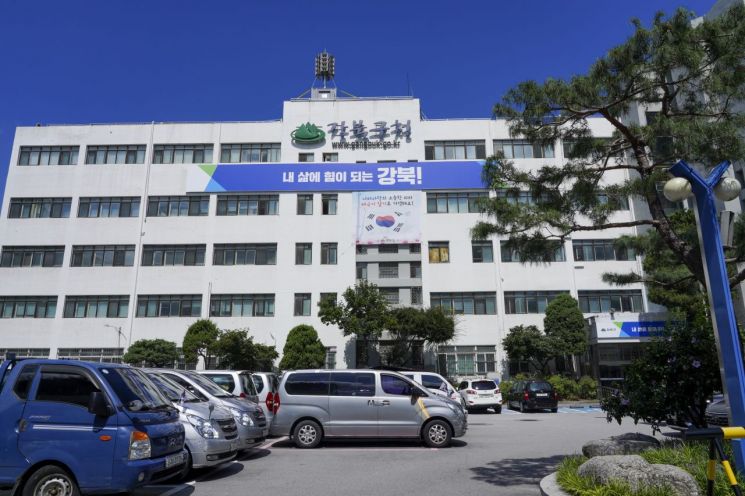
Gangbuk-gu (Mayor Lee Soon-hee) announced that it will establish a ‘Public Design Promotion Plan’ this year to strengthen the public design system.
‘Public design’ refers to design applied to public facilities created by the state or local governments to enhance publicness and aesthetics. The district will set basic goals and directions for public design policies and improve the city image by establishing the ‘Public Design Promotion Plan.’
The promotion plan to be established this year will include ▲public design guidelines reflecting Gangbuk-gu’s identity ▲annual public design promotion projects ▲sustainable and consistent public design development directions.
The district plans to start bidding for the service in March and complete the plan by December. During the planning process, resident surveys, workshops, and advisory meetings will be conducted to gather opinions from local residents and experts.
Additionally, the district operates a ‘One-Stop Design Clinic (Consulting) Service’ for public design projects promoted by various district office departments.
The ‘One-Stop Design Clinic Service’ matches departments needing design advice with design experts one-on-one, providing customized consulting from the planning stage to completion.
This service was established to strengthen the expertise of public design in projects currently promoted by district office departments. The district expects that the consulting system will propose systematic guidelines and enhance project capabilities, resulting in public design that reflects the district’s characteristics.
Mayor Lee Soon-hee of Gangbuk-gu said, “We plan to create a better urban environment using public design. Through this plan, we will establish consistent public design that leverages Gangbuk-gu’s strengths.”
© The Asia Business Daily(www.asiae.co.kr). All rights reserved.



















