Government Claims to Reflect MZ Generation's Opinions
But Opposition Grows Mainly from MZ Labor Unions
President Yoon Orders 'Public Communication' on Working Hours Reform
South Korean Prime Minister Also Pledges Strong Action Against Wage Arrears and Related Issues
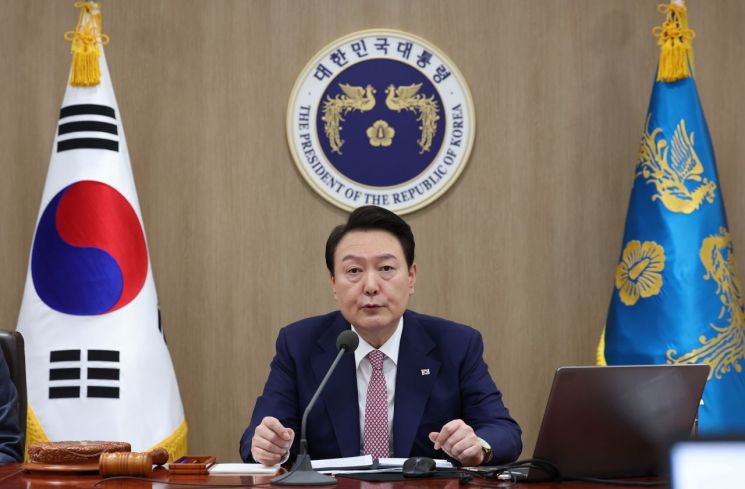
President Yoon Suk-yeol has instructed a reconsideration of the proposed reform to the working hours system that would allow working up to 69 hours. This appears to be a request for supplementation following concerns raised from various sectors about the government's proposed reform.
On the 14th, President Yoon directed, regarding the bill announced for legislative notice by the Ministry of Employment and Labor on the 6th, "Carefully listen to the diverse opinions of workers expressed during the legislative notice period, especially those of the MZ generation, and review points for improvement in the bill's content and communication with the public," according to Kim Eun-hye, the Chief of Public Relations, in a written briefing.
Previously, the Ministry of Labor announced a labor law amendment that changes the current system allowing workers to work up to 52 hours per week, permitting up to 69 hours during busy periods.
The proposal includes expanding the management unit to allow extended working hours on a monthly, quarterly, semi-annual, or annual basis if agreed upon by labor and management.
If the system is reformed, the maximum weekly working hours could be extended to 69 hours. However, to extend the working period, employers must reach a written agreement with the workers' representatives.
At the time, the government explained, "The intention is to reflect the opinions of the MZ generation, allowing concentrated work during busy times and taking long vacations when there is leisure."
However, the MZ labor union, Saerogochim Workers' Council, publicly opposed the proposal on the 9th, stating that "the 'expansion of the extended working hours management unit' is an element that goes against the efforts and historical progress of the international community to raise the minimum standards of working conditions."
Saerogochim also pointed out, "Despite South Korea having relatively many public holidays, the reason for longer average working hours compared to major advanced countries is due to high limits on extended working hours and frequent occurrence of extended work in industrial sites," adding, "The intended stabilization expected from the 52-hour workweek system has not been achieved."
As criticism of the reform proposal spread, it is interpreted that President Yoon ordered additional review.
In response, Prime Minister Han Duck-soo also sought understanding of the reform's purpose at the Cabinet meeting that day. In his opening remarks, Prime Minister Han explained, "The essence of this reform is to grant the choice of working hours through agreement between employers and workers."
He emphasized, "During concentrated working hours, work intensively, and afterward, ensure sufficient rest to protect workers' health rights."
He continued, "The government will operate this system with thorough law enforcement to strongly respond to issues such as unpaid overtime wages, wage arrears, and neglect of health rights, ensuring such problems never occur."
Additionally, the Ministry of Labor was asked to ensure no setbacks in the design process so that the system's intent and essence can be fully realized, and to promote public communication accordingly.
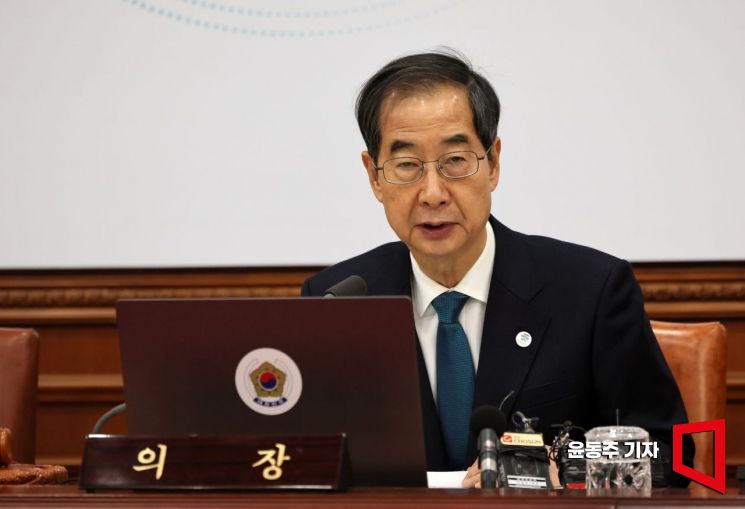 Prime Minister Han Duck-soo is attending the Cabinet meeting held at the Seoul Government Complex on the 14th and delivering opening remarks. Photo by Yoon Dong-joo doso7@
© The Asia Business Daily(www.asiae.co.kr). All rights reserved.


















