"It will definitely be a game changer."
Following the sudden collapse of Silicon Valley Bank (SVB) in the United States, the Federal Reserve's (Fed) dilemma has deepened. Having been focused on the war against inflation for the past year, voices have emerged calling for the Fed to temporarily pause its tightening steps to prioritize "financial system stability," another policy goal. On the other hand, there is strong opposition arguing that since each of the two policy goals has its own tools, the current tightening stance must be maintained.

According to the FedWatch tool of the Chicago Mercantile Exchange (CME) on the 13th (local time), the federal funds (FF) futures market currently reflects more than a 35% chance that the Fed will hold rates steady at the March Federal Open Market Committee (FOMC) meeting. This figure surged sharply from 0% the previous day. The possibility of the usual 0.25 percentage point rate hike stands at 64.2%. Meanwhile, the chance of a big step (a 0.5 percentage point increase), which had been highlighted by Fed Chair Jerome Powell's tightening remarks last week, has dropped to 0%.
The sudden disappearance of the big step option and the emergence of the "rate hold" card on the table is due to confirmation that rapid rate hikes are damaging the financial system amid the SVB collapse. Banks, already shocked by cumulative high-intensity tightening, would inevitably face turmoil linked to the SVB incident if further tightening occurs.
Gina Volbin, Chair of Volbin Wealth Management Group, described the SVB incident as "a deflationary shock the Fed must consider," calling it "definitely a game changer." Jeff Kilburg, founder of KKM Financial, also predicted, "Going forward, the Fed will have no choice but to be less hawkish (less inclined toward monetary tightening)." Goldman Sachs and Barclays expect the Fed to hold rates steady at the March 21-22 FOMC meeting.
However, the Fed cannot ignore the consistent tightening message needed to achieve its inflation stabilization goal. The Wall Street Journal (WSJ) reported that the Fed is ultimately faced with choosing a top priority between the two goals of price stability and financial system stability. Subadra Rajappa, head of U.S. rates at investment bank Soci?t? G?n?rale, pointed out, "The Fed has no choice but to raise rates to curb inflation," adding, "In this case, weaknesses in the financial system will be exposed." Ultimately, the Fed faces a dilemma of choosing between price stability and financial system stability.
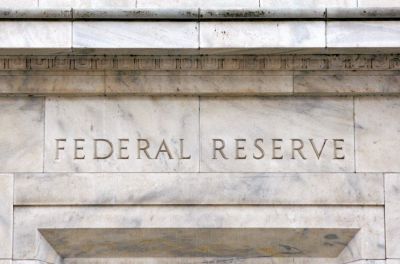
Accordingly, market speculation is growing that the Fed will take a breather with a baby step (a 0.25 percentage point rate hike) to continue its tightening stance. Before this incident, the big step outlook was dominant. Joe Brusuelas, chief economist at RSM US, said, "I believe a 0.25 percentage point increase is currently on the table," adding, "With the financial authorities' response reducing the risk of a bank run, and if there is no bank run risk, the Fed must clearly send the message that tightening will continue." Citi and Bank of America (BoA) also forecast a 0.25 percentage point hike in March.
Warnings have also emerged that if the Fed turns to easing, the U.S. economy could fall into stagflation. Mohamed El-Erian, chief economic advisor at Allianz, appeared on CNBC that day and said, "The Fed must continue its (tightening) path," emphasizing, "There are separate policy tools to respond to inflation and financial stability, and the two should not be confused." He warned that if the Fed stops raising rates due to concerns about the SVB incident, it may have to pay a bigger price.
The Consumer Price Index (CPI), an inflation indicator closely watched by the Fed before its rate decision, will be released on the 14th. Wall Street estimates that the February CPI will rise 6.1% year-over-year, a slowdown from the previous month's increase of 6.4%. The short-term inflation expectations released that day by the New York Federal Reserve (New York Fed) declined. According to the New York Fed's survey, the expected inflation rate over the next year was 4.2%, down 0.8 percentage points from the 5% recorded a month earlier. This is also the lowest level since May 2021.
© The Asia Business Daily(www.asiae.co.kr). All rights reserved.
![User Who Sold Erroneously Deposited Bitcoins to Repay Debt and Fund Entertainment... What Did the Supreme Court Decide in 2021? [Legal Issue Check]](https://cwcontent.asiae.co.kr/asiaresize/183/2026020910431234020_1770601391.png)

















