Will Masks Be Removed on Buses, Subways, and Taxis... Announcement on the 15th
US and Japan to Manage COVID-19 Like the Flu Starting in May
About a month and a half after the indoor mask-wearing mandate was adjusted to a recommendation, it appears that masks on public transportation such as buses and subways will soon be able to be removed as well. Plans to downgrade the COVID-19 crisis alert level are also expected to be discussed soon, with some anticipating that COVID-19 will be managed at a level similar to the flu.
The government is scheduled to announce the timing for lifting the mask-wearing mandate on buses, subways, taxis, and other public transportation at the Central Disaster and Safety Countermeasure Headquarters (CDSCH) meeting on the 15th. However, even if the mask mandate on public transportation is lifted, the mask requirement will remain in medical institutions, pharmacies, and facilities vulnerable to infections.
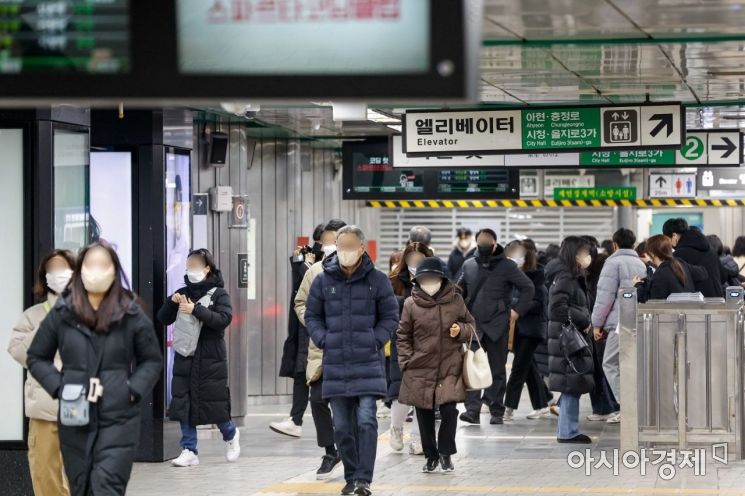 Except for some facilities, indoor mask-wearing shifted from mandatory to recommended on the 30th. Citizens are seen wearing masks while moving at Sinchon Station on Subway Line 2 in Seodaemun-gu, Seoul. Photo by Jinhyung Kang aymsdream@
Currently, mask-wearing is mandatory on public transportation such as subways, trains, and buses. Masks must also be worn on vehicles transporting children to kindergartens, schools, and academies, as well as on commuter buses. Masks are not required in airport duty-free zones, but must be worn when boarding airplanes.
The mask mandate on public transportation has been maintained for over three years since the large-scale COVID-19 outbreak. However, as the COVID-19 situation has stabilized, the government has gradually eased quarantine guidelines. In May last year, the mask mandate was lifted for indoor spaces except for outdoor venues with gatherings of 50 or more people, and in September of the same year, the outdoor mask mandate was fully lifted. Then, at the end of January this year, the indoor mask mandate was relaxed to a recommendation, excluding public transportation.
The lifting of the mask mandate on public transportation was initially discussed for late April to early May, but the discussion appears to have been moved up as the number of new COVID-19 cases has remained relatively stable even after some indoor mask mandates were eased. From the 7th to the 13th, the daily new confirmed cases were 12,281 → 12,791 → 10,885 → 10,335 → 10,009 → 9,342 → 4,198, averaging 9,977 cases per day.
The COVID-19 infectious disease crisis alert level is also expected to be downgraded from 'Severe.' The alert levels are divided into 'Interest - Caution - Warning - Severe,' and COVID-19 has maintained the 'Severe' level since February 2020.
The adjustment of the crisis level is expected to be announced and adjusted after the 15th Emergency Committee meeting on COVID-19 by the World Health Organization (WHO), scheduled for late April to early May. If the alert level is lowered, the legal infectious disease classification of COVID-19, currently level 2, is expected to be downgraded to level 4. At level 4, quarantine obligations will be removed, and COVID-19 will be managed at a flu-like level.
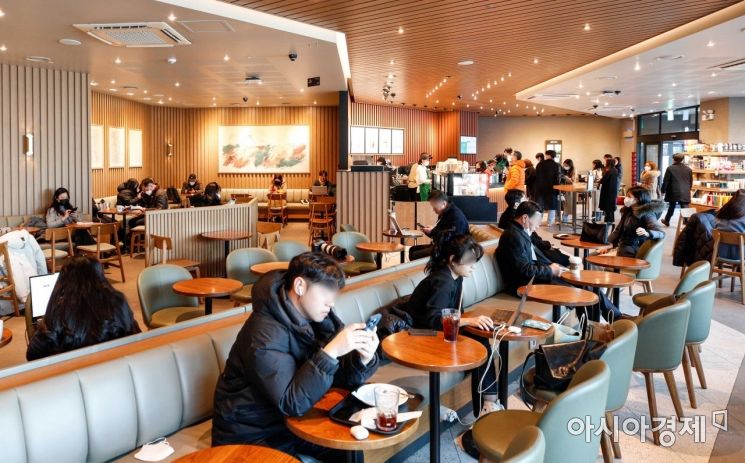 On the 31st, when the indoor mask mandate was lifted, citizens are seen taking off their masks at a cafe in Seoul. Photo by Jinhyung Kang aymsdream@
Japan, which mandated mask-wearing earlier than Korea, decided from the 13th to leave indoor and outdoor mask-wearing to individual discretion. They also relaxed quarantine regulations for vulnerable facilities from mandatory to recommended. Additionally, from May 8, COVID-19 will be downgraded to the same level as the flu in terms of infectious disease classification.
The United States, which lifted the indoor mask mandate last March, plans to end the COVID-19 public health emergency on May 11. This means COVID-19 will be considered at the flu level, and wage loss support will be discontinued. Furthermore, COVID-19 tests, vaccines, and treatments that were previously free will likely become chargeable.
Meanwhile, even if the mask mandate on public transportation is lifted, it is uncertain whether citizens will stop wearing masks. Having experienced the COVID-19 pandemic for over three years, people have become sensitive to infectious diseases, and many may voluntarily continue wearing masks for their own health, even if it is no longer mandatory.
According to a survey conducted in January by the Korea Research Institute’s regular survey team 'Public Opinion within Public Opinion,' which polled 1,000 adults nationwide, 77% of respondents said they would always or mostly wear masks in indoor multi-use facilities (47% said they would always wear masks, and 30% said they would mostly wear masks).
© The Asia Business Daily(www.asiae.co.kr). All rights reserved.


















