Haruhiko Kuroda, Governor of the Bank of Japan, who is about a month away from retirement, reviewed the large-scale monetary easing policy implemented during his 10-year tenure and described it as "successful."
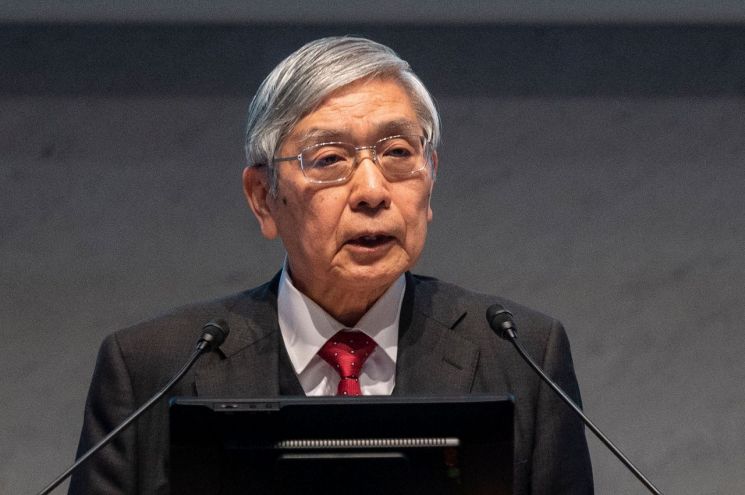
Governor Kuroda made these remarks during a press conference held at the Bank of Japan on the afternoon of the 10th, mentioning employment growth and the absence of deflation, according to a report by Nihon Keizai Shimbun (Nikkei). The conference took place after Kuroda presided over his final Monetary Policy Meeting.
He was appointed Governor of the Bank of Japan in March 2013, shortly after the launch of the second Shinzo Abe administration. Since then, he has served the longest term in history, 10 years, continuously promoting monetary easing and ultra-low interest rate policies supporting "Abenomics."
Regarding the prolonged monetary easing policy, Governor Kuroda said, "It has been effective for the economy and price increases," adding, "Employment increased by 4 million, mainly among women and the elderly, and wage increases have also revived."
He continued, "Monetary easing has led to a situation without deflation. The effects far outweighed the side effects."
He expressed regret over not being able to continuously and stably achieve the 2% price stability target. However, he emphasized, "If monetary easing continues, it is possible to achieve the price stability target accompanied by wage increases, even if it takes time."
Earlier, Governor Kuroda set a 2% inflation target to escape deflation following the collapse of the bubble economy. Through monetary easing and a weaker yen, he aimed to improve corporate performance, which would lead to wage increases and expanded consumption, creating a virtuous cycle of rising prices.
Japan's annual consumer price inflation rate last year was 2.3%, the highest level in 31 years since 1991, excluding the impact of the consumption tax hike. However, this was attributed to external factors such as rising energy and international raw material prices and was considered to lack sustainability.
The Bank of Japan noted that consumer prices recorded consecutive 4% levels in December last year and January this year but forecasted that the rate of price increases would narrow by mid-year.
Kazuo Ueda, the successor to Governor Kuroda, has expressed his intention to maintain the monetary easing stance for the time being. However, there are expectations that the timing of an exit strategy will have to be considered to address side effects such as high inflation and distortions in long-term interest rates. Governor Ueda is scheduled to take office on the 9th of next month.
© The Asia Business Daily(www.asiae.co.kr). All rights reserved.
![Clutching a Stolen Dior Bag, Saying "I Hate Being Poor but Real"... The Grotesque Con of a "Human Knockoff" [Slate]](https://cwcontent.asiae.co.kr/asiaresize/183/2026021902243444107_1771435474.jpg)











