BOJ Maintains Large-Scale Monetary Easing Policy
New Governor Ueda Scheduled to Take Office on 9th
Possibility of YCC Policy Revision Under Review
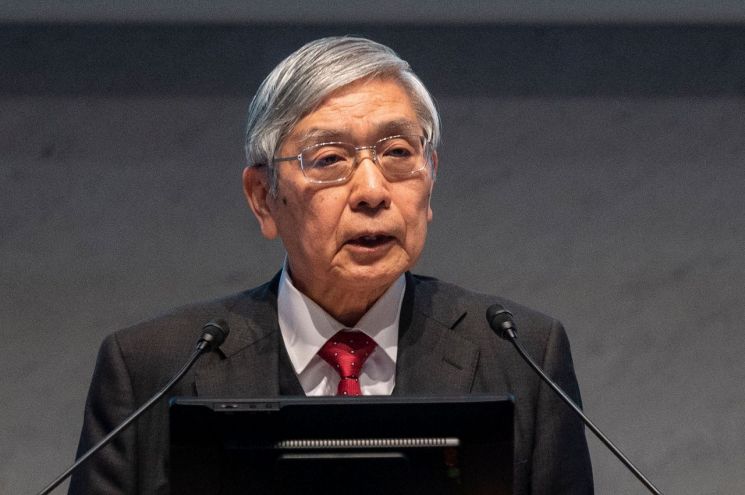
In the monetary policy meeting held ahead of the retirement of Haruhiko Kuroda, Governor of the Bank of Japan (BOJ), the BOJ announced its decision to maintain the existing monetary policy. Abenomics, centered on large-scale monetary easing, is expected to continue for the time being until the new Governor Kazuo Ueda takes office in April.
The BOJ concluded its two-day monetary policy meeting starting on the 9th by stating it will maintain an accommodative monetary policy. Accordingly, the short-term interest rate remains fixed at -0.1%, and the allowable fluctuation range for the 10-year government bond yield, a long-term interest rate indicator, is maintained at ±0.5%. The BOJ also decided to continue purchasing index-linked exchange-traded funds (ETFs) to increase the money supply in the market.
In a statement released after the monetary policy meeting, the BOJ said, "Employment and personal consumption are increasing moderately," and "despite the sharp rise in raw material prices, the domestic economy is recovering." Regarding inflation, it added that the rate of increase is expected to slow down until mid-year due to the government's subsidies on electricity and gas fees.
This monetary policy meeting attracted attention as it was the last meeting attended by Governor Kuroda before his term expires. The market had anticipated that Governor Kuroda would not make significant changes to the existing policy in his final meeting to allow the new governor to implement new monetary policies in a stable environment.
Kazuo Ueda, Kuroda's successor, is scheduled to take office on the 9th of next month. On that day, the Japanese Diet approved the government's personnel proposal to appoint Kazuo Ueda, former BOJ Policy Board member, as the next Governor of the Bank of Japan.
Earlier, at a parliamentary hearing on the 24th of last month, the new Governor Ueda expressed his intention to "continue the monetary easing policy." However, the Nihon Keizai Shimbun reported that "Governor Ueda is expected to maintain the zero interest rate policy but consider revising the Yield Curve Control (YCC) policy, which involves unlimited purchases of government bonds to keep long-term interest rates at a certain level."
© The Asia Business Daily(www.asiae.co.kr). All rights reserved.
![Clutching a Stolen Dior Bag, Saying "I Hate Being Poor but Real"... The Grotesque Con of a "Human Knockoff" [Slate]](https://cwcontent.asiae.co.kr/asiaresize/183/2026021902243444107_1771435474.jpg)











