Nammyeong Jo Sik's Planted Sancheonjae Nammyeongmae
Namsa Yedamchon Wonjeongmae · Dansoksa Site Jeongdangmae
The ‘Sanchaeng 3 Maes (Plum Trees)’ in Sanchaeng-gun, Gyeongnam, have all blossomed at once, filling the air with the scent of spring.
According to Sanchaeng-gun on the 10th, the ‘Nammyungmae’ at Sancheonjae, the Nammyung Jo Sik historic site in Sicheon-myeon, the ‘Wonjeongmae’ in Namsa Yedamchon, Danseong-myeon, and the ‘Jeongdangmae’ at Dansoksa site in Un-ri, Danseong-myeon, have all burst into bloom simultaneously.
This year, the Nammyungmae, which is 462 years old, is said to have been planted directly by the great practical Confucian scholar Nammyung Jo Sik (1501?1572) when he was 61 years old, in the 16th year of King Myeongjong’s reign (1561).
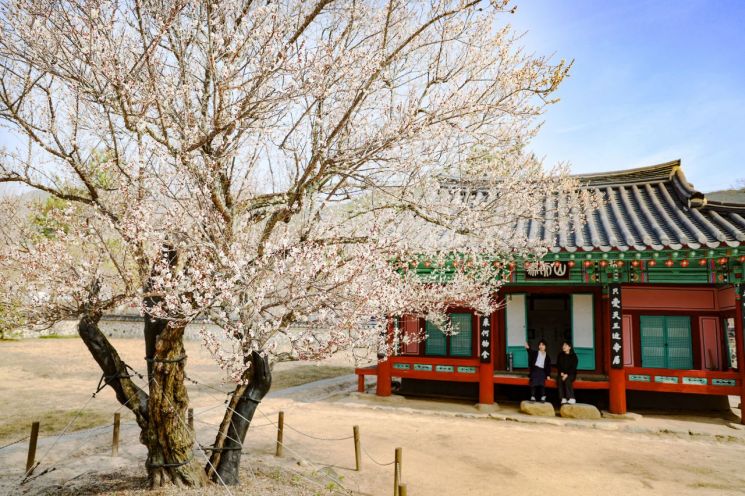
From the front yard of Sancheonjae, Jirisan Cheonwangbong Peak can be seen at a glance, and every spring many plum blossom visitors come to this place. The Wonjeongmae was planted by Wonjeonggong Ha Jeup at the end of the Goryeo Dynasty, and its name comes from his posthumous title, Wonjeong.
The Wonjeongmae is located in the yard of the Ha family old house in Namsa Yedamchon, where Wonjeonggong’s old residence stands. The Wonjeongmae is a red plum blossom tree and boasts the oldest age of about 670 years among the Sanchaeng 3 Maes, but the original tree died in 2007, and its successor tree has been growing from the roots and blooming every year.
The Jeongdangmae was planted by Tongjeonggong Kang Hoebaek, who served as Daesaheon and Jeongdangmunhak at the end of the Goryeo Dynasty, while he was studying at Dansoksa in his childhood. The Jeongdangmae, designated as a protected tree by Gyeongnam Province in 1982, is about 640 years old, but as an old tree its vitality was poor, so part of its branches were grafted for propagation in 2013.
Since then, a successor tree has been planted and managed next to the completely dead Jeongdangmae in 2014. Since ancient times, the Nammyungmae, Wonjeongmae, and Jeongdangmae have been collectively called the Sanchaeng 3 Maes and are recognized for their historical value.
© The Asia Business Daily(www.asiae.co.kr). All rights reserved.
![User Who Sold Erroneously Deposited Bitcoins to Repay Debt and Fund Entertainment... What Did the Supreme Court Decide in 2021? [Legal Issue Check]](https://cwcontent.asiae.co.kr/asiaresize/183/2026020910431234020_1770601391.png)