Ms. Han (27, female) received such a message on the afternoon of the 7th and, thinking it was strange since she had no payment history, made a phone call. Although a mobile phone alert message warned to be cautious of smishing or phishing, she had purchased a product on a shopping platform the day before, and the inquiry number started with 032, so she did not suspect much. When she called, an automated message said the number was 'disconnected.' Ms. Han said, "I thought it wouldn't happen to me, but it seems anyone can easily fall for it."
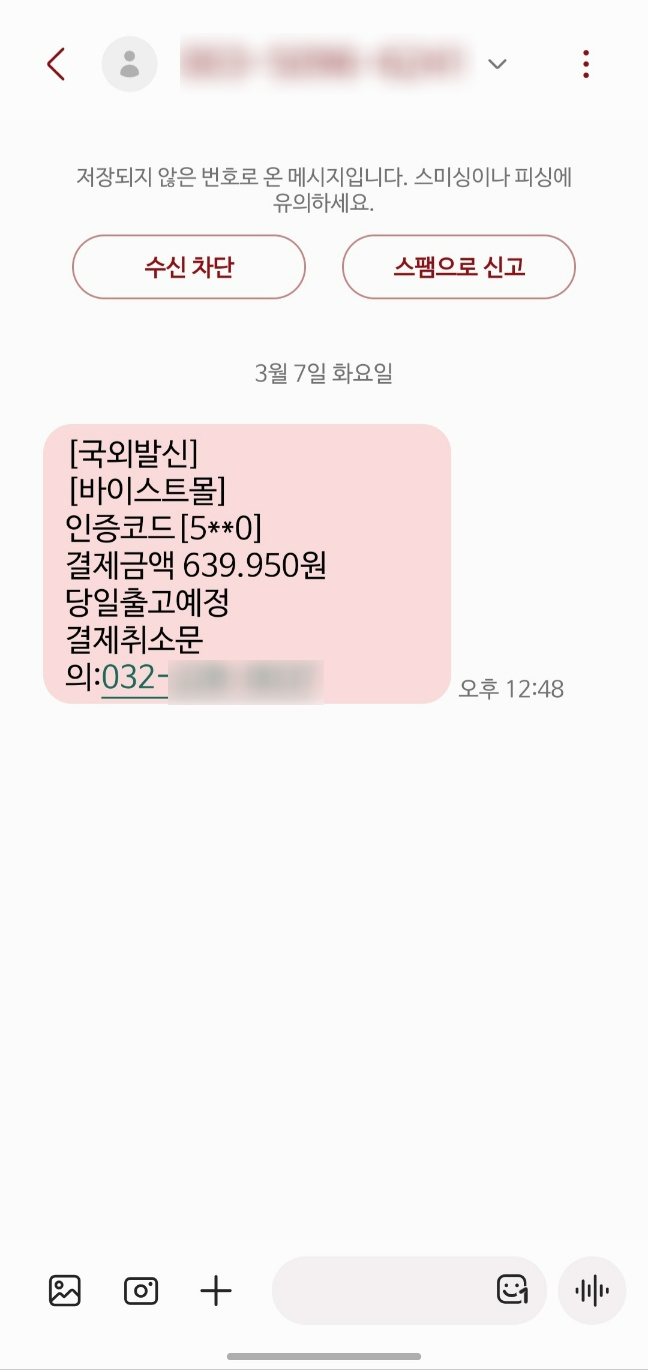
Phishing messages disguised as shopping malls or overseas direct purchases are spreading, claiming payments were made for amounts never charged. As overseas direct purchases and online shopping have recently become the trend for buying products, caution is needed to avoid being deceived.
It has been identified that many smartphone users have received messages similar to Ms. Han’s case. As more consumers purchase products through overseas direct purchases or online shopping malls, phishing messages appear to be sent reflecting this trend. One Twitter user shared a message saying, "Because I shop overseas a lot, I thought it was real." The photo shows a message mimicking 'Flower Shopping Mall,' stating that over 1 million KRW was charged and encouraging calls to an inquiry number. Additionally, posts claiming to have received messages stating payments were made from companies such as World Logistics and Dreaming World Shopping Department Store can be easily found.
If deceived like Ms. Han and calling the number, the caller pretends to be a shopping mall and encourages installing a 'shopping mall application.' Once the application is installed, malicious hacking apps or remote control apps may be installed, leading to leakage of financial and personal information. The phone itself can be taken over, using a ‘forced reception and forced transmission’ method to connect all calls to the phishing criminals, impairing the victim’s judgment.
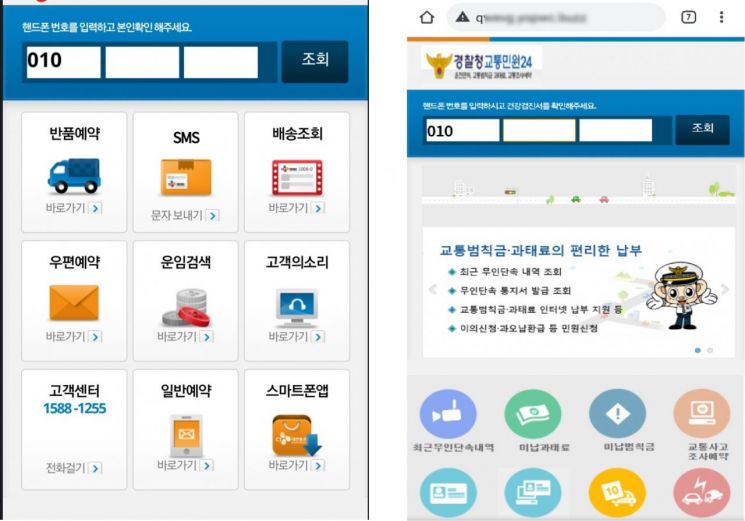 (Left) Smishing page impersonating a delivery service, (Right) Smishing page impersonating Traffic Civil Complaints 24 / Photo by Korea Internet & Security Agency (KISA)
There is also a smishing method that extracts personal information using only the smartphone without making a call. This method, which is prevalent around holidays when gifts are frequently sent, exploits the psychology of 'I might have received a gift' and is sent routinely via text messages. It pretends to be from real courier companies like CJ Logistics or Logen, stating 'Delivery canceled and held due to address error' and induces access to a specific site. Then, it guides users to enter personal information such as name and resident registration number on the delivery tracking page or to install a courier app. Clicking the link out of curiosity can lead to phone hacking.
Other variations include impersonating financial institutions, public agencies, or issuing traffic fines, changing only the message content while inducing app installation or personal information theft. A Financial Supervisory Service official advised, "For payment details, it is best to check the payment statement on the card company’s call center or website you use." They added, "If a malicious app is installed, scan and delete it using a mobile antivirus app or seek help from a phone service center." A Korea Internet & Security Agency official also stated, "The most important thing is not to click on URLs in messages, and if a warning message appears when installing an app, never proceed with the installation."
© The Asia Business Daily(www.asiae.co.kr). All rights reserved.


















