Incheon City and the Ministry of National Defense have begun the demolition of the hospital building of the Japanese Army's 'Jopyeongchang,' a representative facility of forced mobilization during the Japanese colonial period, sparking opposition from civic groups.
The Japanese Army Jopyeongchang Historical and Cultural Ecological Park Promotion Council held a press conference in front of Incheon City Hall on the 8th, stating, "We condemn Incheon City for trying to erase the history of Japanese imperialist war and forced mobilization."
The group said, "The Jopyeongchang hospital was where Koreans forcibly mobilized to the Japanese military weapons factory received treatment, and it is a space that encapsulates modern and contemporary history including the Japanese colonial period," adding "We proposed methods to purify soil contamination without demolition and to postpone the purification work deadline, but the city decided on demolition based on a distorted interpretation of the law."
The council plans to continue candlelight protests against the demolition in front of the Jopyeongchang hospital building.
The day before, the Justice Party Incheon Branch Bupyeong District Committee also issued a statement criticizing, "Incheon City showed a serious regression of democracy and a bad administrative appearance of unilateral dictatorship in responding to the controversy over the demolition of the Japanese Jopyeongchang hospital building."
They continued, "It is also problematic that the unilateral demolition of the Jopyeongchang hospital building is taking place at a time when controversies over compensation for forced labor during the Japanese colonial period are ongoing," and argued, "We cannot understand the central and local governments trying to erase all traces of Japanese imperialism by demolishing buildings with historical value without efforts to correct history and learn lessons."
The committee urged, "Incheon City should immediately stop the demolition of the Jopyeongchang hospital building and present reasonable measures to preserve historically valuable buildings, including Camp Market Zone D."
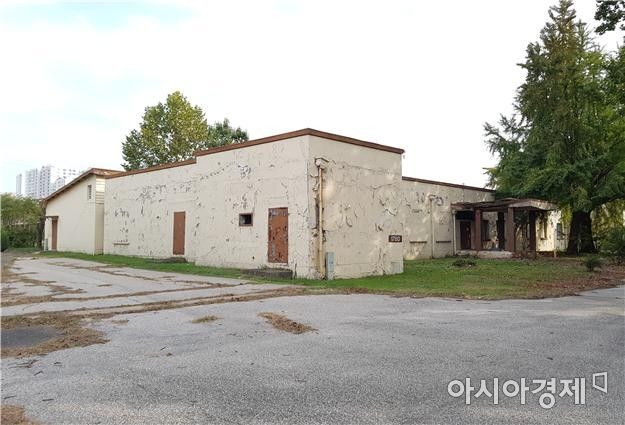
The Ministry of National Defense received a request from Incheon City in January to demolish the Jopyeongchang hospital building within the former Bupyeong US military base (Camp Market) and subsequently submitted a permit application for building dismantling to the relevant district office. The Ministry began preliminary work for demolition, such as installing steel scaffolding along the hospital building, starting from the morning of the previous day.
Earlier, the Ministry of National Defense and Incheon City decided to demolish the Jopyeongchang hospital building, which has a total floor area of 1,324㎡, while promoting plans to develop the Camp Market site, returned by the US military, into parks and other facilities. Soil beneath the hospital building showed petroleum-based total petroleum hydrocarbons (TPH) concentrations exceeding the contamination concern standard (500 mg/kg).
However, civic groups opposed the demolition plan, and when Incheon City sent a letter requesting suspension of demolition last year, the work was temporarily halted.
During this process, the city held three meetings to resolve community conflicts over the demolition of the Jopyeongchang hospital but ultimately failed to reach an agreement. It was judged that soil purification could not be completed by 2023, the legally mandated deadline, while preserving the original form of the building.
The city established a policy to demolish the hospital building but preserve its historical value as much as possible through preserving traces of the building, key materials, and documentation work, and requested the Ministry of National Defense to resume demolition work.
© The Asia Business Daily(www.asiae.co.kr). All rights reserved.

















