IP Camera Footage Leaked at Gangnam Plastic Surgery Clinic
KMA: "Concerns Over Violation of Citizens' Basic Rights Realized"
Patients and Guardians "Satisfied"... Opinions Divided
Video footage from an Internet Protocol (IP) camera installed in a plastic surgery clinic in Gangnam, Seoul, was leaked online, sparking controversy over the 'mandatory installation of closed-circuit television (CCTV) in operating rooms.' Since operating rooms may contain sensitive patient information, there are calls to avoid rushing the policy without adequate safeguards against information leaks.
Korean Medical Association: "Reconsider Mandatory Installation of Operating Room CCTV"
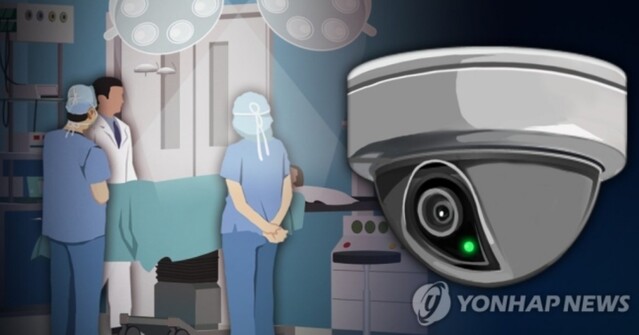
On the 5th, footage recorded by IP cameras inside the consultation room, changing room, and electrocardiogram examination room of a Gangnam plastic surgery clinic was leaked on the internet. Upon discovering the leak, the hospital reported it to the police, who are investigating the circumstances of the leak with the possibility of hacking in mind.
The Korean Medical Association (KMA) has called for a fundamental reconsideration of the mandatory installation of operating room CCTV, scheduled to take effect this September. In a statement on the 7th, the KMA expressed serious concern, saying, "The medical community's ongoing warnings that illegal leaks of surgical footage could infringe on citizens' fundamental rights are becoming a reality."
They argued, "The National Assembly and government should seriously recognize the harm to the public caused by illegal leaks of operating room CCTV footage triggered by this incident and reconsider the necessity of mandatory enforcement from the ground up."
"IP Cameras Are Different from CCTV"... Related Legislation Also Being Prepared
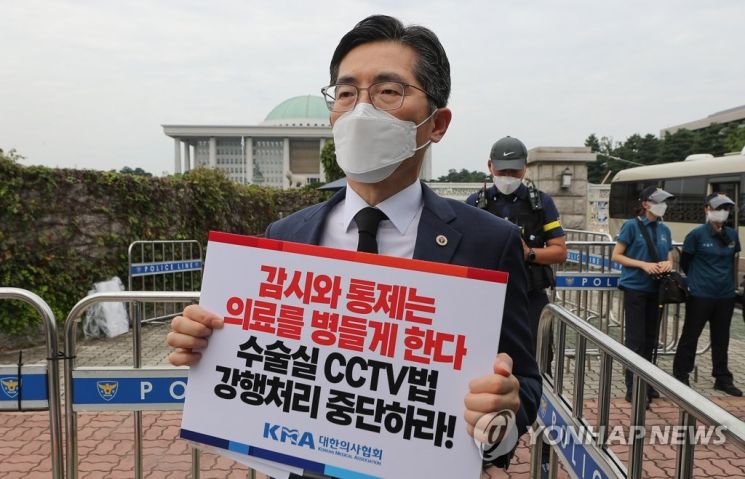 Lee Pil-su, President of the Korean Medical Association, is holding a hand placard urging the rejection of the bill mandating the installation of CCTV in operating rooms at a press conference held in front of the National Assembly in Yeouido, Seoul, in August 2021. / Photo by Yonhap News
There are also counterarguments that the recent video leak and concerns about CCTV security should not be equated.
The leaked footage was recorded by an IP camera, which allows data transmission and remote control over the internet. As long as there is an internet connection, the footage can be viewed regardless of physical distance. Notably, the IP camera used by the plastic surgery clinic was Chinese-made and vulnerable to security breaches, with hacking methods widely shared online.
In contrast, CCTV systems are isolated from external access. If separated from the network, they are not connected wirelessly or wired to the outside, allowing footage transmission only within the area where the CCTV is installed. Once operating room CCTV installation becomes mandatory, related footage can only be accessed upon request by public institutions involved in investigations or trials, or with the consent of both the patient and medical staff.
The Ministry of Health and Welfare also maintains a stance to strictly handle the leakage of patients' sensitive information. The operating room CCTV installation law includes subordinate regulations to establish ▲ separation of CCTV storage devices and networks ▲ maintenance of access logs and management plans for facility entrants.
The Korean Medical Association remains skeptical. In their statement, they claimed, "From the moment the footage is stored, it is exposed to the risk of leakage, and even if CCTV rather than IP cameras is installed, there is no way to completely prevent risks such as theft, loss, or leakage of footage." While CCTV poses less risk of external leaks compared to IP cameras, the possibility of leaks by internal personnel or the patients themselves remains.
What Is the Mandatory Installation of Operating Room CCTV?
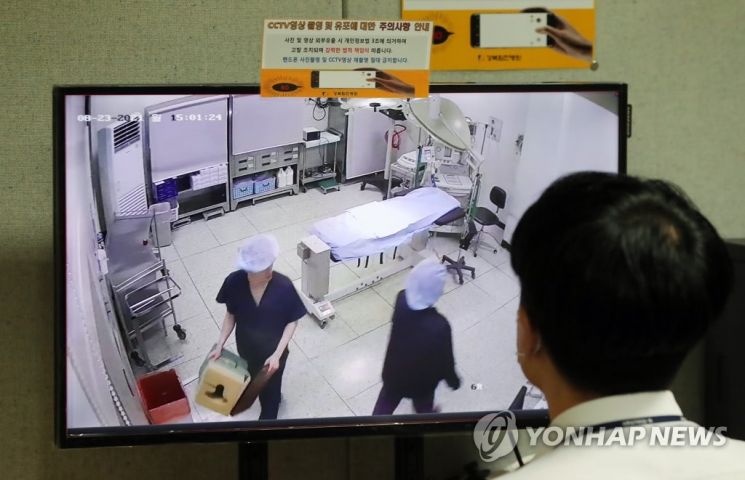
Hospital operating room CCTV was first installed in May 2018 after a 40-year-old patient undergoing shoulder surgery at an orthopedic clinic in Busan was declared brain dead. This occurred because a medical device sales representative, not a doctor, performed the surgery.
To prevent such incidents, bills mandating hospital operating room CCTV installation were proposed multiple times since 2015 but faced opposition from the medical community due to concerns such as "increased burden on medical staff." Eventually, in August 2021, a revision to the Medical Service Act mandating operating room CCTV installation was passed by the National Assembly. After a two-year grace period, it is scheduled to be enforced this September.
According to the law, medical institutions performing surgeries under general anesthesia or when the patient is unconscious must mandatorily install CCTV in operating rooms. Medical institutions violating the installation or recording obligations face fines of up to 5 million KRW.
When requested by the patient, recording without audio is allowed, but audio recording is possible if both the patient and medical staff consent.
However, medical staff may refuse recording in cases such as ▲ emergency surgeries where delays could endanger the patient's life or cause serious physical or mental harm ▲ high-risk surgeries necessary to save the patient's life ▲ situations that could significantly hinder the training of residents.
Additionally, subordinate regulations will establish ▲ CCTV installation standards ▲ scope of recording and request procedures ▲ procedures for viewing and providing footage ▲ storage standards and reasons for extending storage periods ▲ internal management plans to strengthen the security of personal sensitive information.
Furthermore, leaking recorded footage and information is punishable by imprisonment of up to five years or fines up to 50 million KRW. The Ministry of Health and Welfare is currently finalizing enforcement decrees and rules while reflecting the medical community's opinions.
Patients and Guardians "Satisfied with Operating Room CCTV Installation"
Meanwhile, a survey conducted at an orthopedic clinic that piloted operating room CCTV installation in 2021 showed that 80% of patients and guardians were satisfied with the installation.
Patients who agreed to CCTV recording cited "the act of recording itself inspires trust (61.4%)" as their reason, while guardians who watched the surgery in real-time responded that "seeing the surgery directly with their own eyes made them feel reassured (69.6%)."
When asked about concerns over personal information leaks, 75.2% answered that they had "no particular worries regarding operating room CCTV recording."
© The Asia Business Daily(www.asiae.co.kr). All rights reserved.



















