Taehwagang Ecological Center, 2022 Analysis Results of Taehwagang Returning Salmon Otolith
It was found that 68% of the salmon released from Taehwagang in Ulju-gun last year returned after 3 years.
The Taehwagang Ecological Center in Ulju-gun announced on the 8th the results of the otolith analysis of salmon returning to Taehwagang last year through the "2022 Taehwagang Salmon Resource Enhancement and Conservation Research Project," jointly conducted with the Korea Fisheries Resources Agency.
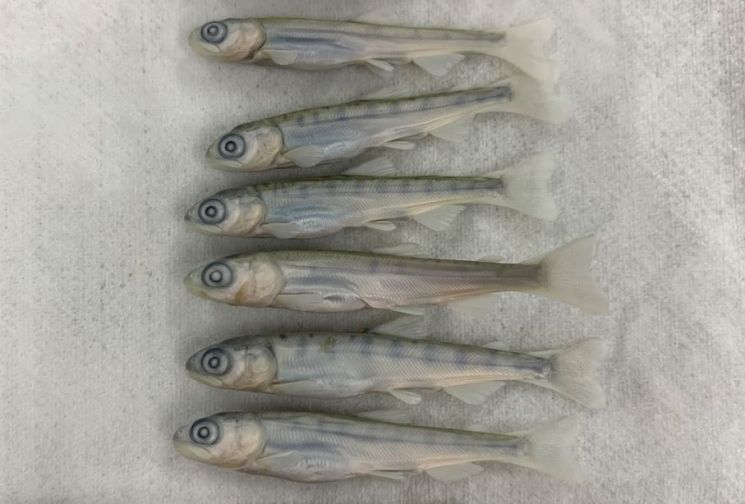
This survey analyzed the otolith patterns of female salmon that returned to Taehwagang last year to determine age distribution and initial release sites.
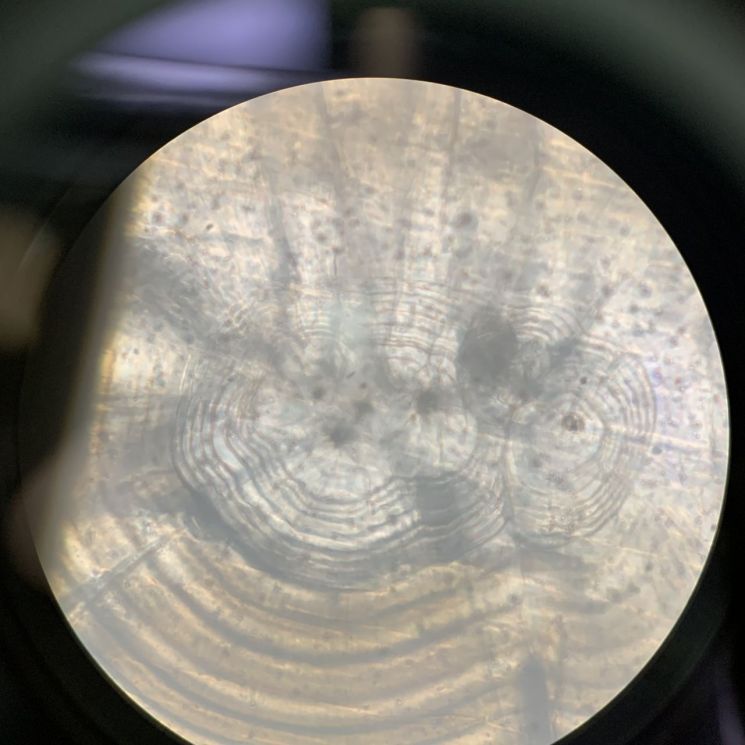
The otolith is the ear bone of salmon, and its unique patterns formed by controlling water temperature during the fertilized egg hatching process can be used to identify birthplace and age.
As a result of the analysis, the salmon originating from Taehwagang that returned last year were counted in the order of 3-year-old individuals at 68.3%, 4-year-old at 18.3%, and 2-year-old at 13.3%, showing that salmon returning after 3 years were the most numerous.
Among the salmon returning to Taehwagang last year, 48% of the individuals had identifiable otolith patterns, and among those with otolith patterns, more than half (58%) were confirmed to be salmon released from Taehwagang.
In addition, Taehwagang-origin salmon were also found among the sea-caught salmon captured off the coast of Gangwon-do, which will be used as evidence to assert the status of Taehwagang as the natal river of salmon in the future.
A county official stated, "Through continuous research, we will manage salmon resources more systematically amid climate anomalies such as warming."
The release of salmon with otolith tags is a recommendation by the North Pacific Anadromous Fish Commission (NPAFC), which manages salmon resources internationally. Currently, in Korea, salmon are released with otolith tags at four locations including Taehwagang in Ulju-gun, Namdaecheon in Gangwon-do, Wangpicheon in Gyeongsangbuk-do, and Seomjingang in Jeollanam-do.
© The Asia Business Daily(www.asiae.co.kr). All rights reserved.
![Clutching a Stolen Dior Bag, Saying "I Hate Being Poor but Real"... The Grotesque Con of a "Human Knockoff" [Slate]](https://cwcontent.asiae.co.kr/asiaresize/183/2026021902243444107_1771435474.jpg)

















