Skipjack Tuna and Fish "Not Even Fishing"
Rice Still Mentioned Alongside 'Radiation' and 'Deformity'
As the 12th anniversary of the Fukushima nuclear disaster in Japan, which occurred in 2011, approaches on the 11th, the Japanese government is intensifying its campaign to promote the consumption of Fukushima agricultural and marine products. However, it has been revealed that even within Japan, Fukushima-produced agricultural and marine products are still not being consumed due to 'radiation fears.'
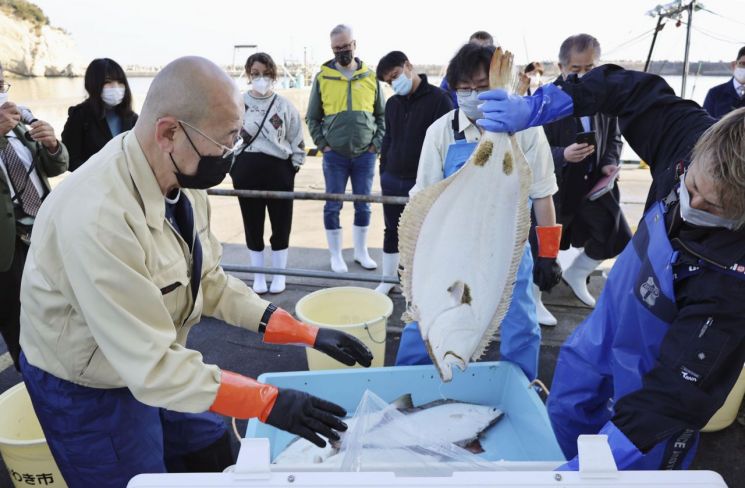 In November last year, an International Atomic Energy Agency (IAEA) inspection team transferred fish samples collected from the port of Iwaki City, Fukushima Prefecture. Iwaki = Kyodo News / Yonhap News Agency
According to NHK on the 8th, although radiation levels in Fukushima Prefecture's agricultural and marine products have remained below the standard limits since the nuclear accident, these products are still not selling. Despite various promotional policies by the Japanese government, public distrust regarding safety remains significant.
Fukushima was once a famous fishing ground for bonito, but NHK reported that the catch volume has sharply declined because even when bonito are caught, they do not sell. In Japan, seafood origin is labeled by the port where it was caught, so fishing operations at Fukushima ports are currently almost non-existent. Fishermen are moving their operations to nearby ports in Miyagi or Chiba Prefecture because products labeled 'Fukushima-produced' are difficult to sell even at reduced prices.
In fact, radiation fears regarding Fukushima products persist in Japan. NHK conducted a big data analysis of social networking services (SNS) and found that posts mentioning Fukushima agricultural and marine products alongside words like 'radiation' and 'radioactivity' exceeded 4,000 last year. Right after the nuclear accident in 2011, there were 90,000 such mentions. NHK analyzed that "although related posts have decreased due to government promotional measures, the numbers remain significant."
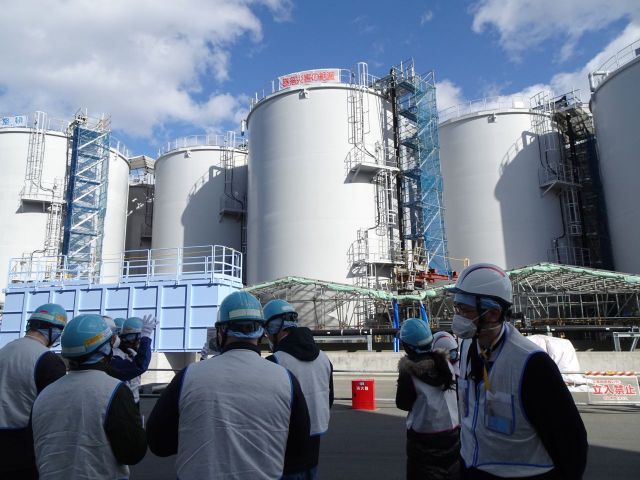 On the 6th of last month, Tokyo Electric Power Company officials inspected the Fukushima nuclear power plant's contaminated water storage tanks together with the press. The Japanese government and Tokyo Electric Power Company have announced plans to release the contaminated water into the ocean starting next month. [Image source=Yonhap News]
Most people mentioning Fukushima fish used words such as 'radiation,' 'deformity,' and 'contamination,' indicating a continued negative perception. NHK noted that "mentions of words like deformity tended to increase around the time media reports emerged that the Fukushima contaminated water tanks were nearly full." In the case of rice, words like 'radiation' and 'cesium inspection' were also frequently mentioned. Radiation was the second most mentioned term in posts introducing Fukushima rice last year. The most mentioned term was 'brand,' likely due to the launch of a new rice brand from Fukushima, which increased searches.
Analysis by age group of people using words like radiation in relation to Fukushima agricultural and marine products showed that those in their 30s and older, who are married or have children, made up the majority, rather than teenagers or people in their 20s.
The Japanese government and Fukushima Prefecture regard this perception as 'reputational damage' caused by fake news and are working to improve the situation. The contaminated water, which is about to be discharged, is referred to as treated water in Japan. NHK added, "With the discharge of treated water imminent, there are concerns about new reputational damage to Fukushima stakeholders," and "The key to future measures against reputational damage will be how effectively safety can be communicated to those who harbor anxiety and concerns."
The prefecture is inviting seafood buyers to Fukushima for fish market tours and is holding various events in Fukushima to promote recovery on the 12th anniversary of the nuclear accident. On the 15th, a bicycle race covering various parts of Fukushima is scheduled. Local agricultural and marine products will be served at the event to improve the image. The event organizer emphasized, "Since the earthquake, we have continuously suffered from reputational damage," and added, "People always say they do not eat things from Fukushima. But I hope many people realize that many live healthily in Fukushima."
© The Asia Business Daily(www.asiae.co.kr). All rights reserved.


















