"Opposition for the Sake of Opposition in Some Departments"
The government announced a reform plan to flexibilize the 52-hour workweek system, allowing work up to 69 hours per week, which labor groups have opposed as a 'law promoting death from overwork.' In response, Seong Il-jong, the Policy Committee Chair of the People Power Party, retorted, "I think some are opposing just for the sake of opposition."
On the 8th, on MBC's 'Kim Jong-bae's Focus,' Chair Seong said, "When people talk about '69 hours per week,' it seems they are misleading others to think that people will work 69 hours every week, causing some confusion."
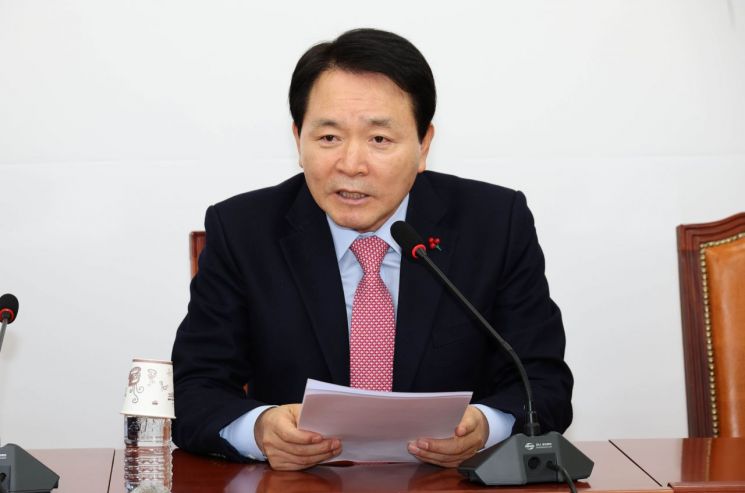
He explained, "Currently, workers are only allowed to work 52 hours per week. Because of this, when sudden orders come in from abroad or elsewhere, it is impossible to handle them. For example, with the recent Ukraine crisis, South Korea's defense industry is booming, and in such times, we can work up to 69 hours. Additionally, for the extra hours worked, workers can take time off monthly, quarterly, or annually, or use vacation days as needed. This system allows flexibility."
However, labor groups criticize this as promoting 'death from overwork,' pointing out that it exceeds the 64-hour weekly labor time recognized as the standard for occupational overwork. In response, Chair Seong explained, "There is a mandatory 11-hour rest period between consecutive working days, so everything is in compliance," adding, "advanced countries are all doing this."
The idea is to work intensively when orders surge and rest later, but there are concerns that this could disrupt workers' rhythms. Regarding this, Chair Seong said, "In cases of seasonal demand or special circumstances, both companies and workers need to work, so this system is implemented. If the current system is optimized and satisfactory, labor and management do not have to agree to this change," adding, "For example, in summer when ice demand is high, workers can work more flexibly and sufficiently during the season, then take vacations and travel with family in autumn or winter."
The existing 52-hour workweek system does not allow working beyond 52 hours, making it difficult to respond to seasonal demand. He said, "Currently, working exactly 52 hours is the rule, so if someone works 60 hours, it violates the law," adding, "therefore, it is impossible to meet surging seasonal demand or special orders."
Chair Seong emphasized, "The idea is to save these overtime hours and, for example, take two weeks off instead of one week of vacation," and added, "Also, a new change is that if you work on weekends or do night shifts for 10 hours, you get a 50% bonus rest time." This means that through a labor savings account, if you work 10 hours, you get a bonus of 15 hours of rest.
However, many question whether such 'working hard now, resting later' is feasible when even legally guaranteed leave is not properly used. He said, "If the labor union says, 'We will not accept this,' then it does not have to be done," adding, "If there is a sudden influx of work or seasonal demand but they refuse and want to continue as before, then they can continue as is."
© The Asia Business Daily(www.asiae.co.kr). All rights reserved.

















