Investigation Agencies: "Secretive and Slow Investigations Hinder Victim Protection"
Court: "Investigation Agencies Subject to In-Person Hearings... Considering Wording Revisions"
As the prosecution, police, and the Corruption Investigation Office for High-ranking Officials (CIO) all voiced opposition to the ‘pre-hearing system for search and seizure warrants,’ the Supreme Court drew a line, stating that investigative agencies are overinterpreting the matter.
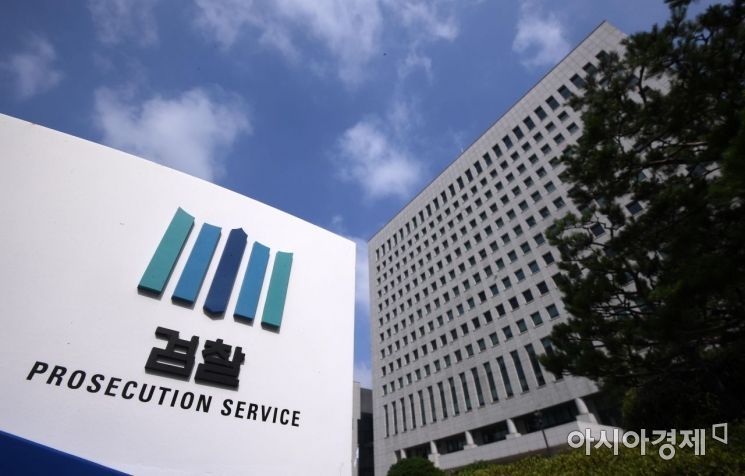
According to the legal community on the 8th, the prosecution and CIO expressed their opposition to the Supreme Court’s proposed amendments to the Criminal Procedure Rules. Earlier last month, the police issued an official stance urging careful consideration, citing concerns that the speed of investigations might be hindered.
On the 3rd of last month, the Supreme Court’s Judicial Administration Office announced a legislative notice to introduce a pre-hearing system by adding a new Article 58-2 (Hearing on Search and Seizure) to the ‘Partial Amendment Rules of the Criminal Procedure Rules,’ which did not previously exist. The newly added Article 58-2 (Hearing on Search and Seizure), Paragraph 1, states, “When the court deems it necessary, it may set a hearing date before issuing a search and seizure warrant to question a person who has information necessary for reviewing the conditions of the search and seizure.”
Investigative agencies have taken issue with the phrase “a person who has necessary information” in the new provision, arguing that suspects might become subjects of face-to-face hearings, thereby compromising the confidentiality of investigations. They claim that exposing investigation details to suspects runs counter to victim protection and that conducting separate hearing procedures could significantly delay investigations.
In response, a court official explained, “Investigative agencies do not assume that suspects will be the subjects of face-to-face hearings,” adding, “The court does not consider questioning suspects, and in most cases, the subject of questioning is likely to be the investigative agency, that is, the prosecutor who requested the warrant.”
The official continued, “There will be no need to summon suspects, and even calling witnesses would only apply in extremely exceptional cases,” and noted, “The current legislative notice broadly states ‘a person who has information,’ but we are considering revising the wording to narrow it down to ‘investigative agencies.’”
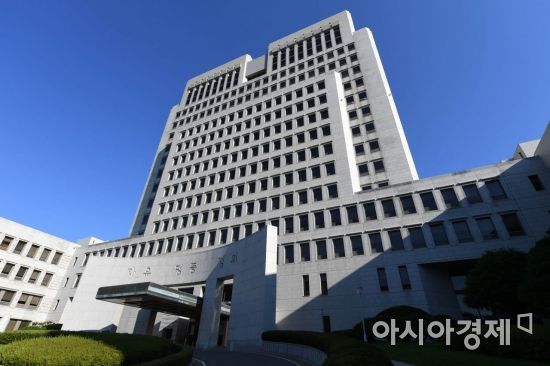
Furthermore, the prosecution, police, and CIO expressed concerns about the restrictions placed on the execution methods of electronic information search and seizure warrants. They argue that limiting search methods such as keywords when issuing warrants related to electronic information would make criminal investigations more difficult.
The Judicial Administration Office added a new subparagraph 2-2 to Article 107 (Matters to be Stated in the Application for Search, Seizure, and Inspection Warrants), requiring that applications for search and seizure warrants related to electronic information, such as mobile phones, include the ‘keywords’ to be used for analysis.
Regarding this, the court rebutted that requiring the inclusion of keyword plans is intended as a reference when deciding whether to issue the search and seizure warrant and determining its scope.
A court official stated, “It does not mean that the warrant will be limited only to the keywords listed,” adding, “We are not asking to specify keywords in the warrant application, nor are we issuing warrants limited to the stated keywords,” and explained, “The intention is to use the keywords as a reference for what will be done with the warrant. It seems investigative agencies do not trust the court. If necessary, we may revise the wording.”
The Judicial Administration Office plans to collect opinions on the amended rules until the 14th of this month and aims to implement the revised rules starting June 1. However, if various opinions are heard and reviewed, and revisions are made, the implementation date may be adjusted.
The Supreme Court is scheduled to hold a nationwide meeting of court chiefs over two days on the 9th and 10th to discuss the ‘Current Status and Operational Plans of Search and Seizure Warrant Practices.’
© The Asia Business Daily(www.asiae.co.kr). All rights reserved.
![User Who Sold Erroneously Deposited Bitcoins to Repay Debt and Fund Entertainment... What Did the Supreme Court Decide in 2021? [Legal Issue Check]](https://cwcontent.asiae.co.kr/asiaresize/183/2026020910431234020_1770601391.png)
















