Government Supports '6 Major Sectors' with Many Vacant Jobs
Root Industry Workers Receive 18 Million KRW After 3 Years of Service
Special Housing Opportunities for Overseas Construction Workers Granted

The government has prepared focused support measures to address the labor shortage issue in industrial sites. It plans to support customized measures to resolve vacant jobs by selecting six key industries, including shipbuilding and the root industry. For the root industry, an asset-building project will be promoted that provides 18 million KRW for three years of continuous service, and various incentives will be given, such as special housing supply opportunities for overseas construction workers.
On the 8th, the government held an emergency economic ministers' meeting and announced the "Vacant Job Resolution Plan" containing these details. Although employment is expected to decline significantly due to the recent economic slowdown, some industries such as shipbuilding still face serious labor shortages. As of the third quarter of last year, the number of vacant jobs reached 185,000, the highest ever recorded. Vacant jobs refer to positions that are currently unfilled or can be newly hired within one month.
The dual structure of the labor market, including outdated working conditions, is analyzed as the main cause of the increase in vacant jobs. The Ministry of Employment and Labor stated, "If job imbalance continues, difficulties for job seekers and hiring companies will intensify, and it is feared that employment indicators and potential growth rates will be negatively affected," adding, "Considering the poor job conditions due to this year's economic slowdown, it is necessary to focus capabilities on filling vacant jobs."
The government selected six major industries with many unfilled positions and significant field difficulties to be managed exclusively by the responsible ministries. These include manufacturing (Ministry of Trade, Industry and Energy), logistics and transportation (Ministry of Land, Infrastructure and Transport), health and welfare (Ministry of Health and Welfare), restaurant industry (Ministry of Agriculture, Food and Rural Affairs), agriculture (Ministry of Agriculture, Food and Rural Affairs), and overseas construction (Ministry of Land, Infrastructure and Transport). This is the first time the government has selected industries to implement separate vacant job measures.

First, in the case of shipbuilding, the government will induce the implementation of the Shipbuilding Win-Win Agreement to reduce wage gaps between primary contractors and subcontractors, and support a shipbuilding win-win package including vocational training, industrial safety, and manpower recruitment support. Additionally, to ensure a smooth supply of foreign workers, a dedicated foreign worker quota for shipbuilding will be temporarily established for two years.
For the root industry, working conditions will be improved through the advancement of manufacturing such as smart factories, and a "Root Industry Modernization Strategy" to promote the influx of new personnel will be prepared within the first half of the year. In particular, asset-building projects such as the Youth Tomorrow Savings Program, which provides 12 million KRW for two years of continuous service, and the Youth Employee Tomorrow Savings Plus, which provides 18 million KRW for three years of continuous service, will also be implemented to secure excellent young talent.
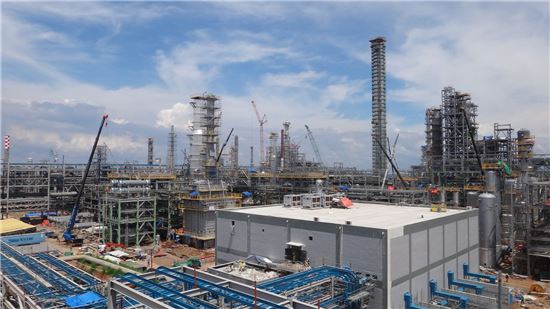
Incentives such as special housing supply opportunities will be given to overseas construction workers who have been dispatched to remote areas and worked for long periods. In addition, the taxi industry, which is facing severe manpower shortages, will see significant deregulation. To ensure smooth supply of taxi drivers, the "drive first, qualify later" system for platform-based taxis will be promoted, and the conversion process from medium-sized taxis to large vans and premium taxis will be changed from a licensing system to a notification system.
In the health and welfare sector, a pilot promotion system will be implemented where care workers with more than five years of service will be assigned as senior care workers after training and given management duties. Furthermore, the ratio of care workers to recipients will be increased to reduce work intensity. In the labor-short restaurant industry, regulations will be eased for overseas Koreans and foreign international students to facilitate easy employment as kitchen assistants and other roles.
Additionally, the government will increase the introduction of high school graduates and foreign workers. To strengthen job linkage for high school graduates, a preparatory apprenticeship course will be newly established from the first year, expanding work-study programs. The quota for foreign workers (E-9) will be expanded to 110,000 this year, promoting rapid entry of about 10,000 people per month. The Ministry of Employment and Labor stated, "Improving the dual structure of the labor market is essential for fundamentally solving job mismatches," and added, "A comprehensive inter-ministerial improvement plan will be prepared and announced next month."
© The Asia Business Daily(www.asiae.co.kr). All rights reserved.


















